
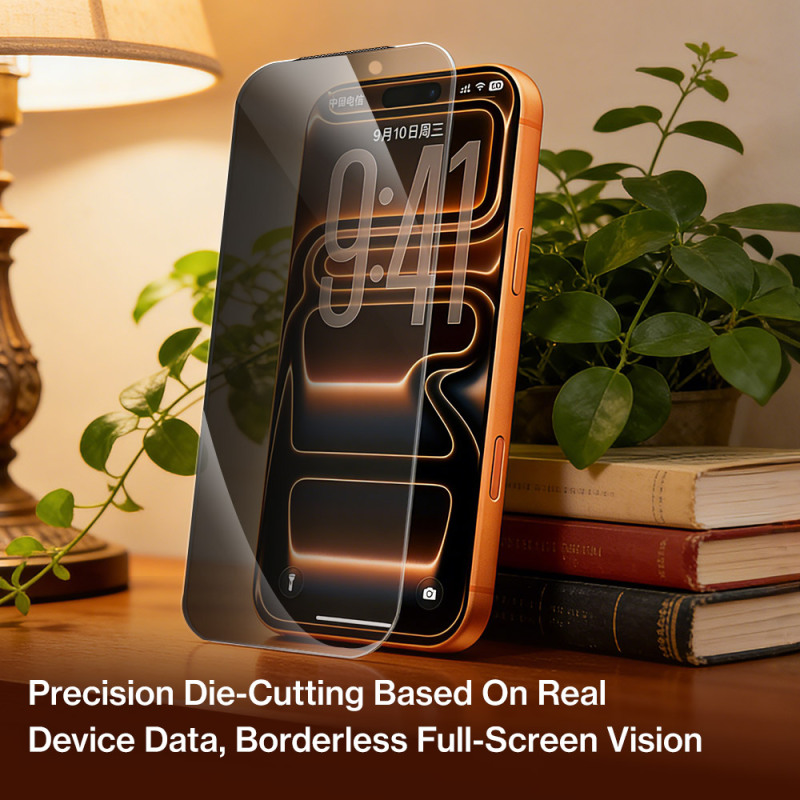
A screen protector and tempered glass are not necessarily competing product categories: “screen protector” is the broader category, while tempered glass describes a glass-based construction within it. For sourcing decisions, verify the actual material stack rather than relying on the product label. The Borderless Privacy Screen Protector, for example, is categorized as a phone screen protector but specifies high-alumina glass, privacy adhesive, and curved-edge configurations.
Make the Classification Decision Before Sample Approval
The practical difference for buyers is the level of detail communicated by each term. “Screen protector” states the product function but does not, by itself, confirm the substrate, thickness, adhesive, edge geometry, or privacy treatment. A tempered-glass description provides more construction context, but it still does not establish whether the product is suitable for a specific device or sales channel.
Key validation criteria:
- Confirm the substrate and adhesive combination for every quoted version.
- Test samples on the exact phone models included in the order.
- Evaluate privacy, display, touch, edge feel, and appearance together.
- Define measurable or observable acceptance points before production.
- Retain an approved reference sample for output comparison.
Validate Material Compatibility, Not Category Labels
The Borderless Privacy Screen Protector has two listed construction options. One combines 0.4 mm high-alumina glass with 28-degree privacy anti-static AB adhesive and a 120cc curve. The other uses 0.25 mm high-alumina glass with 150um privacy anti-static AB adhesive and a 60cc curve.
These should not be treated as interchangeable merely because both are sold under the same product name. A change in glass thickness, adhesive configuration, or curvature may affect installation behavior, edge transition, case clearance, and the finished user experience. Buyers should therefore request a sample matching the intended bulk construction rather than approving a convenient substitute.
Test Representative Samples on the Intended Devices
A representative test set should cover each ordered construction and the principal phone models in the purchasing plan. The goal is not only to confirm that the protector can be installed, but also to judge whether the completed output matches the target market’s expectations.
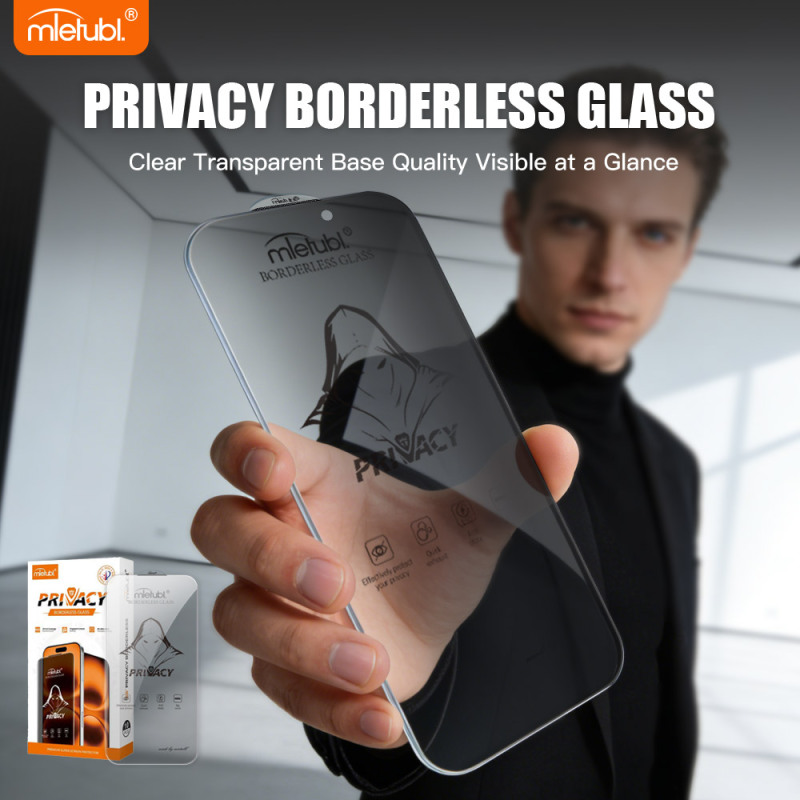
For this privacy model, sample review should include front-view clarity and side-view content shielding because the approved selling point is a micro-louver privacy layer designed to keep the display clear from the front while obscuring it from the side. The transparent borderless structure should also be checked for unwanted visual weight or display obstruction.
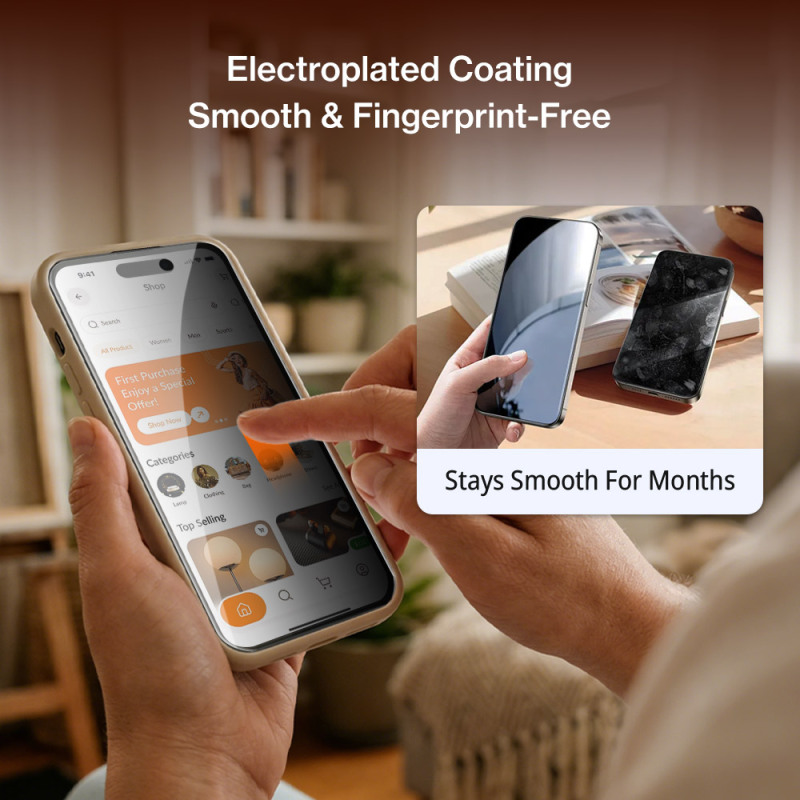
Installation testing should examine alignment, edge seating, and air evacuation to the perimeter. After installation, buyers can assess the smooth 2.5D-style edge transition, touch response, glass feel, fingerprint visibility, and oil residue under normal handling. These checks convert broad selling points into observable approval decisions without turning them into unsupported guarantees.
Define Output Acceptance Before Bulk Approval
A useful acceptance sheet should identify the approved device model, construction version, installation method, and viewing conditions. It can then record pass-or-fail observations for privacy angle behavior, front clarity, border appearance, edge fit, touch operation, surface finish, and visible installation defects.
The listed quality inspection method is GB/T2828.1. Buyers should still confirm the applicable sampling arrangement, defect classifications, and acceptance thresholds with the supplier before ordering. The standard name alone does not define which cosmetic or functional outcomes are acceptable for a particular brand.
For OEM or ODM projects, the approved sample should also reflect the selected branding, packaging, and product specification. Keeping that reference sample available can reduce ambiguity when finished output is inspected.
Common Questions
Is every phone screen protector made from tempered glass?
No. “Screen protector” identifies a broad product category and does not prove a specific material. Buyers should check the construction details. In this case, the privacy protector is listed as a screen protector and specifies high-alumina glass.
Can one sample approve both listed glass configurations?
It should not. The 0.4 mm and 0.25 mm versions use different adhesive and curvature configurations, so each intended construction should have its own representative approval sample.
What should matter most in privacy-screen sample acceptance?
Prioritize device fit, clear frontal viewing, effective side shielding, unobstructed display area, comfortable edges, reliable touch operation, and consistent installation output.
Conclusion
Do not choose between “screen protector” and “tempered glass” based on terminology alone. Confirm the precise glass, adhesive, and curvature combination, test it on representative devices, and approve the finished output against written acceptance criteria before committing to bulk production.
About Mietubl
Mietubl is a Guangzhou-based mobile accessories brand whose name reflects its guiding idea: Make It Easier To Use, Better Life. With roots in the mobile accessories industry dating to 1998 and the MIETUBL brand registered in 2010, the company focuses on products that make everyday digital use simpler and more practical.
Its portfolio includes screen protectors, intelligent screen protector cutting machines, film materials, data cables, chargers, power banks, and audio accessories. By combining design, product development, manufacturing, and channel support, Mietubl works with distributors and retailers serving a broad range of mobile accessory needs, with products exported to more than 120 countries and regions.
For product information, samples, or distribution opportunities, contact Marketing@mietubl.com or visit www.mietubl.com.
Was this article helpful?
Your feedback helps us improve future articles.