
For retailers evaluating a fully automatic screen protector applying and cutting machine, the MTB-CUT M688 brings film cutting, application, and UV curing into one guided service sequence. Staff select the required device model, prepare and cut the film, complete application, and use the built-in curing function before handover. It can simplify counter operations, but it should not be treated as a printing system for customized graphics.
How the In-Store Service Workflow Runs
The M688 is designed around a three-in-one process rather than separate cutting, application, and curing machines. A typical retail workflow can be organized as follows:
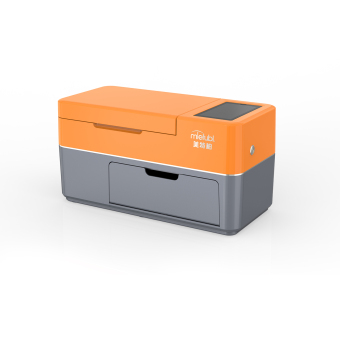
- Identify the customer’s phone or tablet model.
- Find the matching template through the machine interface or app.
- Load the selected film material and send the cutting instruction.
- Follow the standardized guidance to complete film application.
- Use the integrated UV curing function when the selected film process requires it.
This structure may help a store create a more consistent service routine, particularly when several employees share the same counter equipment.
Key buyer takeaways:
- Cutting, application, and UV curing are integrated into one machine.
- Guided operation can reduce reliance on an entirely manual fitting process.
- The device database supports broad phone and tablet service coverage.
- Custom image printing is outside the stated M688 feature set.
Where Model Selection Replaces Manual Design Setup
“Design” in this workflow primarily means selecting an existing device template, not drawing a cutting path from scratch. The M688 includes a database covering more than 60,000 device models, with daily cloud updates and support for offline cutting. This can be valuable for stores that serve a changing mix of devices and do not want to maintain a large library of cutting files manually.
Control is available through an app and the built-in operating system, while a 5.5-inch HD touchscreen provides an on-machine interface. Buyers should still confirm how model search, update access, user permissions, and offline file availability fit their store network and staff procedures.
How Cutting, Applying, and Curing Stay in One Sequence
The machine supports a maximum cutting size of 14.6 inches, making it relevant to both phones and compatible tablets within that limit. Its stated cutting precision is 0.1 mm, with a cutting speed of 500 mm/s. These figures describe machine capability, but the finished service result can also depend on correct template selection, film compatibility, blade condition, surface preparation, and operator handling.
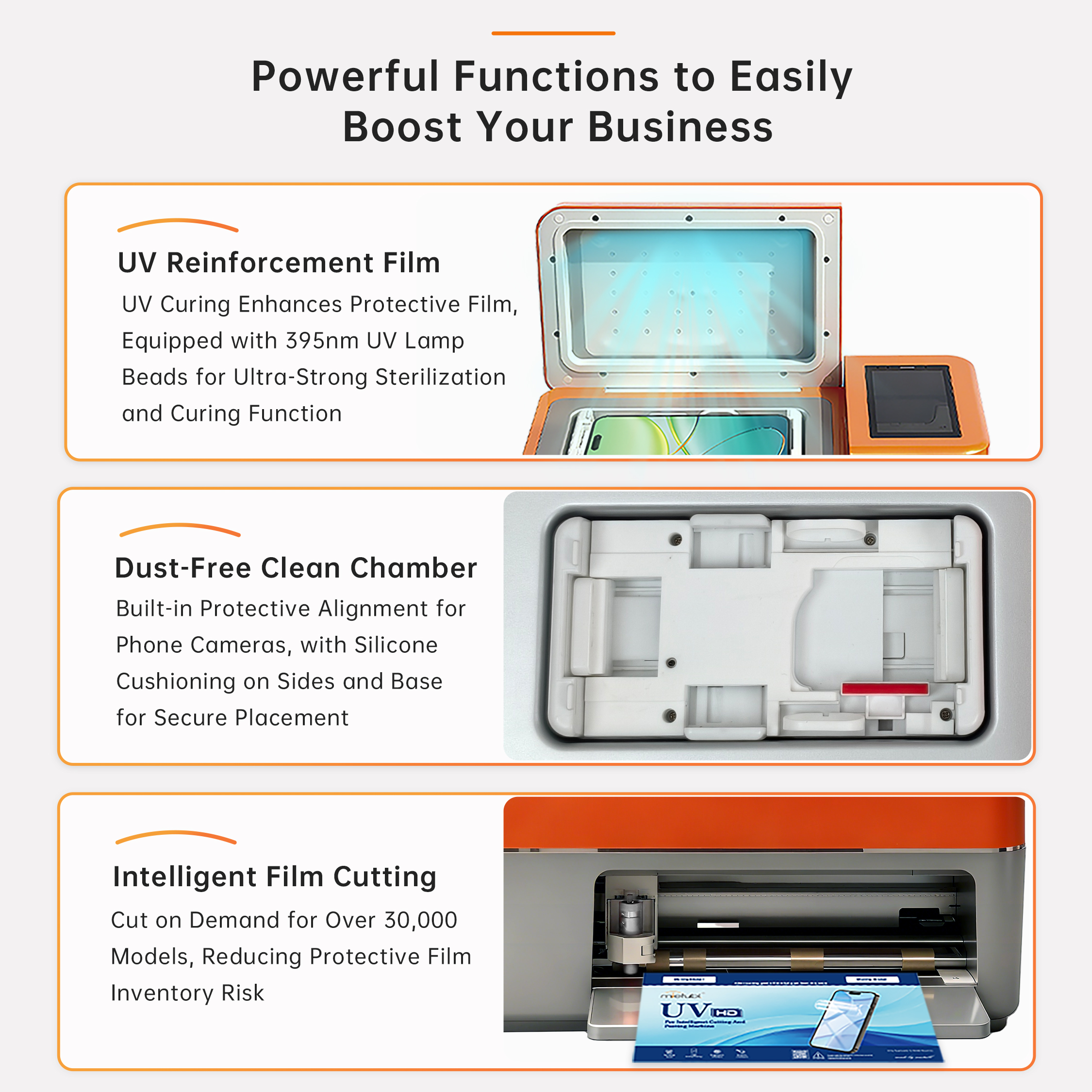
For retail deployment, the more important workflow benefit is continuity. Staff do not need to move the job between a dedicated cutter and a separate UV curing device. That may reduce equipment occupation and unnecessary counter movement while keeping the customer order within one defined operating process.
Where Printing Fits—and Where It Does Not
The approved M688 functions cover cutting, film application, and UV curing; they do not identify an integrated printer. Stores selling standard clear, privacy, matte, or other cut-to-size films can position the machine within a direct service workflow. Retailers offering personalized back films, photographs, labels, or printed graphics would need a separate printing stage or a different print-and-cut solution.
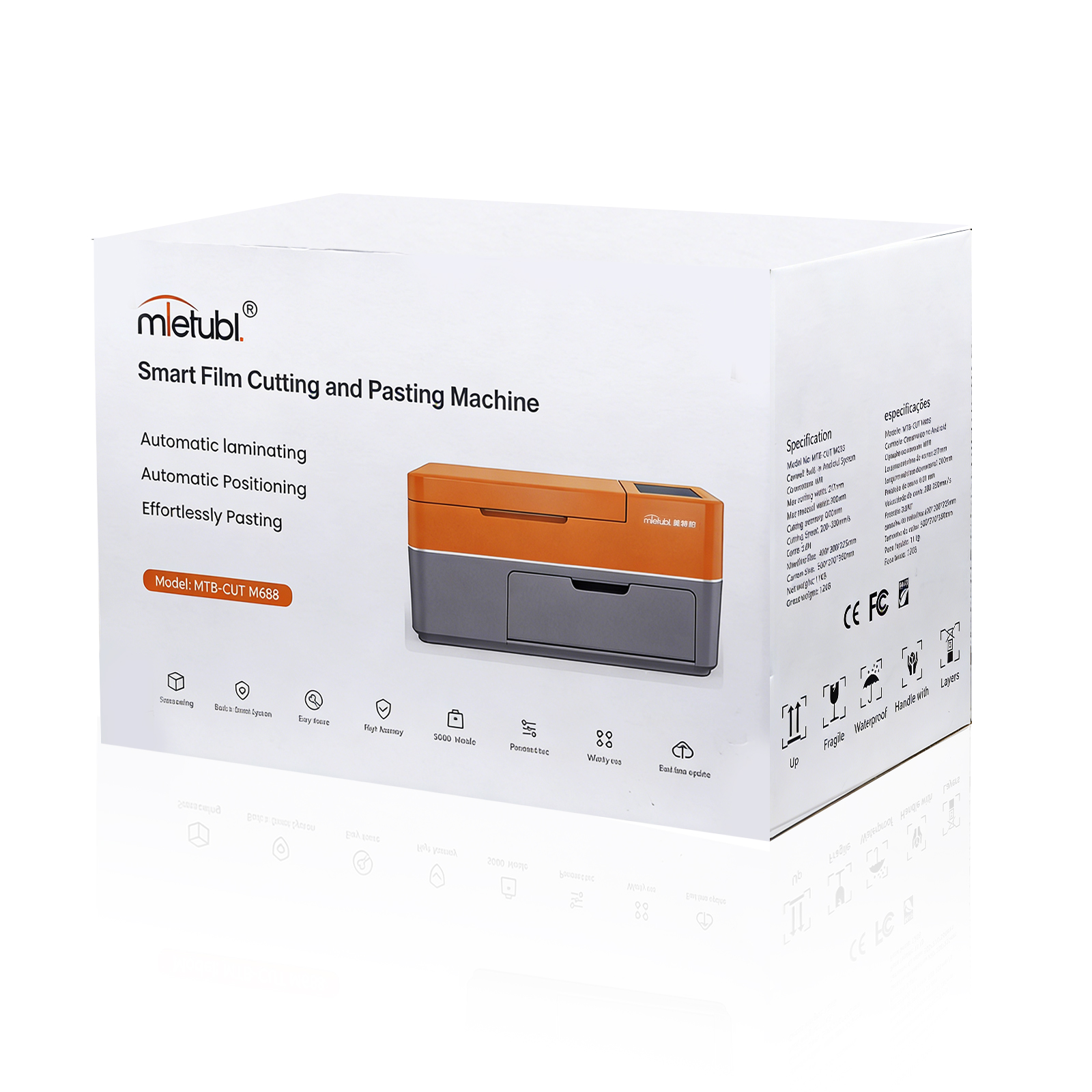
Professional buyers should therefore define the intended service menu before procurement. If the main requirement is on-demand screen film fitting, the M688 can consolidate the relevant steps. If customers expect custom colors or uploaded artwork, printing equipment and its associated media workflow should be evaluated separately.
Common Questions About the Retail Workflow
Can staff operate the M688 without relying only on a phone app?
The listed control methods include both app control and a built-in operating system. Buyers should test the preferred operating route during evaluation, especially if store policies restrict staff phone use.
Does “fully automatic” mean the entire service is unattended?
No unattended operation is stated. It is more accurate to treat the M688 as an integrated, guided machine that still requires staff to identify the device, load material, manage application, and check the finished result.
What should a retailer validate before installing it at the counter?
Confirm the store’s common device mix, compatible film materials, available workspace, network access, staff training procedure, and whether UV curing is required for the films being offered.
Conclusion
The MTB-CUT M688 is a practical choice when the purchasing goal is to organize model selection, film cutting, application, and UV curing into a repeatable in-store service workflow. Buyers needing personalized printed products should plan a separate printing process rather than expecting the M688 to cover that function.
About Mietubl
Mietubl is a Guangzhou-based mobile accessories brand whose name reflects its guiding idea: Make It Easier To Use, Better Life. With roots in the mobile accessories industry dating to 1998 and the MIETUBL brand registered in 2010, the company focuses on products that make everyday digital use simpler and more practical.
Its portfolio includes screen protectors, intelligent screen protector cutting machines, film materials, data cables, chargers, power banks, and audio accessories. By combining design, product development, manufacturing, and channel support, Mietubl works with distributors and retailers serving a broad range of mobile accessory needs, with products exported to more than 120 countries and regions.
For product information, samples, or distribution opportunities, contact Marketing@mietubl.com or visit www.mietubl.com.
Was this article helpful?
Your feedback helps us improve future articles.