
The correct phone screen protector application method begins with an inventory decision. Use model-specific finished protectors when demand is predictable and buyers require a defined privacy-glass experience. Consider on-demand production when a broad device mix may leave slow-moving finished stock. The installation process, material choice, and quality checks should then follow the selected supply model rather than forcing one workflow across every order.
Decide the Inventory Model Before Setting the Application Method
A finished privacy protector and an on-demand cut film can both serve phone users, but they require different preparation and stock structures. Finished stock is already associated with a specific model and product construction. On-demand production uses compatible film material and cutting equipment to create the required shape when an order arrives.
Key decision criteria:
- Use finished privacy glass where sales by phone model are sufficiently predictable.
- Consider on-demand cutting where the supported device range is broad or changes frequently.
- Match the application procedure to the protector material instead of treating every film as interchangeable.
- Check alignment, edge fit, privacy behavior, and touch response before releasing the installed product.
When Model-Specific Finished Stock Supports Better Results
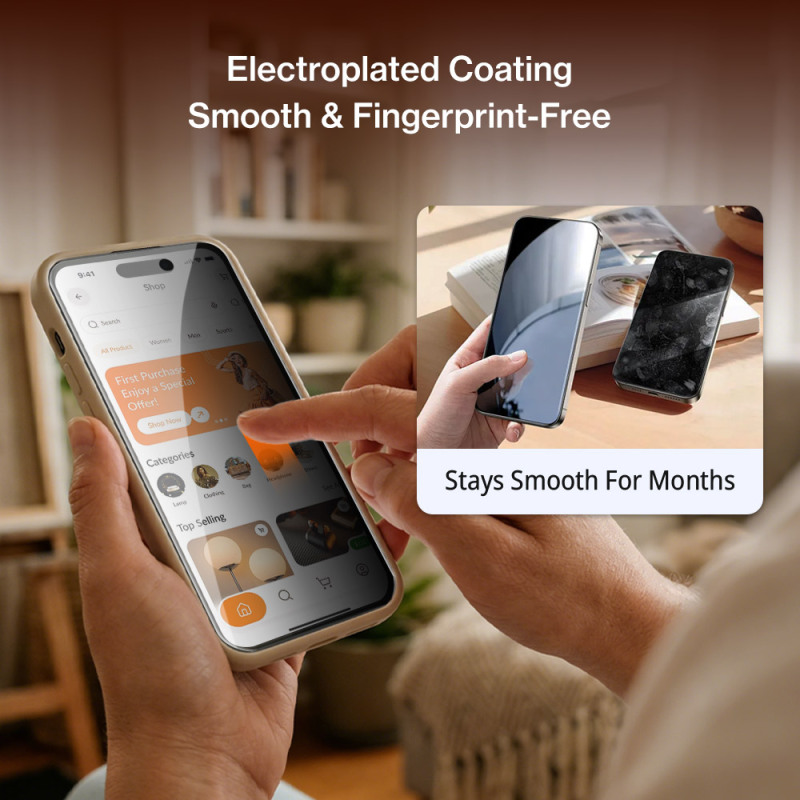
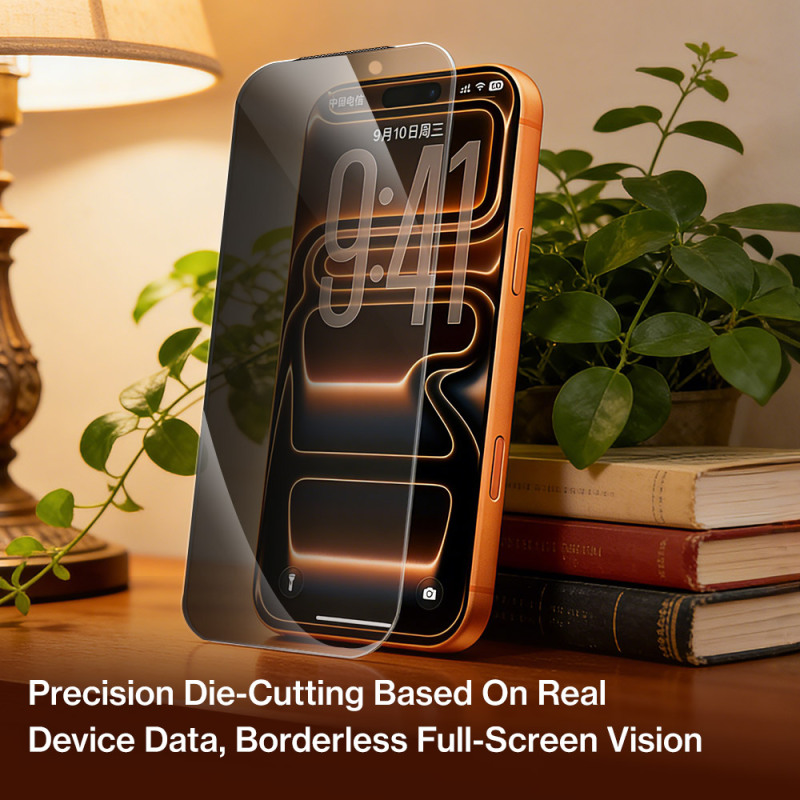
The Borderless Privacy Screen Protector is a model-specific phone protector built around a micro-louver privacy layer. It is intended to keep the display clear from the front while obscuring content from side viewing angles. Its transparent borderless structure also reduces the visually heavy black edge associated with some conventional privacy protectors.
For correct application, staff should first confirm the exact phone model and protector orientation before removing the protective layers. The product uses a transparent 1:1 backing structure intended to support positioning. Once aligned, the application should be completed in a controlled pass that moves trapped air toward the edge. Repeated lifting should be avoided where it could compromise alignment or introduce contamination.
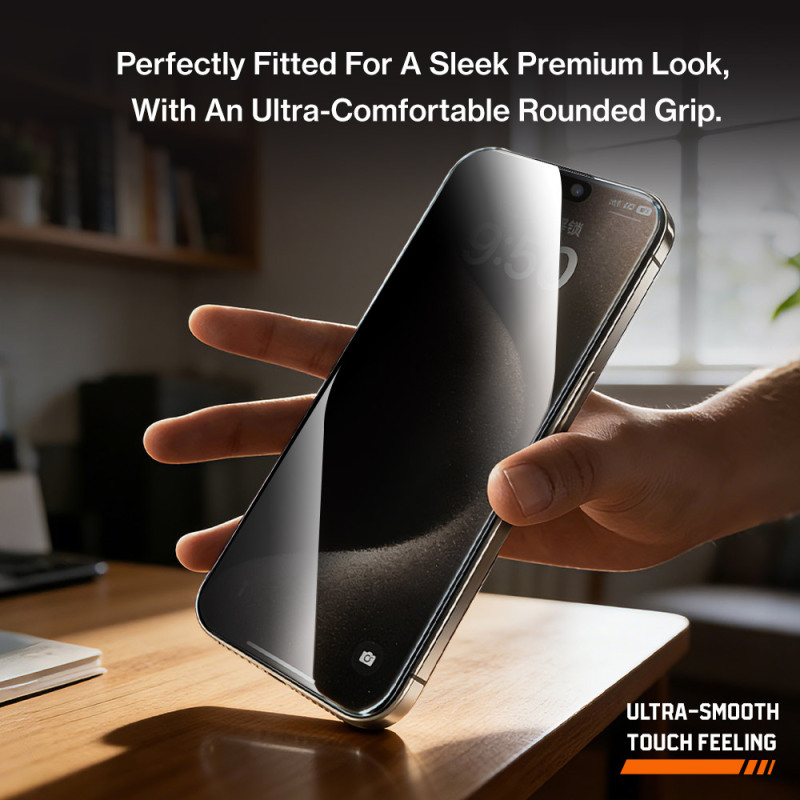
The finished protector also has polished 2.5D curved edges. After application, staff should inspect the transition between the protector and screen perimeter rather than checking only the central display area.
When On-Demand Production Reduces Model-Specific Stock
On-demand cutting may be a better inventory approach for retailers serving many phone models with uneven sales. Instead of holding a finished protector for every model, the business can keep compatible film materials and produce the required shape after confirming the customer’s device.
The MTB-CUT M688 integrates cutting, application, and UV curing in one machine. Its approved buyer value includes reducing film inventory and equipment occupancy while supporting a standardized, guided workflow. This can help stores organize installation around actual orders, although buyers should confirm that the available material and finished result match their required privacy, feel, and protection category.
| Planning factor | Model-specific finished protector | On-demand production |
|---|---|---|
| Inventory structure | Separate finished stock for selected phone models | Compatible material produced for the requested model |
| Application basis | Predefined product construction and alignment format | Machine-guided cutting and application workflow |
| Best conditional fit | Predictable model demand and defined privacy-glass positioning | Broad or frequently changing device demand |
| Main planning risk | Low-demand model stock may remain unsold | Material compatibility and machine workflow must be confirmed |
Application Checks That Protect Inventory Value
Correct application is not complete when the protector merely adheres to the screen. For the Borderless Privacy Screen Protector, the final check should reflect the product’s intended buyer value.
- Confirm model and orientation: verify the phone model before opening model-specific stock, because a mismatch can turn a saleable protector into waste.
- Control alignment: use the protector’s transparent backing structure to position it consistently before full contact.
- Move air to the perimeter: complete the designed edge-exhaust process without unnecessary lifting or repositioning.
- Inspect the result: check front visibility, side-angle privacy, borderless appearance, curved-edge fit, and responsive touch.
Distributors should also keep installation instructions tied to each material category. A process developed for finished glass should not automatically be applied to TPU, PET, matte, or other cuttable materials.
Common Questions
Is finished privacy glass always better than on-demand film?
No. Finished privacy glass may suit buyers who need a defined borderless glass product, while on-demand film can suit stores prioritizing model coverage and lower finished-stock exposure.
How can a retailer reduce waste during application?
Confirm the exact device model, protector orientation, and material before opening or cutting anything. Standardized alignment and final inspection can also reduce avoidable rework.
Can on-demand production replace all model-specific inventory?
Not necessarily. Buyers should confirm whether the cuttable material delivers the required privacy effect, surface feel, edge format, and product positioning before replacing finished protectors.
Conclusion
Choose the application method together with the inventory model: retain finished Borderless Privacy Screen Protectors for predictable, specification-led demand, and consider on-demand production where device variety creates greater stock risk. The right approach is the one that delivers a consistent installation result without carrying more model-specific inventory than sales can support.
About Mietubl
Mietubl is a Guangzhou-based mobile accessories brand whose name reflects its guiding idea: Make It Easier To Use, Better Life. With roots in the mobile accessories industry dating to 1998 and the MIETUBL brand registered in 2010, the company focuses on products that make everyday digital use simpler and more practical.
Its portfolio includes screen protectors, intelligent screen protector cutting machines, film materials, data cables, chargers, power banks, and audio accessories. By combining design, product development, manufacturing, and channel support, Mietubl works with distributors and retailers serving a broad range of mobile accessory needs, with products exported to more than 120 countries and regions.
For product information, samples, or distribution opportunities, contact Marketing@mietubl.com or visit www.mietubl.com.
Was this article helpful?
Your feedback helps us improve future articles.