
For inventory planning, use on-demand cut screen film to cover the long tail of device models, and hold finished tempered-glass protectors for models with predictable sales. A screen protector is the broader category; tempered glass is one type within it. The practical buying difference is therefore not only material—it is whether stock can remain generic until sale or must be committed to a specific phone model in advance.
Make the inventory decision before choosing the protector
Distributors and retailers should begin with demand concentration. If sales are spread across many phone models, model-specific finished stock can create slow-moving SKUs. Cut-to-order film can shift part of that exposure into adaptable sheet material. Where customers actively request stronger glass construction, premium feel, or impact-focused positioning, finished tempered glass may deserve dedicated stock.
- Use on-demand film to extend coverage across lower-volume and newly introduced models.
- Stock finished glass where model-level demand is sufficiently predictable.
- Separate the value propositions: flexible-film availability should not be presented as equivalent to glass impact performance.
- Plan replenishment by model, not only by the total number of protectors sold.
What differs between flexible film and tempered glass?
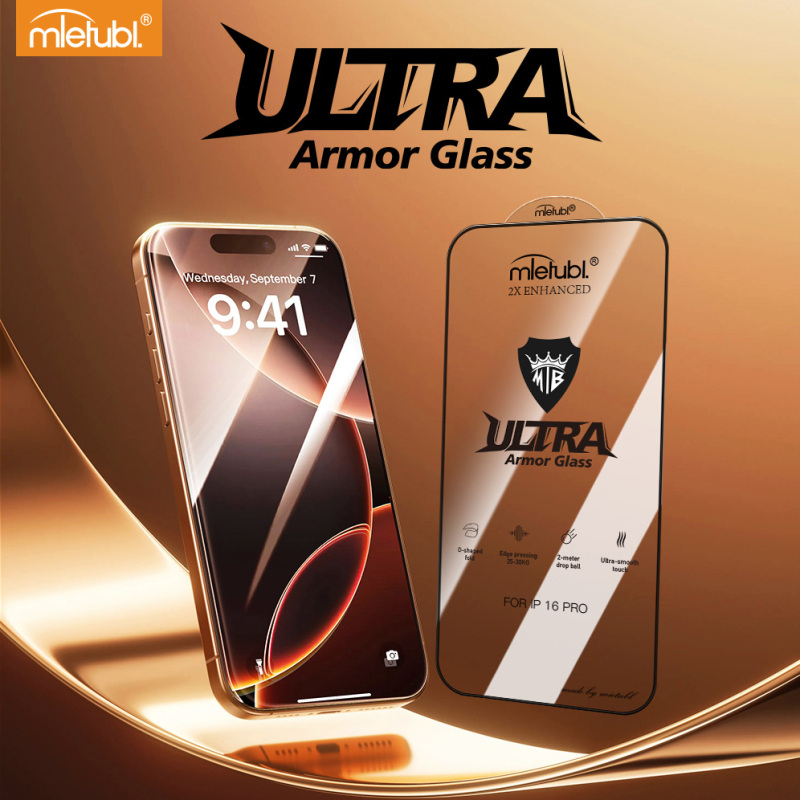
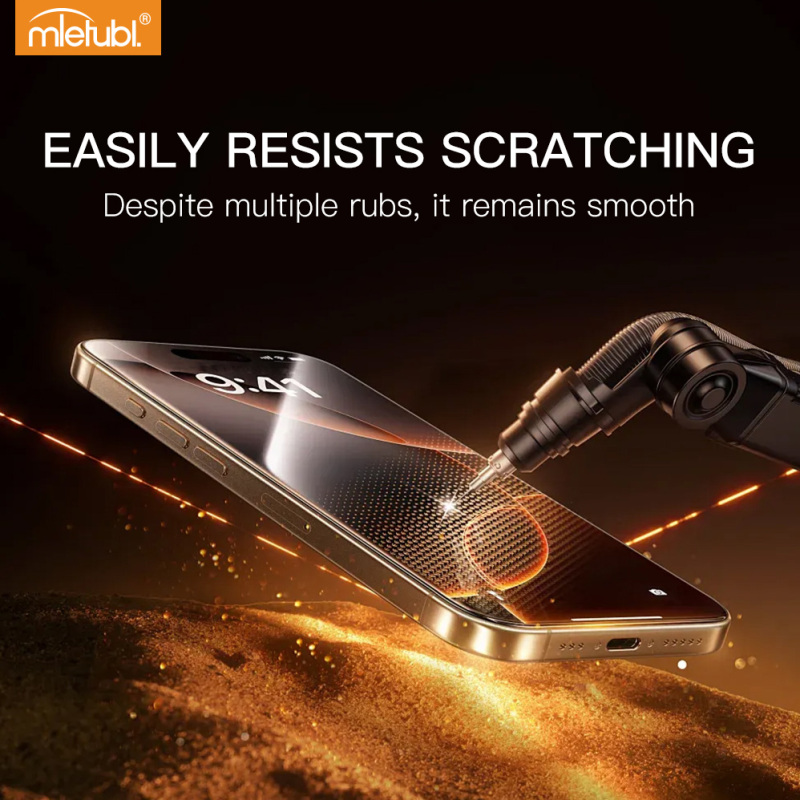
In procurement discussions, “screen protector” often refers to cuttable flexible materials, while “tempered glass” refers to a finished glass protector. Cuttable materials supported by Mietubl equipment include TPU, PET, clear, matte, and privacy options. The Xuanjia Anti-Drop Protector instead uses dual-strengthened high-aluminum glass and is positioned around flexibility, breakage resistance, scratch protection, and impact protection.
| Planning factor | Cut-to-order flexible film | Finished tempered glass |
|---|---|---|
| Inventory form | Generic material is cut after the device model is selected | Fit and finish are prepared for a particular model |
| Available positioning | May include clear, matte, privacy, TPU, or PET choices | May emphasize glass feel, scratch resistance, and impact protection |
| SKU exposure | Can reduce the need for finished stock across every supported model | Requires closer forecasting by model and variant |
| Recommended role | Long-tail coverage and immediate service | Proven-volume models and differentiated glass offers |
Where on-demand production reduces model-specific stock
A compatible cutting machine can produce protectors when the customer selects a device, rather than requiring the seller to pre-stock every finished shape. Mietubl cutting systems are designed around cloud-updated model databases and support multiple device and film categories. This approach can convert part of the inventory burden from hundreds of model-specific finished items into a smaller selection of material types.
The benefit is conditional: buyers should confirm that the available database covers their target devices and that the selected material supports the intended clear, matte, or privacy offer. On-demand cutting also does not automatically reproduce the structure, edge treatment, or impact positioning of a finished glass protector.
Where finished tempered glass earns inventory space
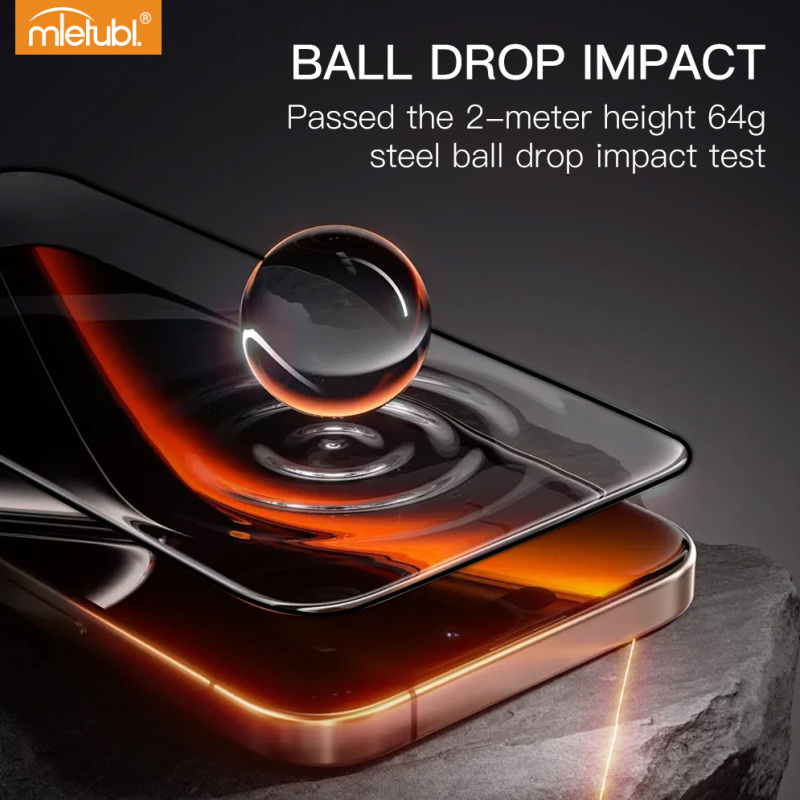
The Xuanjia Anti-Drop Protector provides a more specialized finished-glass proposition. Its approved product information describes 0.4 mm high-aluminum glass with Mohs 6 surface hardness and testing using a 64 g steel ball dropped from approximately 2 meters. Its fine printed border is based on real-device fit testing to approach the screen edge without creating a visible white border.
These features can support a higher-value offer where customers prioritize glass feel and impact protection. However, precise fit also means each phone model may become a separate inventory commitment. The listed minimum order is 500 pieces and the listed delivery time is 30 days, so buyers should align orders with model-level sales forecasts rather than category-wide demand alone.
Common Questions
Are all phone screen protectors tempered glass?
No. “Screen protector” is an umbrella term covering flexible TPU and PET films as well as glass products. Buyers should identify the actual material and protection proposition instead of relying on the category name.
Can on-demand film completely replace finished tempered glass?
Not necessarily. It can improve model coverage and reduce finished-SKU exposure, but retailers may still need tempered glass where customers expect glass construction, defined edge finishing, or impact-focused protection.
How should a distributor divide inventory between the two?
Finished glass should be considered for stable, high-volume models. On-demand material may be better for fragmented demand, new releases, and older devices. Buyers should review sales by model and finish before setting the split.
Conclusion
The strongest inventory plan is usually a conditional mix: use on-demand flexible film to maintain broad device coverage, then allocate finished tempered-glass stock to models where demand justifies the commitment. This keeps availability high without treating every phone model as an equally valuable finished-goods SKU.
About Mietubl
Mietubl is a Guangzhou-based mobile accessories brand whose name reflects its guiding idea: Make It Easier To Use, Better Life. With roots in the mobile accessories industry dating to 1998 and the MIETUBL brand registered in 2010, the company focuses on products that make everyday digital use simpler and more practical.
Its portfolio includes screen protectors, intelligent screen protector cutting machines, film materials, data cables, chargers, power banks, and audio accessories. By combining design, product development, manufacturing, and channel support, Mietubl works with distributors and retailers serving a broad range of mobile accessory needs, with products exported to more than 120 countries and regions.
For product information, samples, or distribution opportunities, contact Marketing@mietubl.com or visit www.mietubl.com.
Was this article helpful?
Your feedback helps us improve future articles.