
Not for a drop-protection-led rollout without additional verification. Borderless Privacy Film is designed around privacy, clean screen coverage, and installation usability, but the approved product data does not provide a drop-test or shatter-resistance result for this item. Retailers can deploy it as a privacy screen protector after checking model fit and installation workflow; buyers requiring documented impact protection should confirm that evidence separately before purchase or promotion.
Readiness starts with the product claim
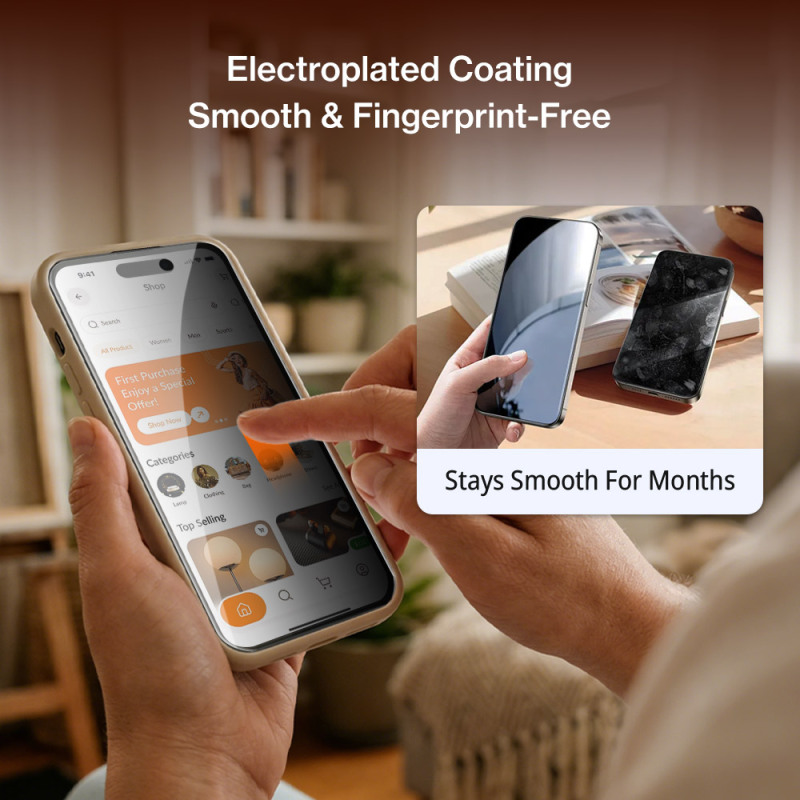
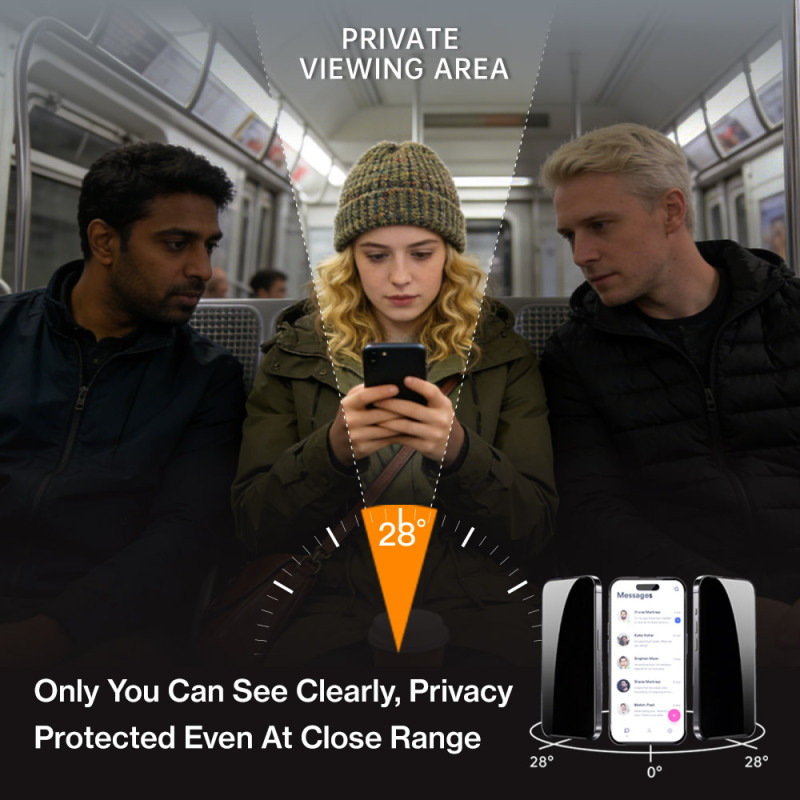
The central procurement question is whether the product matches the promise made at the counter. Its approved selling points support a 28° privacy effect, a transparent borderless appearance, smooth rounded edges, responsive touch, and reduced fingerprint residue. These attributes can support a privacy-focused assortment, but they should not be expanded into an unsupported anti-drop guarantee.
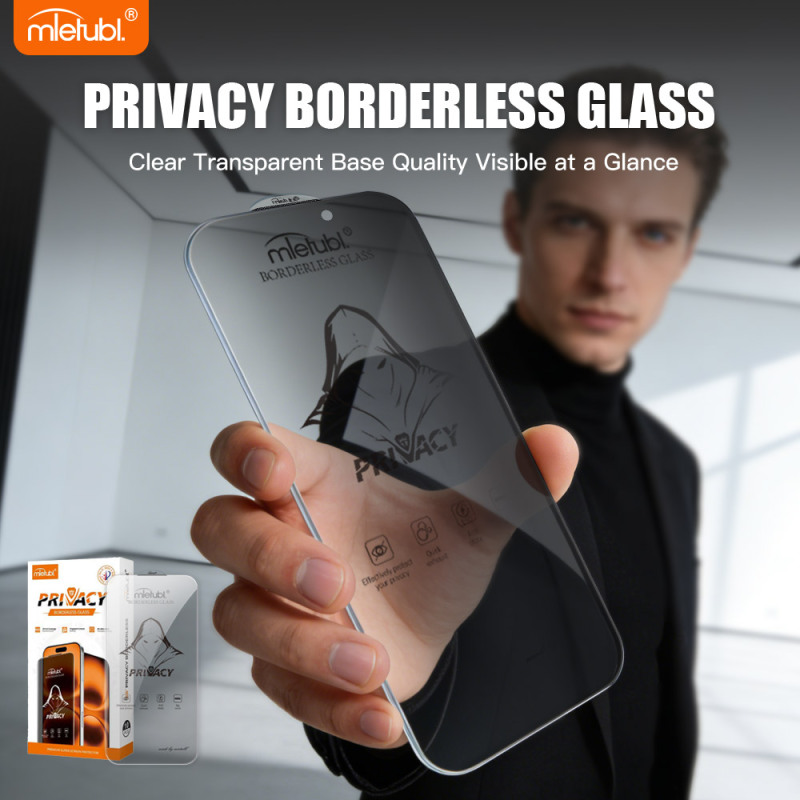
- Position it for privacy: demonstrate clear frontal viewing and reduced side visibility.
- Do not assume impact validation: request separate evidence if shatter and drop resistance are mandatory.
- Confirm device fit: test the selected glass configuration on each intended phone model.
- Pilot the installation process: measure staff consistency before a multi-store release.
Counter-space and operating-condition checks
A retail counter should provide a dry, uncluttered work area with enough room for the handset, alignment materials, cleaning tools, and discarded liners. The product uses anti-static privacy AB adhesive, which may help control particle attraction during fitting, but it does not remove the need for surface preparation and dust management.
The transparent borderless structure also makes alignment important. Before rollout, installers should check the protector under the same lighting normally used at the counter. Bright overhead reflections may make edge position, trapped particles, or incomplete adhesion easier to identify before the customer leaves.
Choose the configuration before training staff
The product information lists two glass configurations: a 0.4 mm option with 120cc curvature and a 0.25 mm option with 60cc curvature. The thicker configuration also lists one-pass air evacuation toward the edge. These differences should be treated as model-selection inputs rather than universal performance rankings.
Buyers should obtain the model list for the intended assortment and test each protector with representative devices and cases. A configuration that fits one screen shape may not produce the same edge result on another. Case clearance, sensor areas, screen coverage, and edge adhesion should therefore be included in the approval sample review.
Staff workflow and rollout checks
Installation training should use one repeatable sequence: identify the phone model, inspect the screen, clean it, align the protector, lower it without shifting, allow the adhesive to evacuate air, and inspect every edge. Staff should then test frontal visibility, side privacy, touch response, and case clearance.
For a controlled launch, record installation time, rework causes, particle contamination, alignment errors, and edge-lift observations. These are recommended operational checks, not stated product performance figures. If multiple stores or distributors are involved, the same acceptance checklist should be used at every location so that feedback can be compared consistently.
Common Questions
Can this product be sold as a shatter- and drop-resistant protector?
Not solely from the supplied information. It is a glass phone protector, but no impact-test or drop-resistance result is provided for this specific product. Buyers should obtain supporting evidence before making that claim.
What should staff verify during a counter trial?
Check model identification, alignment, dust control, edge adhesion, case clearance, touch operation, frontal clarity, and side-angle privacy. The trial should use the actual devices and cases common in the target store.
Does the borderless design simplify deployment?
It can support a lighter appearance by reducing the heavy black border associated with some privacy protectors. However, staff should still verify screen coverage and alignment because a transparent edge may make positioning errors less obvious during placement.
Conclusion
Borderless Privacy Film is a reasonable candidate for a privacy-led retail pilot when counter conditions, device compatibility, and staff inspection steps are controlled. It should enter a shatter- or drop-protection program only after the buyer confirms suitable impact evidence and completes a representative installation trial.
About Mietubl
Mietubl is a Guangzhou-based mobile accessories brand whose name reflects its guiding idea: Make It Easier To Use, Better Life. With roots in the mobile accessories industry dating to 1998 and the MIETUBL brand registered in 2010, the company focuses on products that make everyday digital use simpler and more practical.
Its portfolio includes screen protectors, intelligent screen protector cutting machines, film materials, data cables, chargers, power banks, and audio accessories. By combining design, product development, manufacturing, and channel support, Mietubl works with distributors and retailers serving a broad range of mobile accessory needs, with products exported to more than 120 countries and regions.
For product information, samples, or distribution opportunities, contact Marketing@mietubl.com or visit www.mietubl.com.
Was this article helpful?
Your feedback helps us improve future articles.