
Buyers should validate Super D tempered glass removal on the exact phone models and product variants they plan to sell. Do not approve the product from installation appearance alone: its antistatic AB adhesive thickness varies by model, so a representative sample test is the most reliable way to assess removal behavior, residue, edge access, and the condition of the phone screen after removal.
Removal Approval Starts With Representative Samples
The central procurement question is whether production samples can be removed consistently under the conditions expected in retail, repair, or after-sales service. A sample set should represent the actual model list rather than one convenient flat-screen device.
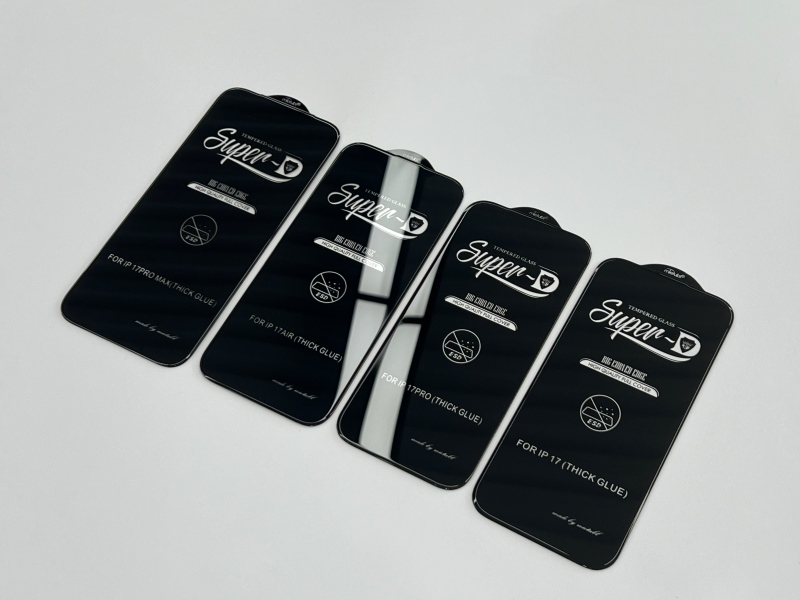
- Test the exact protector SKU and matching phone model.
- Include different screen shapes and edge profiles from the planned assortment.
- Use a consistent installation, dwell period, removal method, and inspection process.
- Record residue, glass integrity, edge-lifting behavior, and screen condition.
- Approve output against written acceptance criteria, not operator impressions.
Why Material Compatibility Changes Removal Risk
Super D uses 0.4 mm high-alumina glass with 280–380 um antistatic AB adhesive. The specified adhesive thickness depends on the phone model. This variation makes model-level compatibility important: a result from one sample should not automatically be applied to every SKU in a mixed-model order.
The product also uses a 120cc curvature and is positioned around 3D hot-bending, full-screen coverage, and precise fit. These characteristics can affect how easily an operator accesses an edge during removal. Buyers should therefore evaluate the complete glass, adhesive, curvature, and device combination rather than treating the adhesive as an isolated material.
Build a Repeatable Removal-Test Matrix
A useful validation matrix should cover both ordinary and challenging models in the intended range. For each sample, identify the phone model, protector SKU, adhesive specification, installer, removal operator, and observed outcome. Keep the method stable so differences are more likely to reflect the sample rather than inconsistent handling.
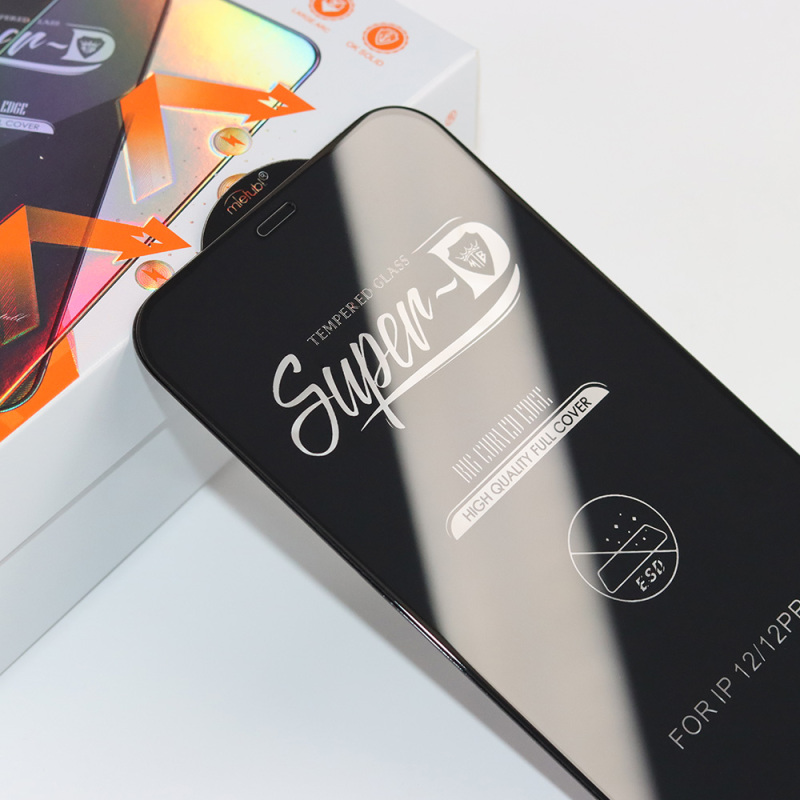
The test should begin with confirmation that the protector was installed correctly. Super D is specified for one-pass air evacuation to the edge, while its AB adhesive is presented as supporting adsorption and bubble evacuation. A poorly installed sample may produce a misleading removal result and should be recorded separately rather than treated as normal output.
Buyers planning OEM or ODM orders should perform this validation with samples that represent the intended model list and construction. A generic sample can support initial screening, but it should not replace approval of the order-specific assortment.
Define Acceptable Post-Removal Output
Acceptance criteria should describe what inspectors must observe after the tempered glass is removed. Relevant checks may include whether the protector remains controlled during removal, whether adhesive residue is visible, whether the screen requires additional cleaning, and whether the device surface shows any unacceptable change.

Set separate classifications for pass, conditional pass, and fail. Photographs under consistent lighting can support comparisons, while written notes should distinguish isolated handling errors from repeatable material or fit issues. The approved quality method is GB/T2828.1, but buyers should still define removal-specific defects and acceptance boundaries in the purchase specification.
Removal results should also be reviewed alongside the intended buyer value. Super D is offered with scratch-resistant tempered glass, a fingerprint-resistant coating, full-screen fit, and case compatibility. These selling points should be confirmed without allowing installation benefits to override unacceptable removal output.
Common Questions About Tempered Glass Removal
Can one phone model represent the entire order?
No. Because the specified AB adhesive thickness changes according to model, buyers should test representative samples across the actual assortment, especially where screen curvature or edge geometry differs.
Should buyers test removal immediately after installation?
An immediate test may be useful for process screening, but buyers should also define a representative installed condition for approval. The timing must remain consistent across compared samples, and any required dwell period should be agreed with the supplier.
What evidence should be retained after testing?
Keep the model and SKU identification, sample quantity, installation record, removal conditions, defect classification, photographs, and final disposition. This creates a clearer basis for production acceptance and after-sales review.
Conclusion
Super D tempered glass should be approved for removal only after exact-model samples meet documented output criteria. A controlled test covering adhesive compatibility, screen geometry, residue, and post-removal condition gives distributors and retailers a stronger decision basis than relying on installation quality or a single demonstration sample.
About Mietubl
Mietubl is a Guangzhou-based mobile accessories brand whose name reflects its guiding idea: Make It Easier To Use, Better Life. With roots in the mobile accessories industry dating to 1998 and the MIETUBL brand registered in 2010, the company focuses on products that make everyday digital use simpler and more practical.
Its portfolio includes screen protectors, intelligent screen protector cutting machines, film materials, data cables, chargers, power banks, and audio accessories. By combining design, product development, manufacturing, and channel support, Mietubl works with distributors and retailers serving a broad range of mobile accessory needs, with products exported to more than 120 countries and regions.
For product information, samples, or distribution opportunities, contact Marketing@mietubl.com or visit www.mietubl.com.
Was this article helpful?
Your feedback helps us improve future articles.