
The MTB-CUT M888 should be approved through representative sample testing rather than specifications alone. Its integrated printing and cutting workflow may reduce equipment and operating steps, but buyers still need to verify their actual media, artwork, and finished products. Test samples should cover the intended product range, difficult designs, and normal production handling, with acceptance criteria agreed before order approval.
Why Sample Validation Should Lead the Buying Decision
The M888 combines printing and contour cutting in one machine. It is positioned for phone back films, protective films, photos, labels, greeting cards, and other customized products. However, application range does not by itself confirm compatibility with every substrate, coating, adhesive layer, or supplier batch.
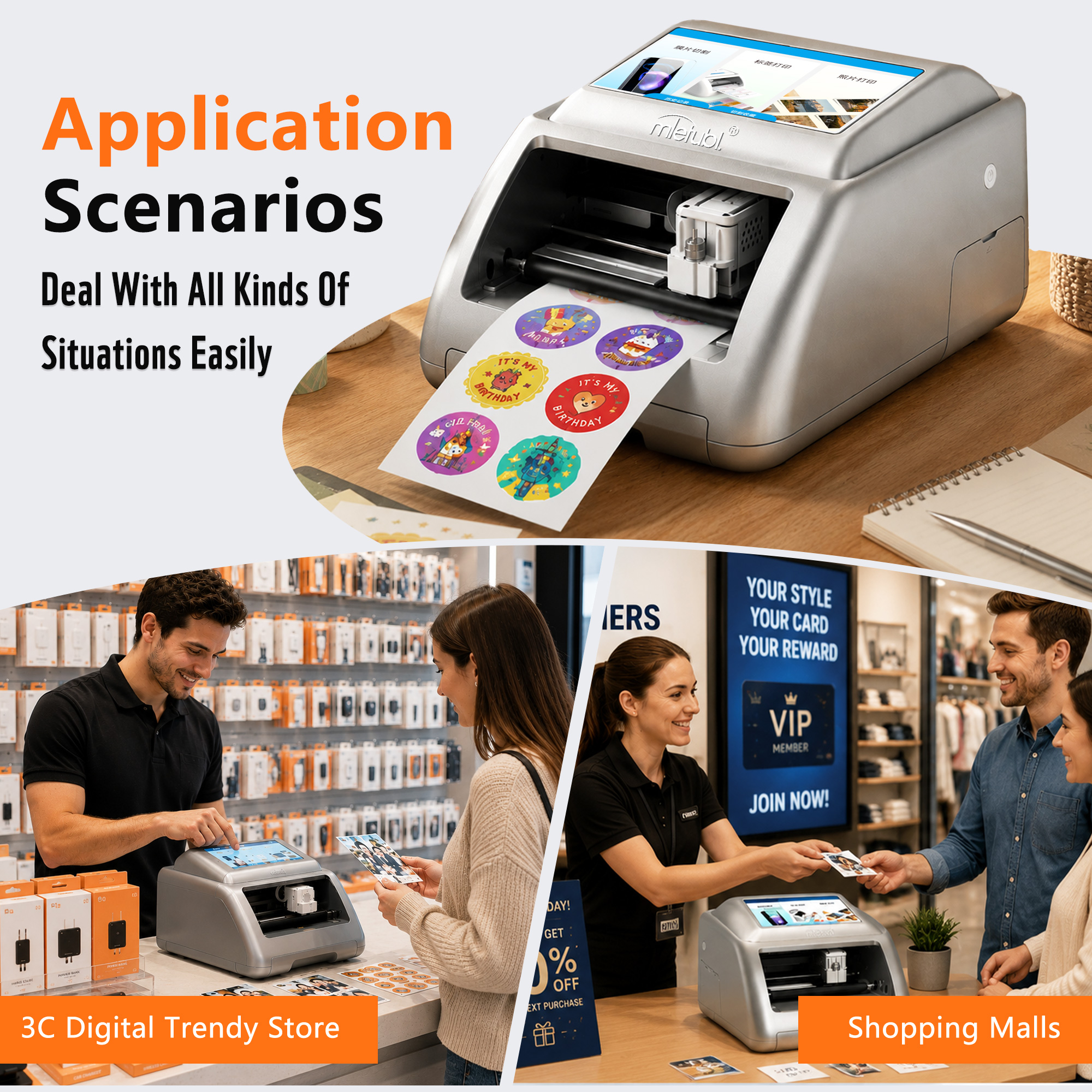
A buyer should therefore treat the product list as a starting point for validation. The strongest evidence is a sample produced with the same media, artwork, and finishing conditions planned for daily use.
- Test actual media: Use production-intent substrates rather than convenient substitute sheets.
- Include difficult designs: Select fine contours, curves, corners, and image areas that reveal alignment problems.
- Define acceptance first: Agree how print appearance, cut position, edge quality, and handling will be judged.
- Repeat key samples: Confirm that an acceptable result is reproducible, not an isolated output.
Build a Representative Material Compatibility Test
The supplied information specifies a 160 mm feed width, a 138 mm cutting width, and a 100 × 148 mm paper size. Buyers should first confirm that every planned sample fits these operating dimensions. Media thickness, surface treatment, liner construction, and adhesive behavior are not stated, so they should be verified directly rather than assumed.
A practical sample set may include the most frequently sold item, the highest-value item, and the media considered most difficult to process. If several suppliers provide similar media, test at least one sample from each relevant source because apparently similar materials can behave differently during feeding, printing, cutting, or removal from the liner.
For printed products, inspect color appearance, surface condition, and resistance to the handling expected in the sales environment. Any requirement for water or fade resistance should be converted into a defined buyer test with an agreed exposure method and pass threshold.
Define Output Acceptance Before Reviewing Samples
The M888 is specified with 300 DPI resolution and approximately 0.1 mm contour-cutting precision. These figures help establish the test plan, but procurement acceptance should be based on the finished sample rather than a specification in isolation.
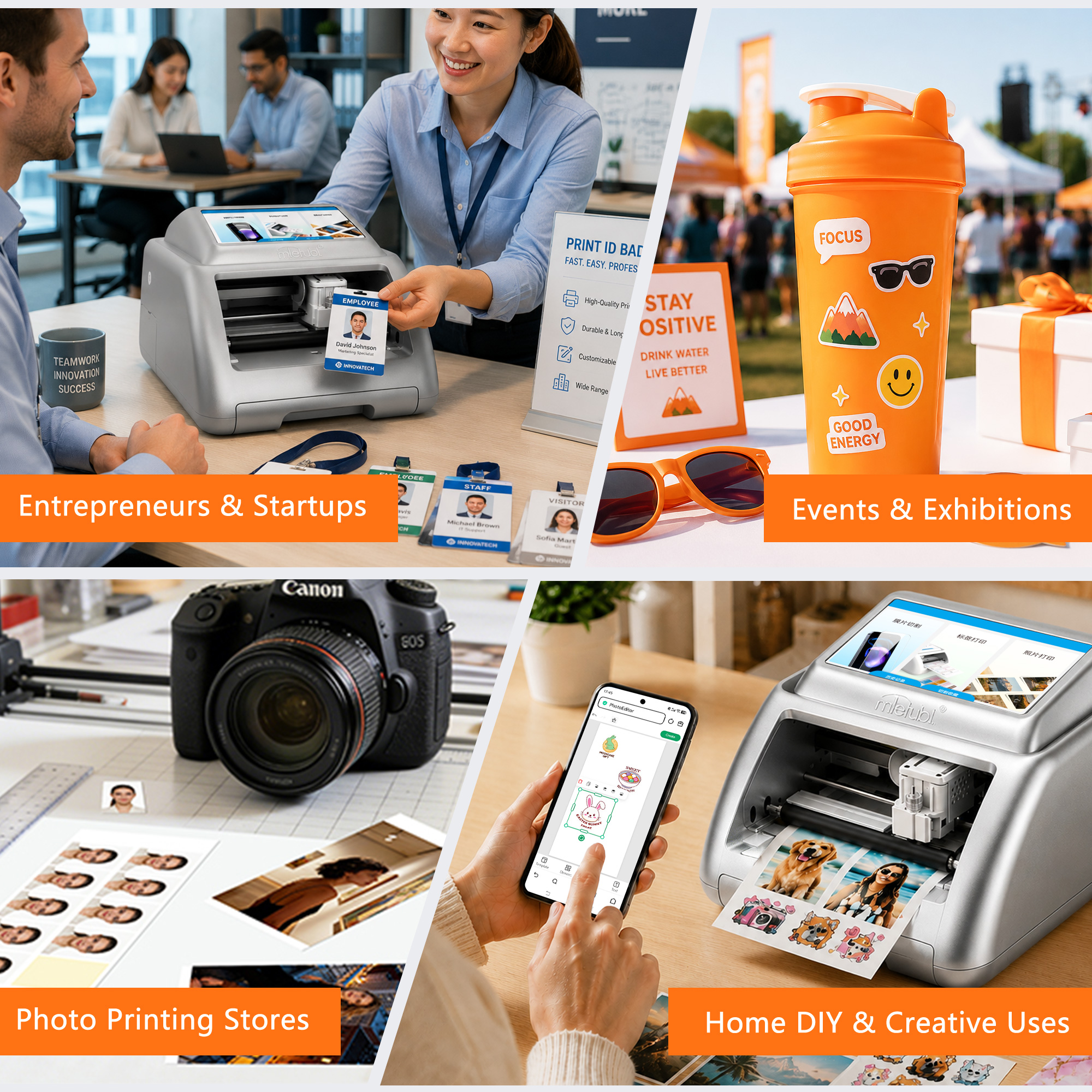
For each sample, record the artwork file, media source, machine settings, and observed result. Inspect whether the contour follows the intended design, whether corners and small shapes remain usable, and whether printed areas show unacceptable defects. Acceptance limits should reflect the product being sold: a photo, label, phone back film, and greeting card may require different visual and dimensional standards.
Buyers should also agree how borderline samples are classified. A clear pass, conditional pass, or fail decision prevents subjective approval after the equipment has been ordered.
Test the Integrated Workflow, Not Only the Final Piece
Sample validation should include the complete operator process. The M888 provides built-in templates, image upload, AI cutout, AI-generated design functions, and scan-based operation. Buyers should test only the functions relevant to their intended workflow and verify that operators can move from design selection to accepted output without unnecessary rework.
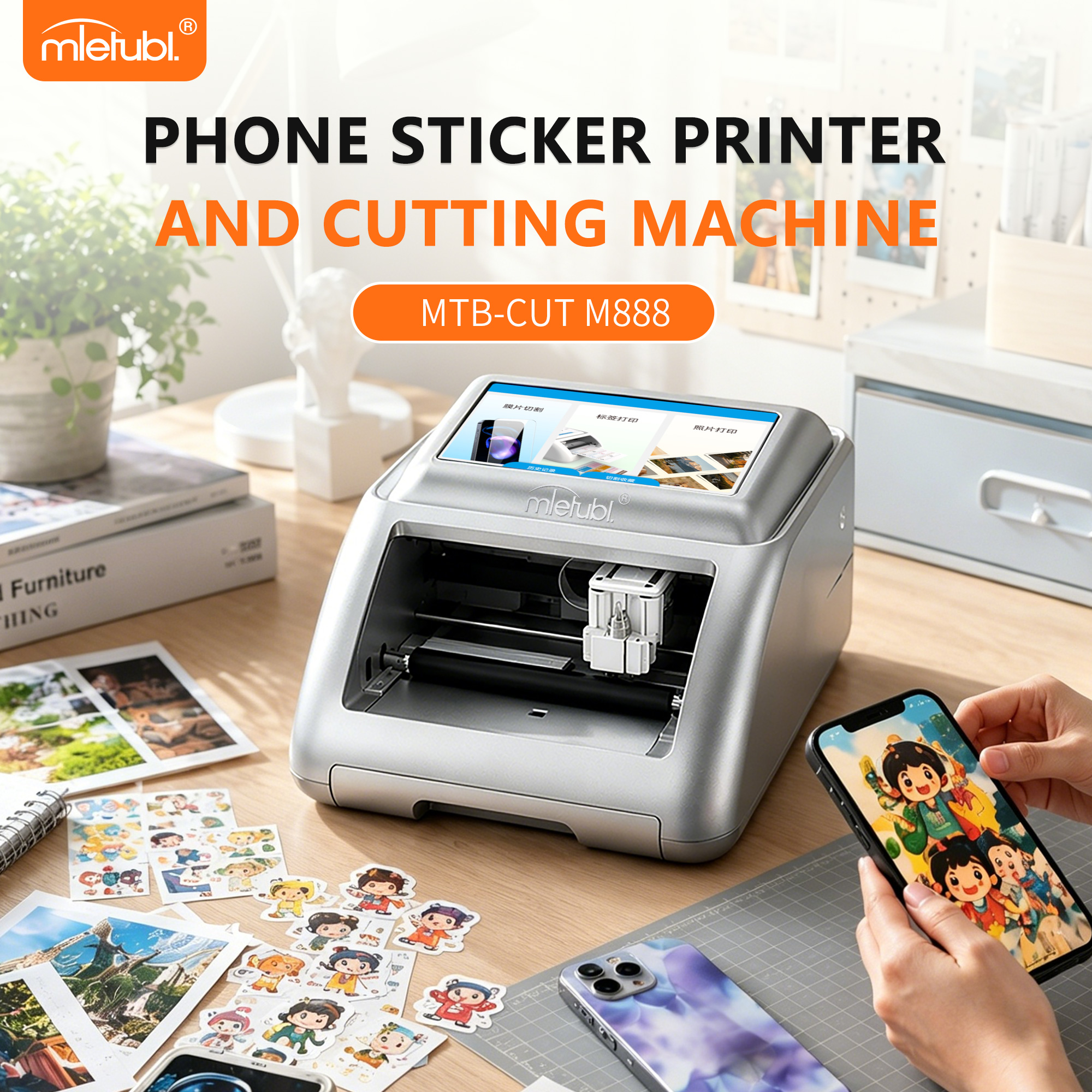
Run the evaluation with representative users where possible. Record setup errors, repeated steps, discarded media, and the time required to obtain an acceptable piece. These observations can reveal whether the integrated print-and-cut approach is suitable for a shop, studio, or other planned operating environment.
Common Questions About M888 Sample Validation
Can buyers approve the machine from one successful sample?
One sample is not sufficient for a broad product range. Buyers should repeat critical designs and include different intended media or applications to check consistency and compatibility.
Which sample should be tested first?
Start with the planned high-volume product, then test the design or material most likely to expose feeding, printing, contour-cutting, or handling problems.
Does the stated cutting precision guarantee acceptable finished output?
No. Approximately 0.1 mm contour-cutting precision is a useful reference, but acceptable output also depends on artwork, media behavior, setup, and the buyer’s product-specific tolerance.
Conclusion
The MTB-CUT M888 is a suitable candidate when integrated printing and contour cutting match the intended product workflow, but purchase approval should follow a documented sample trial. Buyers should provide production-intent media and artwork, define measurable acceptance criteria, and approve the machine only when repeated finished samples meet their commercial requirements.
About Mietubl
Mietubl is a Guangzhou-based mobile accessories brand whose name reflects its guiding idea: Make It Easier To Use, Better Life. With roots in the mobile accessories industry dating to 1998 and the MIETUBL brand registered in 2010, the company focuses on products that make everyday digital use simpler and more practical.
Its portfolio includes screen protectors, intelligent screen protector cutting machines, film materials, data cables, chargers, power banks, and audio accessories. By combining design, product development, manufacturing, and channel support, Mietubl works with distributors and retailers serving a broad range of mobile accessory needs, with products exported to more than 120 countries and regions.
For product information, samples, or distribution opportunities, contact Marketing@mietubl.com or visit www.mietubl.com.
Was this article helpful?
Your feedback helps us improve future articles.