
When a customer requests a personalized screen protector with stronger drop protection, specify tested tempered glass rather than assuming hydrogel will perform better. The approved glass options include documented impact-focused features, while no comparable hydrogel impact data is available here. Buyers can still personalize privacy, appearance, branding, packaging, and product specifications, but the protection requirement should remain the first filter.
Start with the customer’s protection brief
The question is not simply whether tempered glass or hydrogel is universally better. Procurement should begin with the customer’s requested outcome: drop and impact resistance, privacy, scratch protection, edge appearance, touch feel, or a combination of these priorities.
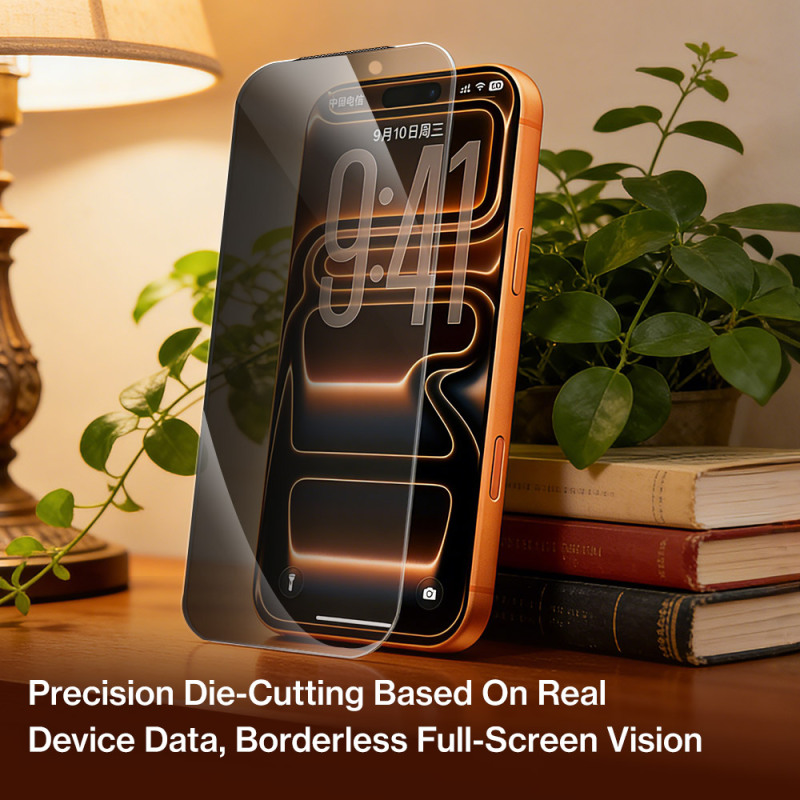
For a request led by drop protection, the defensible decision is the material with relevant test evidence. The Xuanjia impact-resistant glass option uses strengthened high-alumina glass and has documented testing involving a 64 g steel ball dropped from a height of 2 meters. This makes it a more evidence-based starting point for an impact-focused range than an untested hydrogel alternative.
- Choose by requested outcome: Treat impact resistance, privacy, and appearance as separate purchasing criteria.
- Ask for comparable evidence: Do not accept material names alone as proof of drop protection.
- Separate the base product from customization: Branding and packaging should not replace performance validation.
- Confirm the exact model: Different glass constructions have different documented features.
Customize the film around the requested outcome
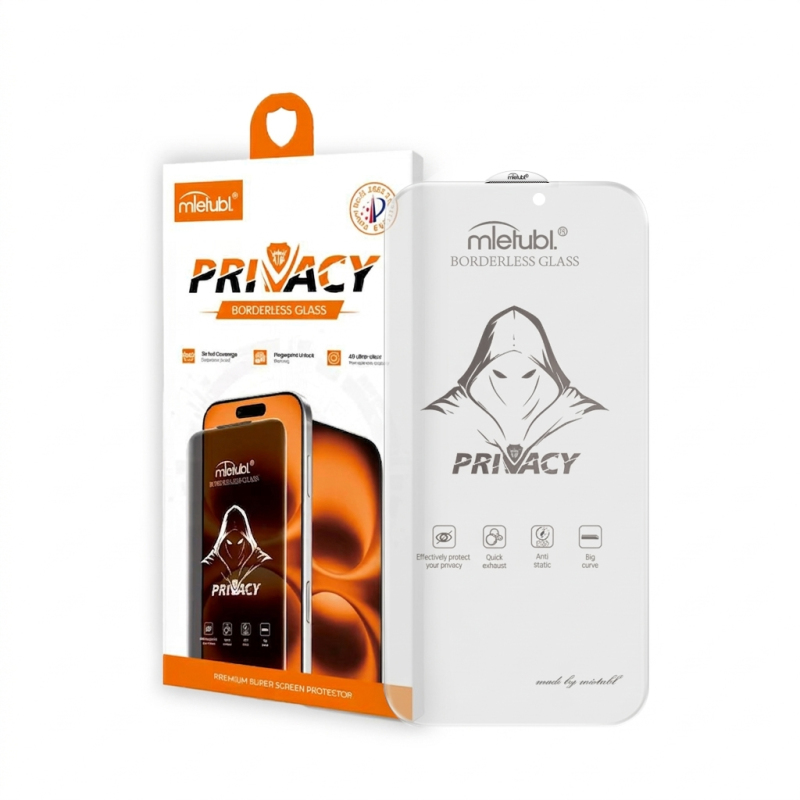
A customer asking for both privacy and a cleaner visual finish may consider the Privacy Borderless Film. Its approved buyer-value features include a micro-louver privacy layer that keeps the front view clear while limiting side viewing, plus a transparent borderless structure intended to reduce the heavy appearance of conventional black borders.
The product can be customized through OEM or ODM service, including brand logo, packaging, and product specifications. This allows distributors and private-label buyers to participate in the output rather than selecting only a standard finished item. However, if drop protection is the primary sales promise, buyers should request a configuration with relevant impact evidence instead of transferring test claims from another glass model.
Match personalized features to the right glass construction
Personalization should define what the customer sees and uses without creating unsupported performance claims. A privacy-oriented specification may prioritize side-view shielding, transparent edges, a smooth 2.5D profile, responsive touch, and reduced fingerprint residue. An impact-oriented specification should prioritize documented glass strengthening and test conditions.
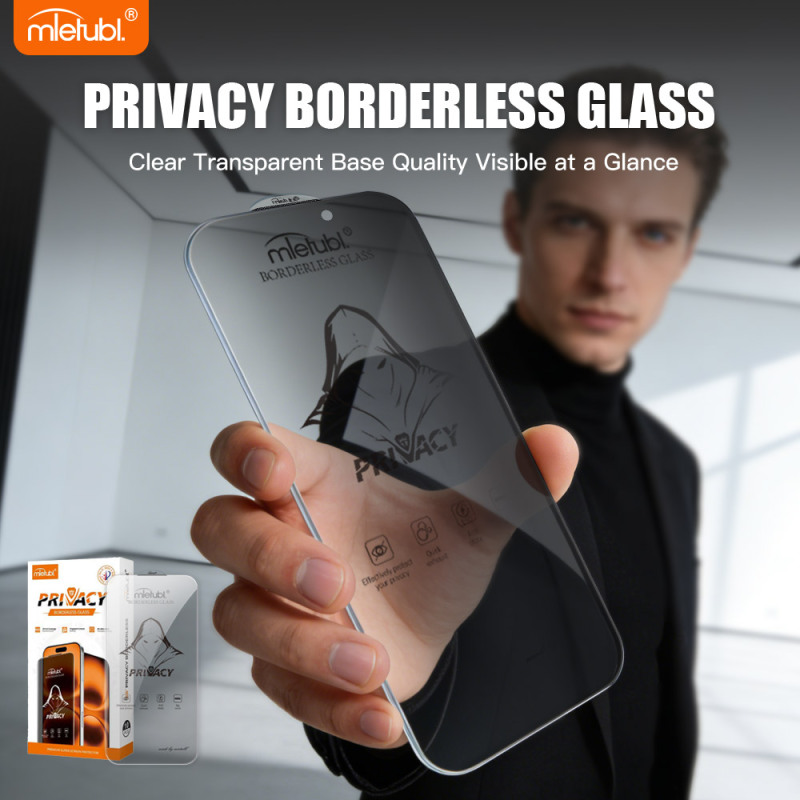
These requirements can lead to different product configurations. For example, a borderless privacy glass may be appropriate when visual discretion and appearance lead the brief. A reinforced glass model with documented impact testing may be preferable when the buyer’s central requirement is protection against drops or collisions. Combining those outcomes should be treated as a development request that requires confirmation, not as an assumed standard feature.
Turn personalization choices into a purchase specification
Before approving samples or packaging artwork, the buyer should record the requested output in a concise specification. This reduces the risk of receiving a visually customized film that does not match the intended protection claim.
- Define the leading claim: State whether the range is primarily for impact protection, privacy, scratch resistance, or appearance.
- Name the required evidence: For drop protection, request the test method, height, impact object, sample construction, and acceptance result.
- Confirm visible details: Specify border style, privacy effect, edge profile, logo placement, packaging, and included accessories.
- Approve model coverage: Check that film dimensions and edge treatment suit the intended phone models and cases.
- Review commercial terms separately: Confirm order quantity, lead time, inspection requirements, and warranty for the selected customization.
Common Questions
Is tempered glass always more drop-resistant than hydrogel?
No universal conclusion should be made from the material name alone. For this purchase, tested tempered glass is the safer selection because relevant impact data is available; a hydrogel option should provide comparable results before being positioned as stronger.
Can a privacy film also be customized for a private label?
Yes. The Privacy Borderless Film supports OEM or ODM customization for the brand logo, packaging, and product specifications, allowing the final presentation to reflect the buyer’s market positioning.
Should privacy and drop protection use the same product claim?
Not automatically. Privacy describes control of side viewing, while drop protection concerns impact performance. Buyers should validate each claim independently and confirm whether one selected construction satisfies both requirements.
Conclusion
For a customized program led by drop protection, procure tempered glass with relevant test evidence and require any hydrogel proposal to meet the same evaluation standard. Add privacy, border style, branding, packaging, and model coverage only after the protective requirement is clearly defined, ensuring the personalized output matches what the customer actually requested.
About Mietubl
Mietubl is a Guangzhou-based mobile accessories brand whose name reflects its guiding idea: Make It Easier To Use, Better Life. With roots in the mobile accessories industry dating to 1998 and the MIETUBL brand registered in 2010, the company focuses on products that make everyday digital use simpler and more practical.
Its portfolio includes screen protectors, intelligent screen protector cutting machines, film materials, data cables, chargers, power banks, and audio accessories. By combining design, product development, manufacturing, and channel support, Mietubl works with distributors and retailers serving a broad range of mobile accessory needs, with products exported to more than 120 countries and regions.
For product information, samples, or distribution opportunities, contact Marketing@mietubl.com or visit www.mietubl.com.
Was this article helpful?
Your feedback helps us improve future articles.