
Counter space, environmental conditions, connectivity, and staff sequencing should be confirmed before deploying the MTB-CUT M688 intelligent cut-and-apply all-in-one machine. It can consolidate film cutting, application, and UV curing into one workflow, but a successful rollout still depends on a stable work surface, accessible power, controlled temperature and humidity, and clear operating procedures. Buyers should approve the installation plan—not only the machine—before assigning units to stores.
Store-readiness decision at a glance
The M688 may suit mobile accessory stores that want to perform multiple screen protector preparation steps at one station. Its standardized operating guidance can also support staff who are new to the process, provided they receive practical training and follow an established sequence.
- Counter allocation: Reserve a permanent, level work area rather than moving the machine between transactions.
- Operating environment: Confirm that each location remains within the specified temperature and humidity ranges.
- Workflow ownership: Assign responsibility for cutting, application, curing, and final inspection.
- Rollout validation: Test power, connectivity, materials, and representative device models before launch.
Counter space and utility readiness
The machine measures 430 × 200 × 237.5 mm and weighs 9.3 kg. Buyers should measure the usable counter surface rather than relying on the machine footprint alone. The installation zone also needs clearance for loading film, handling the customer’s device, and completing the application process without mixing clean materials with packaging or repair tools.
The M688 accepts 110V–240V power and has stated consumption below 48W. Even with this broad voltage range, rollout teams should confirm local plug compatibility, outlet condition, cable routing, and whether other equipment shares the circuit. Power cables should not cross customer walkways or interfere with staff movement behind the counter.
Operating conditions and connectivity checks
The specified working environment is 5°C–35°C with relative humidity of 35%–70%. Stores outside these ranges should correct the installation environment before deployment. A clean working zone is also advisable because dust and handling conditions can affect the application stage, even when cutting is completed correctly.
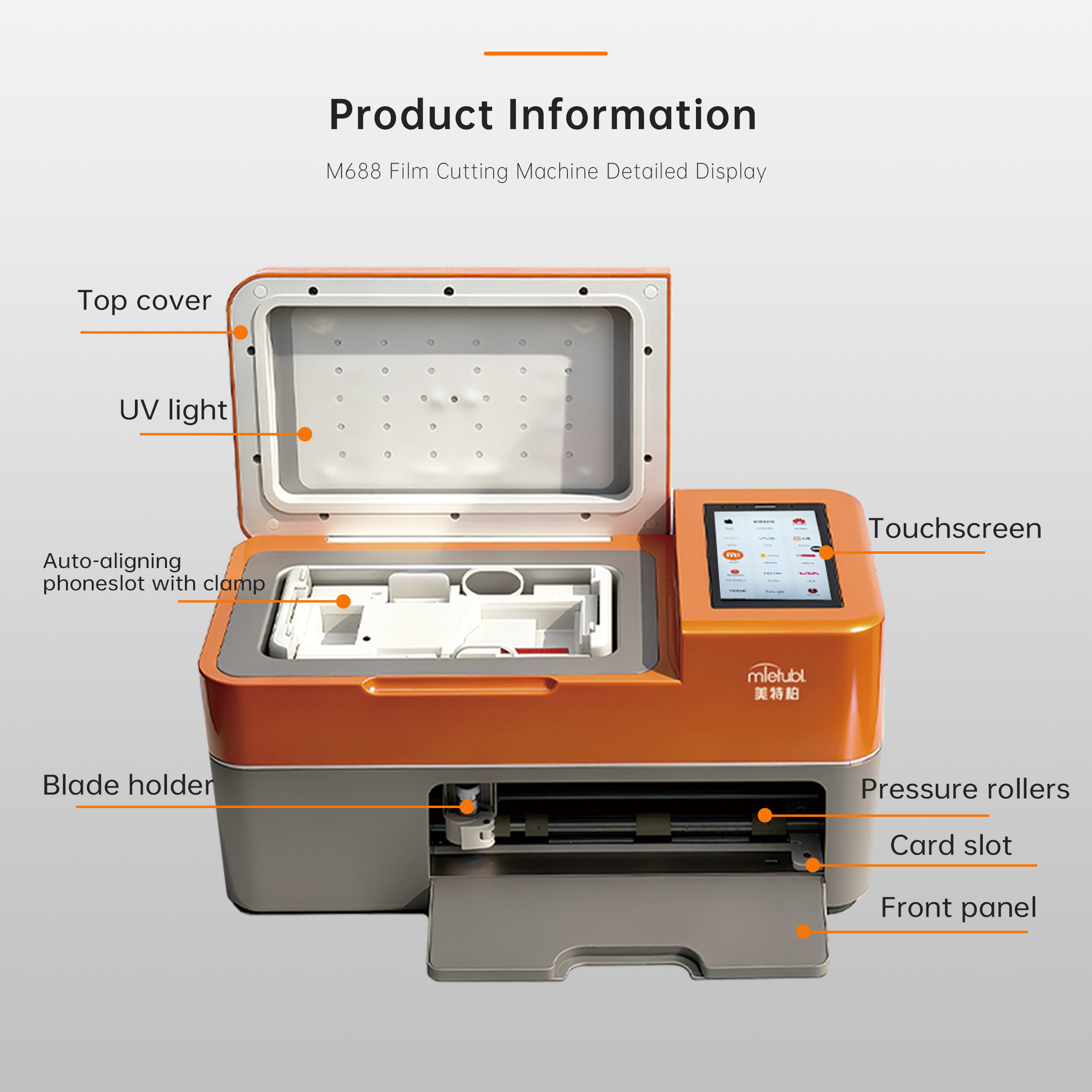
Operation is supported through an app and the machine’s built-in system, with Wi-Fi and Bluetooth connectivity. Offline cutting is also supported. During store acceptance, teams should test the intended connection method, staff access permissions, model search, and an offline job. This helps determine whether normal service can continue during a temporary network interruption.
Staff workflow and rollout acceptance
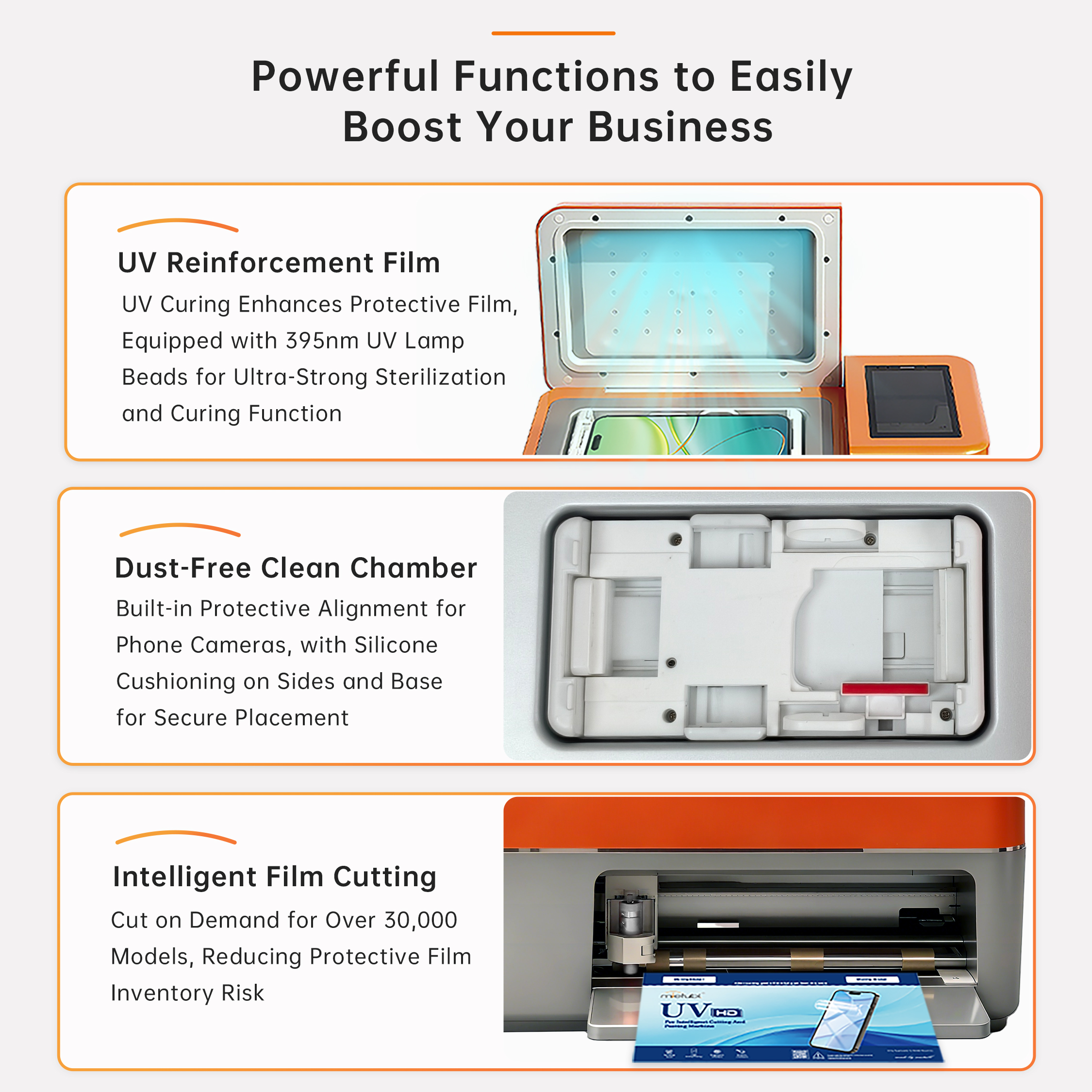
The three-in-one design combines film cutting, application, and UV curing. This can reduce equipment handoffs, but stores should still define a repeatable service path. A practical sequence is to identify the device, select the matching template, confirm the film material, perform the cut, prepare and apply the film, complete curing when required, and inspect the finished result.
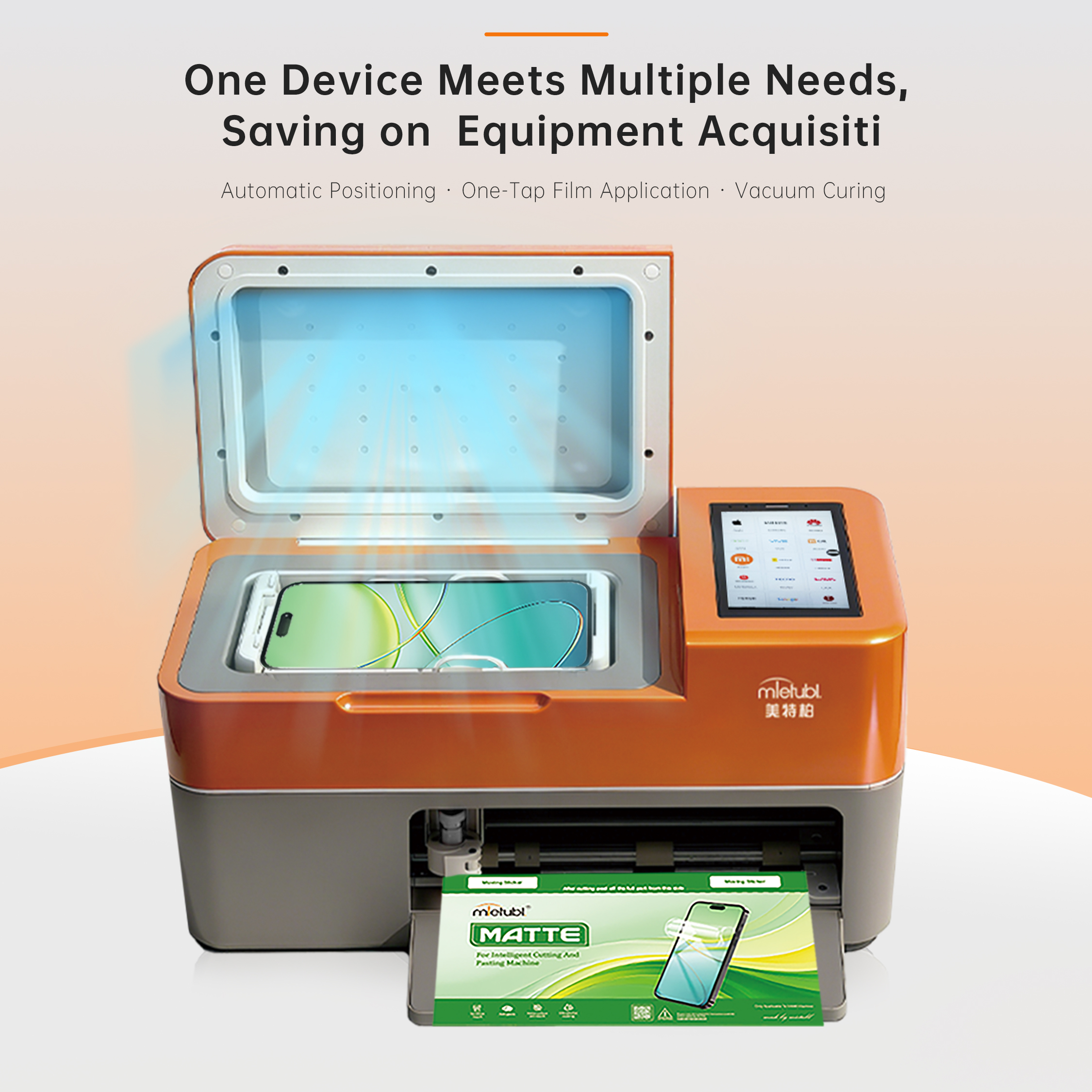
The maximum cutting size is 14.6 inches, supporting use cases that may include phones and tablets. Buyers should nevertheless validate the actual device mix sold or serviced at each location rather than assuming every model or material is suitable.
- Measure and photograph the planned counter position.
- Verify power, Wi-Fi, Bluetooth, and offline operation.
- Train staff on device identification and the full operating sequence.
- Run trial jobs using representative models and approved film materials.
- Record acceptance standards for alignment, finish, curing, and rework handling.
Common Questions
How much counter space should a store reserve?
Allow more than the machine’s physical footprint. The station should include safe clearance for film loading, device preparation, application work, and cable management.
What should managers verify before staff begin serving customers?
Managers should verify the installation environment, connection method, template-selection process, material handling, operating sequence, and final inspection criteria through supervised trial jobs.
Can the M688 be included in a multi-store rollout?
It may be, but buyers should pilot the workflow in a representative location first. Counter layouts, staff experience, local operating conditions, and connectivity can differ across branches.
Conclusion
The MTB-CUT M688 is best considered deployment-ready after the site, utilities, operating environment, and staff process have passed a documented trial. A controlled pilot should precede wider distribution so buyers can standardize counter setup, training, service steps, and acceptance checks across participating stores.
About Mietubl
Mietubl is a Guangzhou-based mobile accessories brand whose name reflects its guiding idea: Make It Easier To Use, Better Life. With roots in the mobile accessories industry dating to 1998 and the MIETUBL brand registered in 2010, the company focuses on products that make everyday digital use simpler and more practical.
Its portfolio includes screen protectors, intelligent screen protector cutting machines, film materials, data cables, chargers, power banks, and audio accessories. By combining design, product development, manufacturing, and channel support, Mietubl works with distributors and retailers serving a broad range of mobile accessory needs, with products exported to more than 120 countries and regions.
For product information, samples, or distribution opportunities, contact Marketing@mietubl.com or visit www.mietubl.com.
Was this article helpful?
Your feedback helps us improve future articles.