
The buying decision for a smart print-and-cut machine should rest on verified output, material compatibility, operating workflow, and order terms—not feature count alone. The MTB-CUT M888 combines printing and contour cutting in a compact unit and supports several small-format product applications. Before ordering, professional buyers should obtain representative samples, test their intended media, confirm regional power arrangements, and record acceptance criteria in the purchase agreement.
Buying Decision Criteria to Confirm First
- Application match: Confirm that the machine can produce the exact phone back films, protective films, labels, photographs, stickers, or cards planned for sale.
- Usable output area: Check each job against the stated 138 mm cutting width, 160 mm feed width, and 100 × 148 mm paper size.
- Sample quality: Request printed and contour-cut samples using representative artwork and media rather than approving the machine from specifications alone.
- Store workflow: Test template access, image upload, QR-code operation, AI background removal, and AI-assisted design functions with the intended operators.
- Commercial acceptance: Put the agreed configuration, inspection method, delivery arrangement, warranty scope, and included accessories in writing.
Confirm the Printing and Cutting Scope
The M888 is positioned as an integrated printing-and-cutting machine, reducing the need to move a job between separate devices. This may benefit counters or studios where space and the number of operating steps need to be controlled. Buyers should nevertheless map the complete production sequence, including artwork preparation, printing, contour recognition, cutting, removal, and final application.
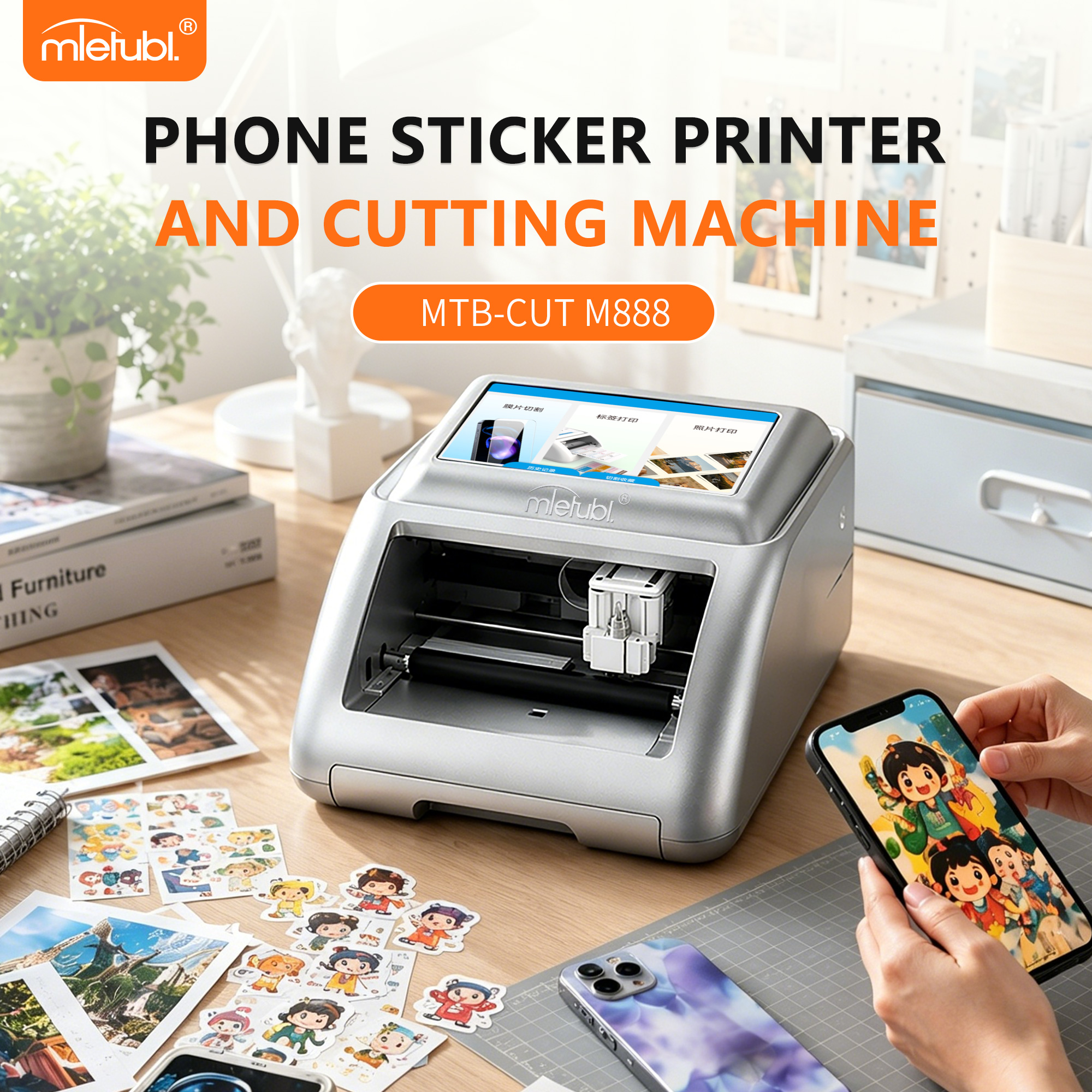
The stated print resolution is 300 DPI, while the approved selling points describe thermal-sublimation printing with detailed color output. The machine is also presented as providing contour cutting accuracy of up to approximately 0.1 mm for irregular stickers. These figures should be validated with the buyer’s own designs, especially artwork containing small lettering, narrow borders, sharp corners, or alignment-sensitive outlines.
Ask the supplier to produce several identical samples. Review color consistency, edge alignment, fine-detail reproduction, cutting completion, and waste removal. If water resistance or resistance to fading is important to the intended product, define a sample test rather than treating the description as a universal guarantee across all media and operating conditions.
Verify Media, Format, and Workflow Before Approval
A smart print-and-cut machine is useful only when its working area and media requirements correspond to the planned assortment. The M888 has a stated cutting width of 138 mm and feed width of 160 mm. Buyers should compare both figures with the full dimensions of every proposed product, allowing for margins, registration requirements, and handling space.
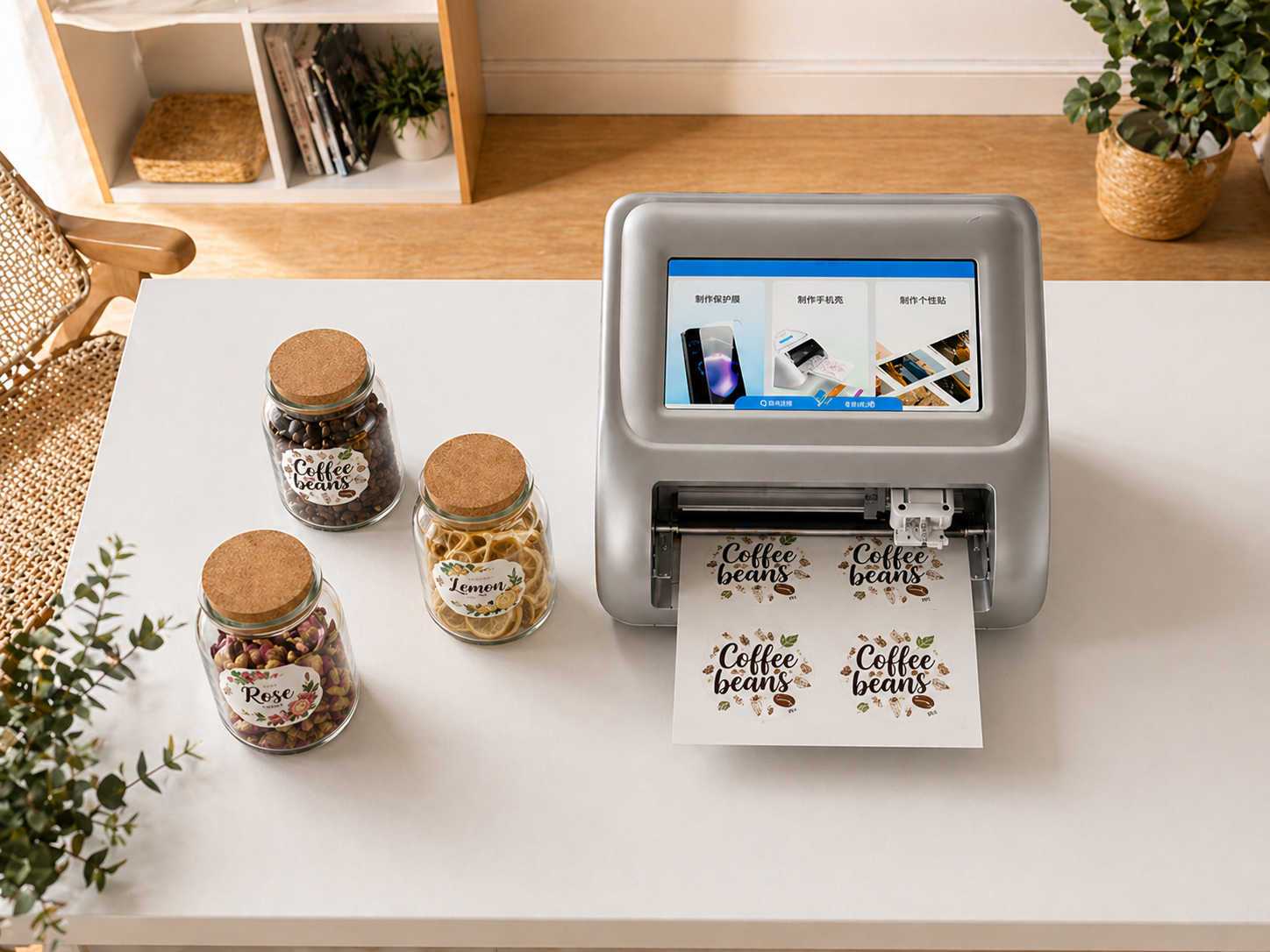
The machine supports applications including phone back films, protective films, photos, labels, greeting cards, and custom-shaped stickers. This range does not establish compatibility with every material sold under those categories. Before placing a volume order, confirm suitable media composition, thickness, surface treatment, print side, storage conditions, and required consumables.
Workflow verification is equally important. Built-in templates and image-upload functions may simplify customized production, while QR-code operation may suit customer-facing counters. Buyers should run a supervised trial with typical staff and confirm language availability, account setup, template access, file requirements, design-function availability, and any ongoing software or service conditions.
Lock Down Power, Inspection, and Order Terms
The listed adapter input is 100–240V at 50/60Hz, with a 24V/2.7A output. Buyers should still confirm the supplied plug, adapter labeling, destination-market requirements, and the exact package contents. The machine measures 333 × 255 × 135 mm and weighs 4.1 kg, so the receiving team should check counter space, ventilation clearance, storage, and handling arrangements.
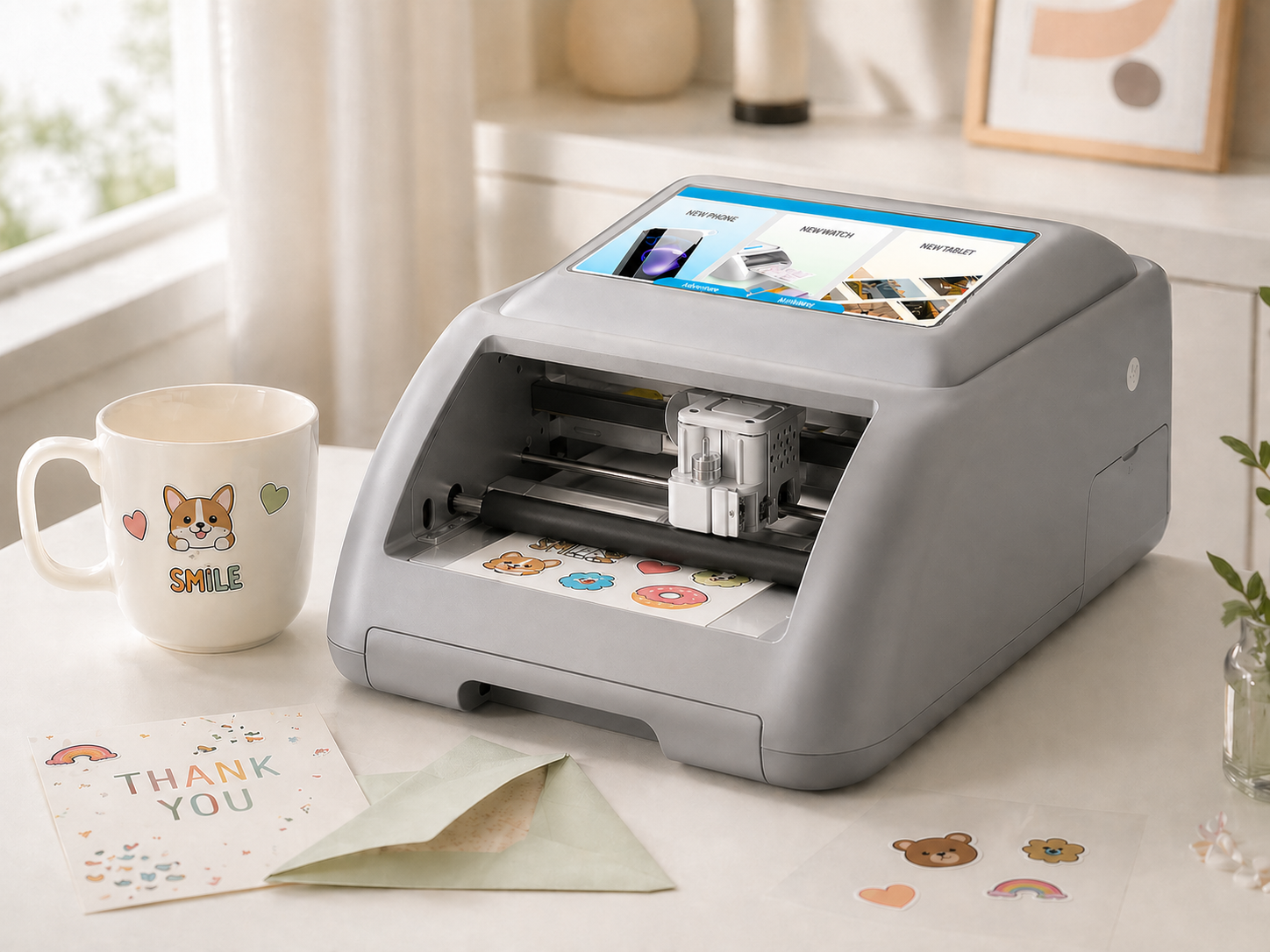
The approved commercial data states a minimum order quantity of one machine, a seven-day delivery time, and a one-year warranty. Treat these as terms to reconfirm for the specific quotation, destination, stock status, and order date. The warranty document should identify covered parts, exclusions, troubleshooting procedures, repair responsibility, and responsibility for transport costs.
The listed quality inspection method is GB/T2828.1. Buyers should ask how the sampling plan is applied to their order, which defects are classified as critical, major, or minor, and what happens if a lot does not meet the agreed acceptance level. For a trial order, functional checks and approved output samples may be more informative than appearance inspection alone.
Common Questions
What samples should a buyer request before ordering?
Request outputs using intended artwork and media, including fine text, curved contours, narrow borders, photographs, and at least one repeated production run. Approve both print appearance and cut alignment.
Does the integrated design eliminate all other equipment?
It combines printing and cutting, but the complete setup may still require media, consumables, design files, finishing tools, and application accessories. Confirm the full operating package in the quotation.
Is one machine enough for a retail trial?
The stated minimum order quantity is one machine, which may support controlled evaluation. Buyers should define trial volume, operator training, acceptable output, and support procedures before broader deployment.
Conclusion
The MTB-CUT M888 is a credible candidate when a buyer needs compact, integrated production for small-format printed and contour-cut products. Proceed only after the supplier demonstrates the intended media and artwork, the operator workflow is tested, and power, inspection, delivery, package contents, and warranty responsibilities are documented in the order.
About Mietubl
Mietubl is a Guangzhou-based mobile accessories brand whose name reflects its guiding idea: Make It Easier To Use, Better Life. With roots in the mobile accessories industry dating to 1998 and the MIETUBL brand registered in 2010, the company focuses on products that make everyday digital use simpler and more practical.
Its portfolio includes screen protectors, intelligent screen protector cutting machines, film materials, data cables, chargers, power banks, and audio accessories. By combining design, product development, manufacturing, and channel support, Mietubl works with distributors and retailers serving a broad range of mobile accessory needs, with products exported to more than 120 countries and regions.
For product information, samples, or distribution opportunities, contact Marketing@mietubl.com or visit www.mietubl.com.
Was this article helpful?
Your feedback helps us improve future articles.