
For buyers managing screen protectors across many device models, the MTB-CUT M688 can shift suitable inventory from model-specific finished films toward on-demand production. Rather than eliminating finished stock entirely, distributors and retailers should use the machine to reduce exposure to slow-moving models while retaining ready-made films for predictable high-volume demand or materials outside the chosen cutting workflow.
Why On-Demand Cutting Changes the Inventory Decision
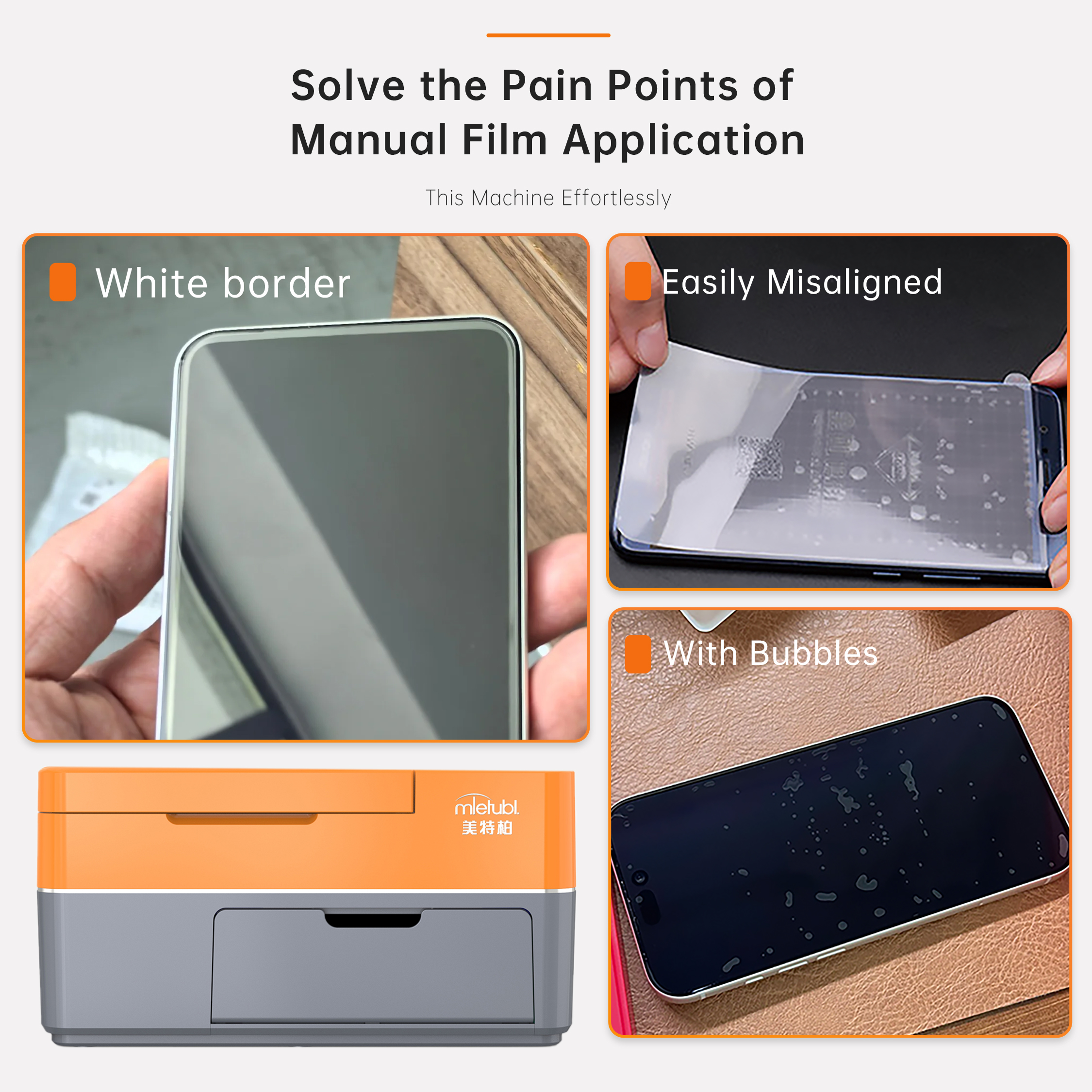
Finished-film purchasing requires a separate stock position for every selected model and film type. As the assortment expands, buyers may face more forecasting decisions and a higher risk that inventory remains unsold after device demand changes.
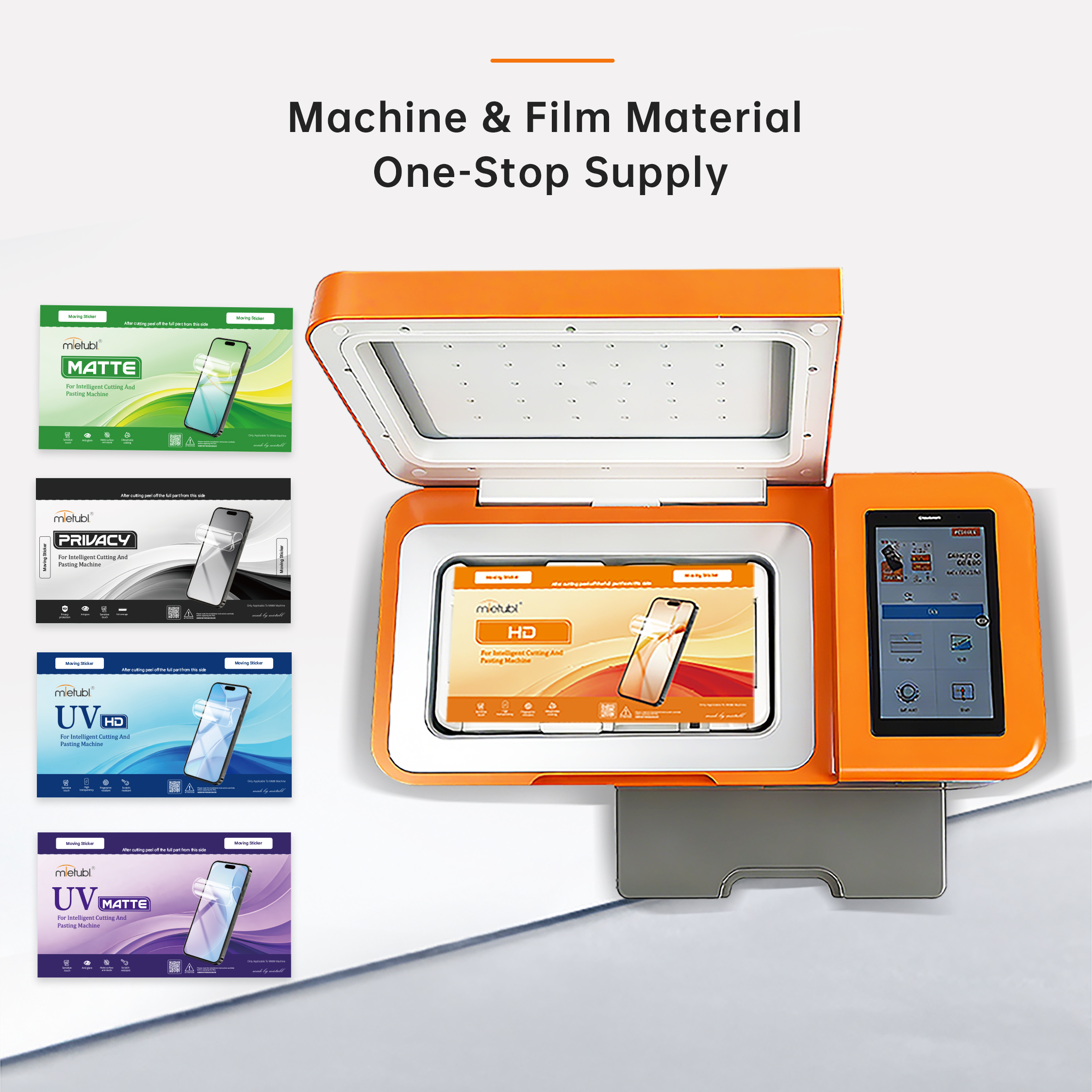
A smart fully automatic film cutting machine changes the planning unit. Instead of purchasing every model shape in advance, the business can hold compatible blank film materials and cut selected patterns when an order arrives. This approach may be particularly useful where customers request a broad mix of phone and tablet models.
- Reduce model-level exposure: use cut-to-order production for uncertain or low-frequency demand.
- Keep selective finished stock: retain ready-to-apply films where sales volume justifies dedicated inventory.
- Plan around materials: forecast blank film consumption rather than treating every device pattern as a separate finished SKU.
- Validate the workflow first: confirm material compatibility, staff procedures, and local demand before reducing existing stock.
What to Stock When Films Are Cut on Demand
On-demand production does not remove inventory; it changes its composition. Buyers still need suitable blank materials and any consumables required by their chosen service process. The practical objective is to concentrate more working inventory in versatile inputs and less in finished shapes with uncertain turnover.
A hybrid plan is usually the more cautious starting point. High-volume models may remain in finished stock for immediate service, while long-tail models can move to on-demand cutting. Buyers can then review sales records and gradually adjust the balance between blank material and model-specific products.
Different film materials may also require different stocking policies. Procurement teams should test the intended blanks with the machine and confirm whether cutting, application, and curing procedures match the products they plan to sell.
How the M688 Supports a Lower-SKU Workflow
The M688 combines film cutting, film application, and UV curing in one machine. This three-in-one structure is intended to complete the service flow on a single device, which can reduce the need to allocate space to separate equipment.
Its model database covers more than 60,000 device models, receives daily cloud updates, and supports offline cutting. For inventory planners, broad pattern availability can make on-demand service more practical across a mixed device assortment, although buyers should confirm that priority regional models are included before purchase.
The maximum cutting size is 14.6 inches, covering use cases that may include phones and tablets. Buyers should compare that limit with their actual device mix rather than assuming that every requested screen size will fit.
Procurement Checks Before Reducing Finished Stock
The approved minimum order is one machine, allowing a buyer to begin with a limited deployment rather than committing to multiple devices at once. A pilot should measure how many existing finished-film SKUs can realistically migrate to on-demand output.
- List current models by sales frequency, margin, and aging risk.
- Identify low-volume patterns suitable for cut-to-order service.
- Confirm that required film materials and priority device templates are supported.
- Train operators and document a consistent cutting, application, and curing process.
- Review material use, service time, failed applications, and finished-stock reductions before expanding.
Buyers should also confirm software access, update procedures, language requirements, replacement consumables, after-sales terms, and local electrical compatibility as part of the purchase evaluation.
Common Questions
Can the M688 replace all model-specific finished films?
Not necessarily. It can replace part of the assortment where compatible blank materials and templates meet the required service standard. Fast-moving finished films may still be useful for immediate fulfillment.
Is on-demand cutting suitable for distributors as well as retailers?
It may suit both. Retailers can use it for customer-level service, while distributors may use it to support mixed-model orders or reduce dependence on forecasting every finished shape.
What should buyers test during a pilot?
Test priority device coverage, material compatibility, operator consistency, service time, application quality, and the amount of finished inventory that can be reduced without affecting availability.
Conclusion
The M688 is best evaluated as an inventory-planning tool, not simply as another piece of store equipment. Buyers with a wide or unpredictable model mix should consider a hybrid strategy: preserve finished stock for reliable fast sellers and move suitable long-tail demand to on-demand production. A controlled pilot can show whether that balance reduces SKU complexity while maintaining the service level customers expect.
About Mietubl
Mietubl is a Guangzhou-based mobile accessories brand whose name reflects its guiding idea: Make It Easier To Use, Better Life. With roots in the mobile accessories industry dating to 1998 and the MIETUBL brand registered in 2010, the company focuses on products that make everyday digital use simpler and more practical.
Its portfolio includes screen protectors, intelligent screen protector cutting machines, film materials, data cables, chargers, power banks, and audio accessories. By combining design, product development, manufacturing, and channel support, Mietubl works with distributors and retailers serving a broad range of mobile accessory needs, with products exported to more than 120 countries and regions.
For product information, samples, or distribution opportunities, contact Marketing@mietubl.com or visit www.mietubl.com.
Was this article helpful?
Your feedback helps us improve future articles.