
Yes, the MTB-CUT M888 can be ready for a retail counter, studio, or compact production area—but only after confirming space, power, media handling, and staff workflow. Its integrated printing and cutting functions can reduce the number of devices and process steps required. Before rollout, buyers should verify that the 333 × 255 × 135 mm body fits the workstation and that the intended products align with its supported media dimensions and functions.
Is the M888 Deployment-Ready for Your Use Case?
The MTB-CUT M888 is an automatic all-in-one printing and cutting machine designed to combine two production stages in one unit. Its approved applications include phone back films, protective films, photos, labels, greeting cards, and irregularly shaped stickers.
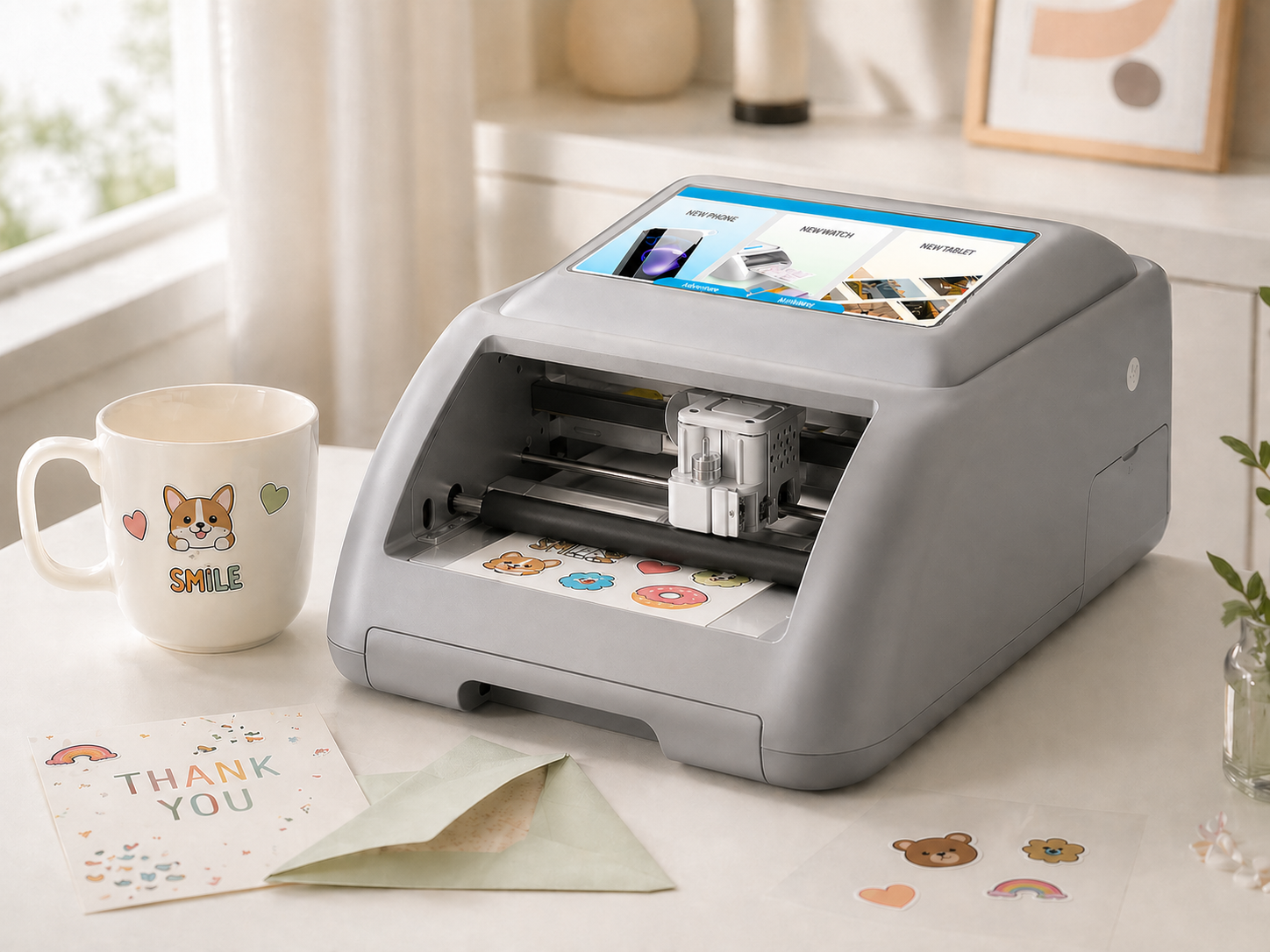
For deployment planning, the key question is not simply whether the machine can print and cut. Buyers should determine whether its format, operating flow, and available design functions fit the products that staff will make most often.
- Compact placement: The machine body measures 333 × 255 × 135 mm and weighs 4.1 kg.
- Integrated workflow: Printing and contour cutting take place through one machine, potentially reducing equipment changes.
- Defined media limits: It has a 160 mm feed width, 138 mm cutting width, and a stated paper size of 100 × 148 mm.
- Staff-facing tools: Built-in templates, image upload, AI background removal, AI-assisted design generation, and scan-based operation are available.
Will the Machine Fit the Available Counter Space?
The physical body is compact, but buyers should not treat its dimensions as the total space requirement. A deployment plan should also allow room for loading media, collecting completed output, accessing controls, and keeping consumables organized.
A counter should provide a stable surface for the 4.1 kg unit and enough clearance to avoid obstructing the feed path. If the machine will sit beside a checkout terminal, repair tools, or screen-protector installation equipment, create a sample counter layout before ordering multiple units. This can reveal whether staff can move materials without interrupting customer service.
Power-cable routing should also be considered. Loose cables near a customer-facing workstation may interfere with loading, cleaning, or routine counter activity.
Are Power and Media Conditions Compatible?
The M888 accepts 100–240V at 50/60Hz, with a stated 24V/2.7A output. This broad input range may support deployment across different markets, but buyers should still confirm local plug configuration, outlet location, and electrical requirements before installation.
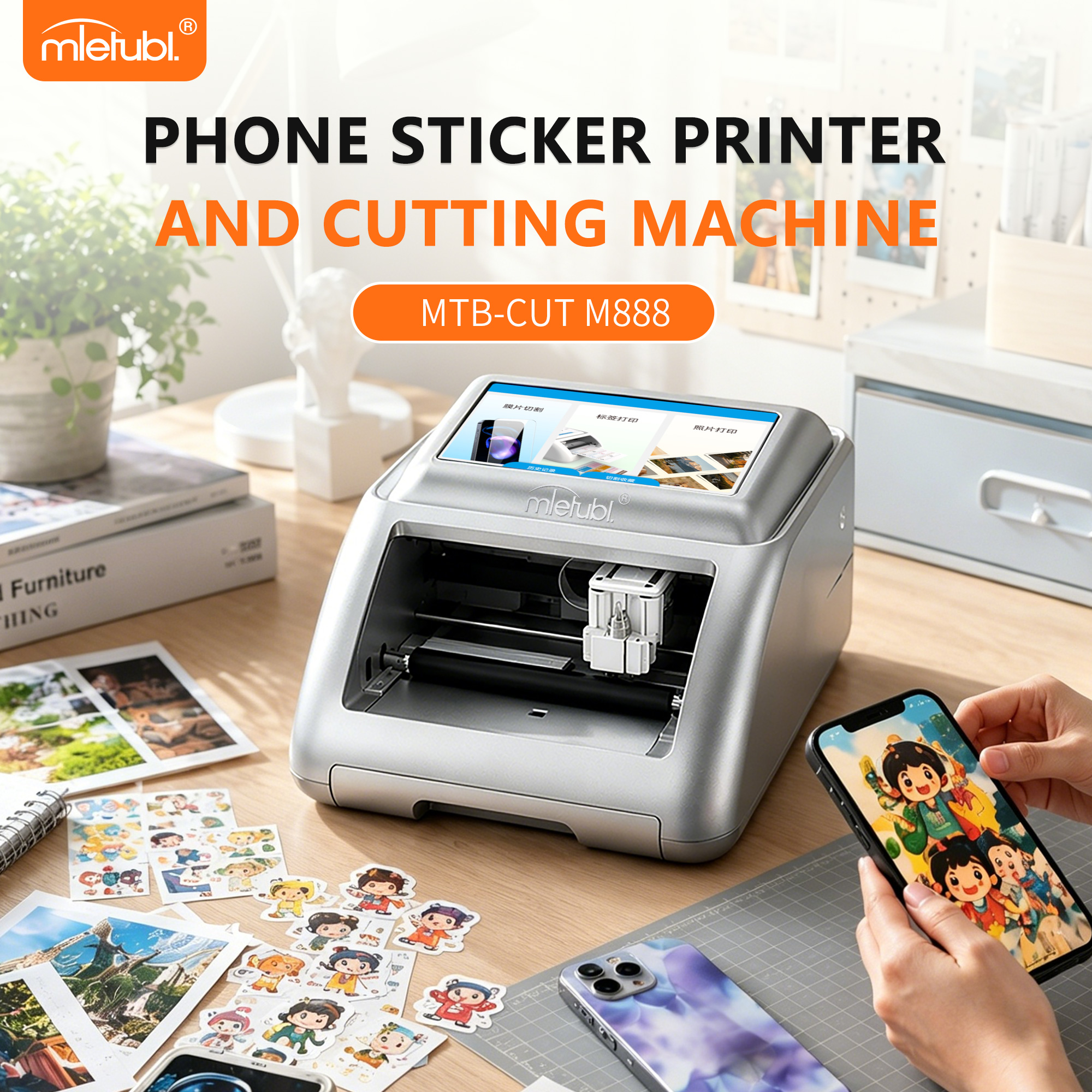
Media compatibility deserves equal attention. The stated feed and cutting widths establish the practical format boundary, while the listed 100 × 148 mm paper size provides a reference for print jobs. Buyers should test the actual films, papers, or label stocks intended for rollout rather than assume every material within the width limit will behave identically.
No approved operating temperature or humidity range is provided for this model. Locations with high heat, moisture, dust, or direct sunlight should therefore confirm suitable operating and storage conditions before deployment.
How Should Staff Workflow Be Prepared?
The scan-based operation and built-in design tools may simplify front-counter production, but staff still need a defined sequence. A practical workflow can begin with selecting a template or uploading an image, preparing the design, loading the correct material, printing, and then completing the contour cut.
The machine supports approximately 0.1 mm contour-cutting precision and 300 DPI print resolution. During training, operators should learn how design boundaries, image quality, and media loading affect the finished result. Managers should approve a limited initial product menu instead of asking new operators to handle every supported application immediately.
Standard job names, saved templates, and clearly labeled materials can also reduce selection errors between phone back films, labels, photos, and greeting-card media.
What Should a Rollout Check Include?
- Measure the intended counter and include working clearance, not only the machine footprint.
- Confirm the local outlet, plug arrangement, and safe cable path.
- Test each planned media type within the stated feed and cutting limits.
- Run sample jobs using templates, uploaded images, and contour-cut designs.
- Document loading, operation, cleaning, and error-handling steps for staff.
For multi-location deployment, buyers should validate one representative workstation first. Differences in counter depth, outlet placement, staff experience, and product mix can affect readiness even when every site receives the same machine.
Common Questions
Can the M888 replace separate printing and cutting machines?
It combines printing and cutting in one unit, so it may replace separate devices for jobs that fall within its supported formats and applications. Buyers should validate their actual media and output requirements first.
Is the M888 suitable for customer-facing counters?
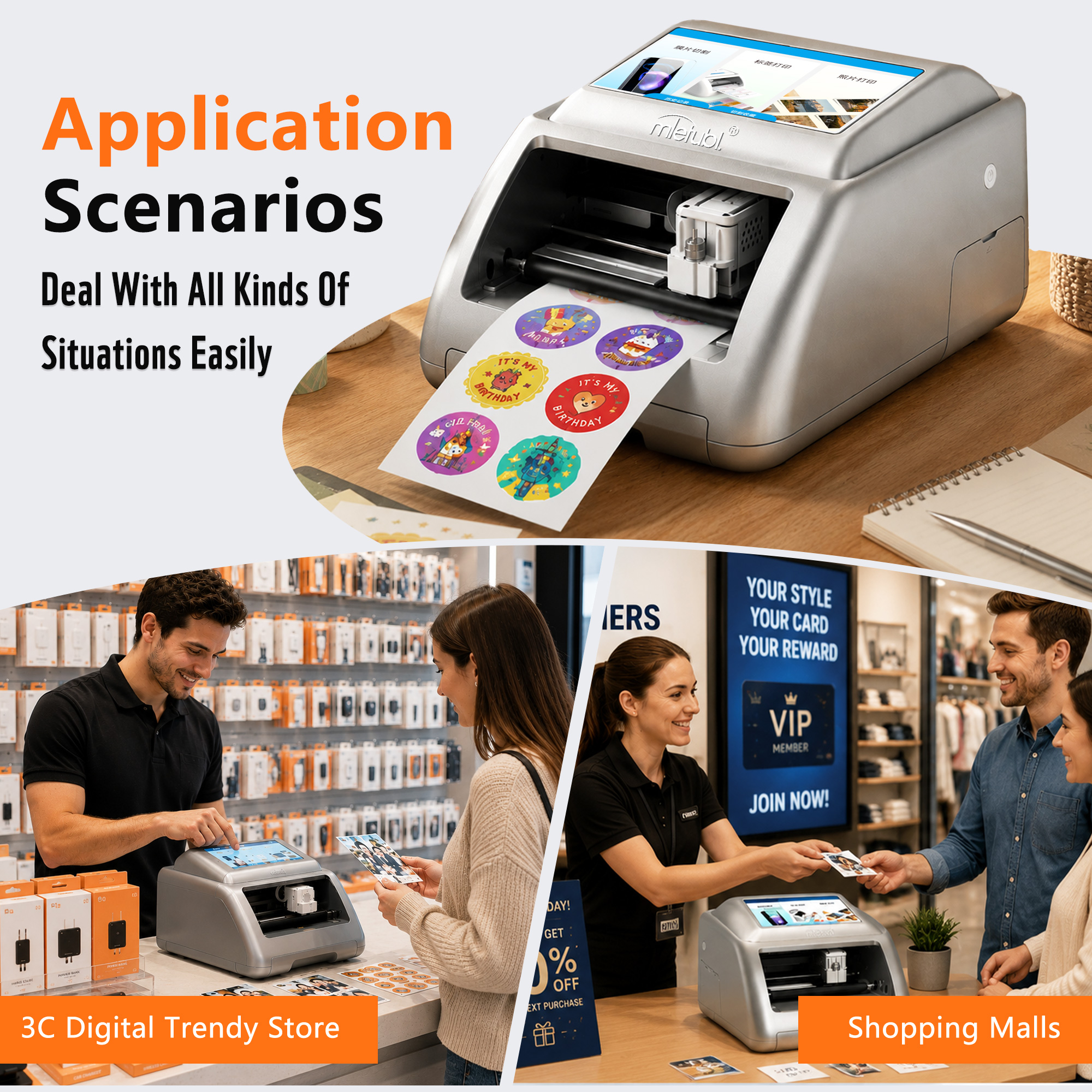
Its compact body and scan-based operation support that possibility. Suitability still depends on available clearance, cable management, material storage, and whether the workflow disrupts other counter tasks.
What should staff test before launch?
Staff should test media loading, template selection, image upload, print output, contour alignment, and completion of the intended product range under normal store conditions.
Conclusion
The MTB-CUT M888 is a strong deployment candidate for buyers seeking compact, integrated printing and cutting at the point of service. Proceed when the counter layout accommodates the complete workflow, the intended media fits its format limits, and staff can reproduce approved jobs consistently during a controlled pilot.
About Mietubl
Mietubl is a Guangzhou-based mobile accessories brand whose name reflects its guiding idea: Make It Easier To Use, Better Life. With roots in the mobile accessories industry dating to 1998 and the MIETUBL brand registered in 2010, the company focuses on products that make everyday digital use simpler and more practical.
Its portfolio includes screen protectors, intelligent screen protector cutting machines, film materials, data cables, chargers, power banks, and audio accessories. By combining design, product development, manufacturing, and channel support, Mietubl works with distributors and retailers serving a broad range of mobile accessory needs, with products exported to more than 120 countries and regions.
For product information, samples, or distribution opportunities, contact Marketing@mietubl.com or visit www.mietubl.com.
Was this article helpful?
Your feedback helps us improve future articles.