
Yes—the MTB-CUT M688 can be provisionally approved for electrical suitability because its total power consumption is specified at under 48W and it supports 110V–240V input. However, that rating does not confirm compatibility with your film materials or acceptable finished output. Buyers should approve the machine only after representative samples pass cutting, application, and UV-curing checks using the materials and device sizes intended for sale.
What the Under-48W Rating Does—and Does Not Validate
The power specification answers an important deployment question: the M688 is designed for global 110V–240V supply and consumes less than 48W as a complete machine. Buyers can use this information to review outlet compatibility, store placement, and electrical planning.
Wattage does not demonstrate whether a particular film cuts cleanly, applies without unacceptable defects, or responds correctly to curing. Those results depend on the actual material, its construction, and the required finished standard.
Key Takeaways for Sample Approval
- Approve electrical suitability separately: confirm the local voltage and plug arrangement for the destination market.
- Test actual materials: the supplied specification does not identify a complete list of compatible film types.
- Represent the real product mix: include small, large, common, and difficult device patterns in the sample batch.
- Evaluate the complete process: the M688 combines film cutting, application, and UV curing, so acceptance should cover all required stages.
- Document pass criteria: agree on visible and measurable output requirements before approving a production order.
Validate Film Compatibility Before Purchase Approval
Material compatibility should be treated as an open validation item rather than inferred from the machine’s cutting force or power consumption. Ask the supplier to process the exact film construction you intend to distribute or use in stores. Samples should come from normal production material where possible, not only from a demonstration roll.
If several film grades, surface finishes, adhesives, or thicknesses are planned, test each commercially important group. A successful result with one material should not automatically qualify another. Buyers should also confirm whether settings must change between materials and whether operators can reproduce those settings through the APP-controlled or built-in operating system.
Run Representative Samples Across the Intended Size Range
The M688 supports a maximum cutting size of 14.6 inches, with a maximum material width of 235 mm and maximum cutting width of 213 mm. A useful sample plan should therefore include the sizes most frequently sold and the largest intended format that remains within these limits.
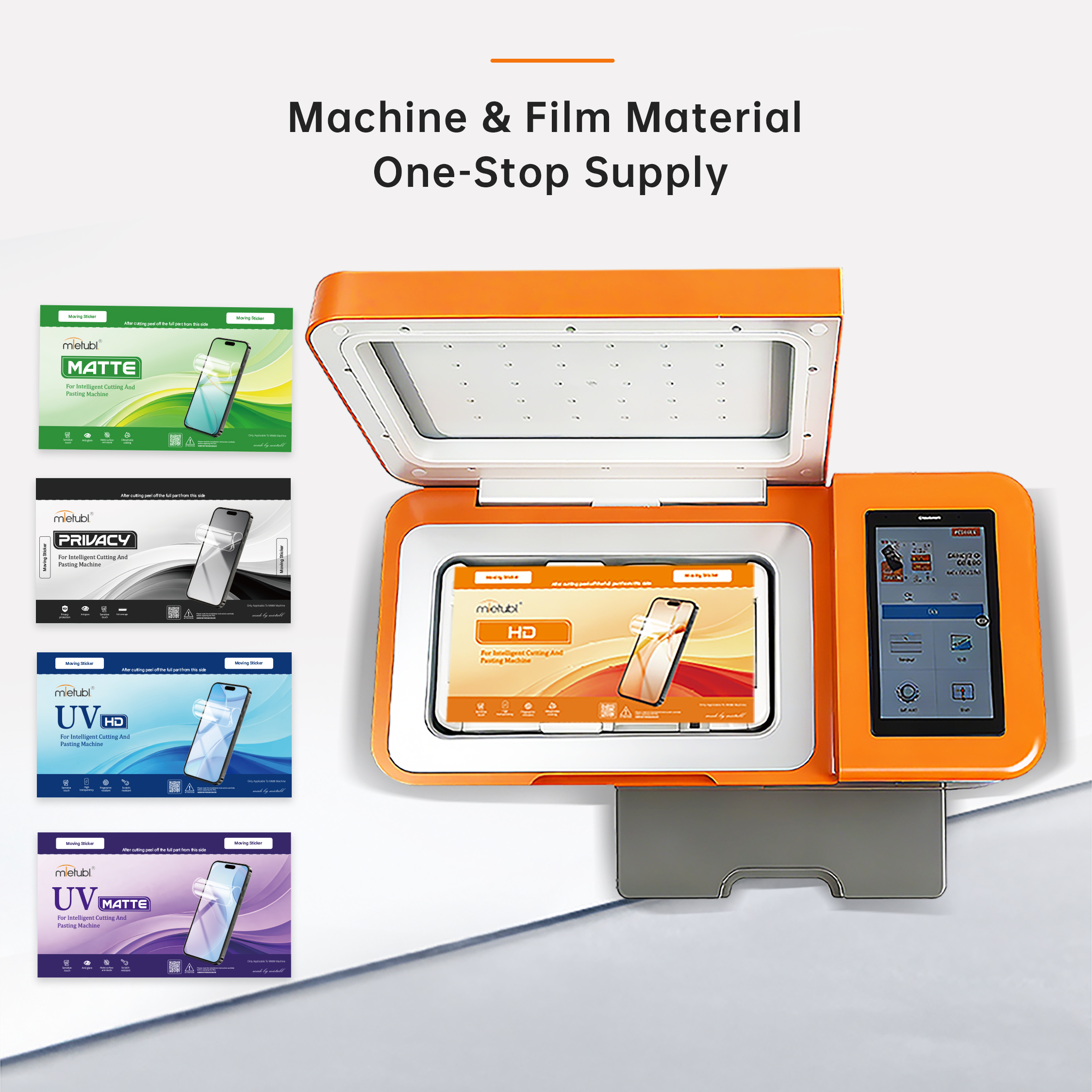
Do not validate only one easy phone model. Include patterns with narrow borders, openings, curved details, or other features that may expose cutting and alignment risks. Run more than one sample for critical products so the decision is not based on a single successful output.
Because the machine integrates three process stages, samples should continue through the intended workflow rather than stopping after cutting. Where UV curing is required, test the actual UV-compatible film with the built-in 395 nm curing system and inspect the finished result.
Define Output Acceptance Before Testing
A buyer-approved sample sheet can prevent subjective decisions. The criteria should reflect the products being sold and may include:
- Cut shape and dimensions match the selected device pattern.
- Edges, corners, speaker openings, and camera areas meet the agreed visual standard.
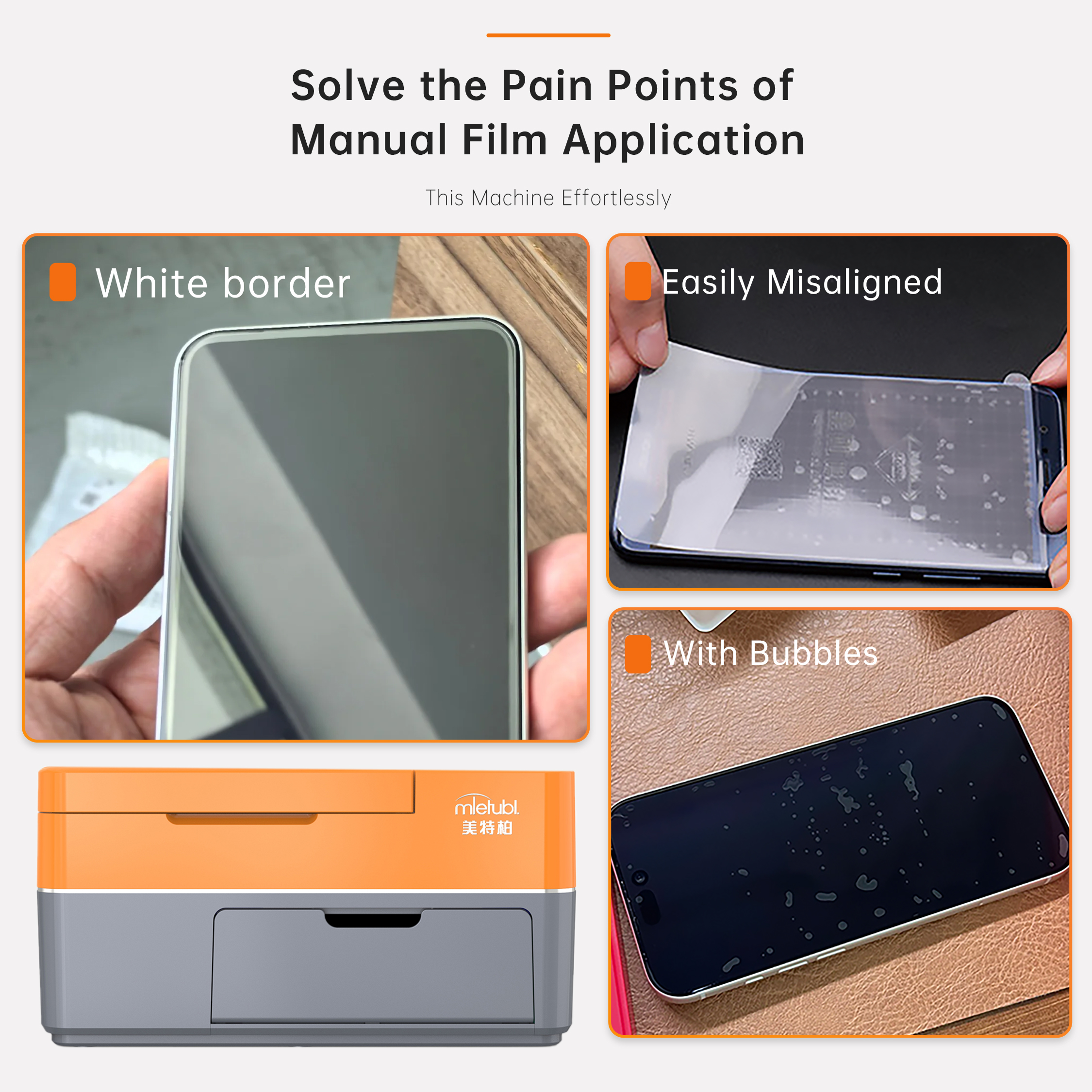
- The applied film has no unacceptable misalignment, lifting, bubbles, or contamination.
- The curing result is consistent with the film supplier’s handling requirements.
- Repeated samples produce an acceptable level of consistency for the intended store or production workflow.
Photograph accepted samples, record the material identity and machine settings, and keep them as approval references. If the supplier cannot confirm a material before ordering, request a sample trial rather than relying on wattage or general product descriptions.
Common Questions
How many watts does the MTB-CUT M688 use?
The specified total power consumption is under 48W. Its rated input range is 110V–240V, but buyers should still confirm the plug and local electrical arrangement.
Does the power rating confirm film compatibility?
No. Wattage describes electrical demand, not cutting, adhesion, application, or curing performance with a specific material. Compatibility should be demonstrated with representative samples.
What should buyers provide for a validation test?
Provide the intended film materials, priority device models, largest required sizes, process instructions, and written acceptance criteria. Include multiple samples when consistency is commercially important.
Conclusion
The M688’s under-48W consumption can satisfy the initial electrical review, but it should not be the final procurement decision. Approve the machine after your representative materials complete the required three-in-one workflow and the finished samples meet a documented acceptance standard.
About Mietubl
Mietubl is a Guangzhou-based mobile accessories brand whose name reflects its guiding idea: Make It Easier To Use, Better Life. With roots in the mobile accessories industry dating to 1998 and the MIETUBL brand registered in 2010, the company focuses on products that make everyday digital use simpler and more practical.
Its portfolio includes screen protectors, intelligent screen protector cutting machines, film materials, data cables, chargers, power banks, and audio accessories. By combining design, product development, manufacturing, and channel support, Mietubl works with distributors and retailers serving a broad range of mobile accessory needs, with products exported to more than 120 countries and regions.
For product information, samples, or distribution opportunities, contact Marketing@mietubl.com or visit www.mietubl.com.
Was this article helpful?
Your feedback helps us improve future articles.