
Buyers should validate the MTB-CUT M888 with representative materials and real production files before approving an order. The machine combines printing and cutting, supports several finished-product types, and offers approximately 0.1 mm contour-cutting precision, but suitability depends on the buyer’s actual media, artwork, and acceptance limits. A controlled sample test is therefore the clearest way to reduce compatibility and output risk.
What Should a Representative Sample Prove?
A sample should demonstrate more than whether the machine powers on or completes one preset design. It should show that the MTB-CUT M888 can process the materials, dimensions, colors, shapes, and artwork complexity expected in routine use.
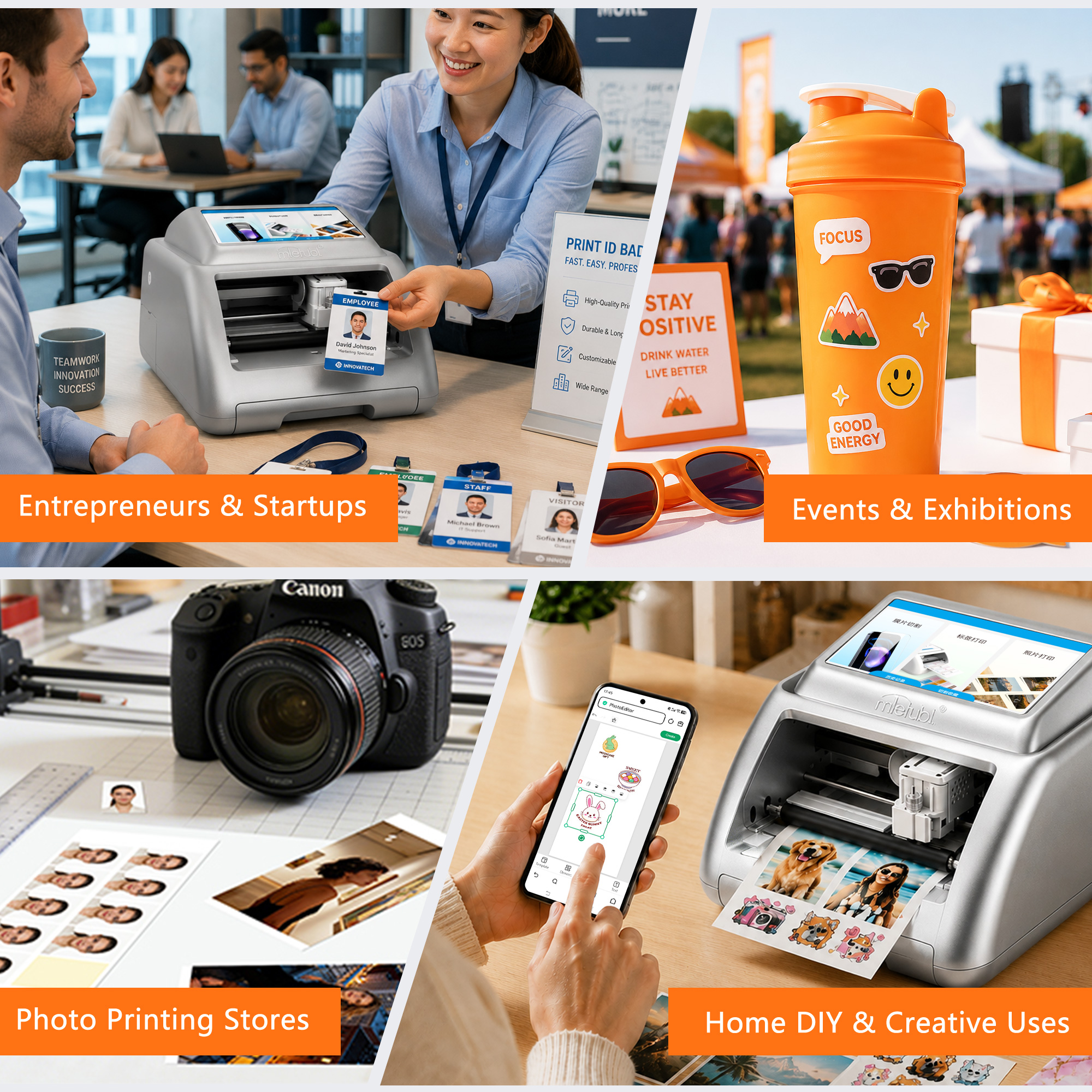
The approved product scope includes phone back films, protective films, photos, labels, stickers, and greeting cards. Buyers should select samples from the categories they genuinely plan to sell rather than testing only the easiest material. If several media types will be used, include each important type in the validation set.
Key decision criteria should include:
- Material handling: Media should feed consistently without obvious shifting, wrinkling, or interference.
- Printed output: Colors, fine details, and image sharpness should meet the buyer’s approved reference.
- Contour result: Cut paths should follow the intended outline within the agreed tolerance.
- Finished-product usability: Samples should be removable, handled, and applied as they would be in normal sales or service.
- Workflow fit: Operators should confirm that template selection, image upload, and design preparation suit the intended process.
Validate Material Compatibility Before Volume Buying
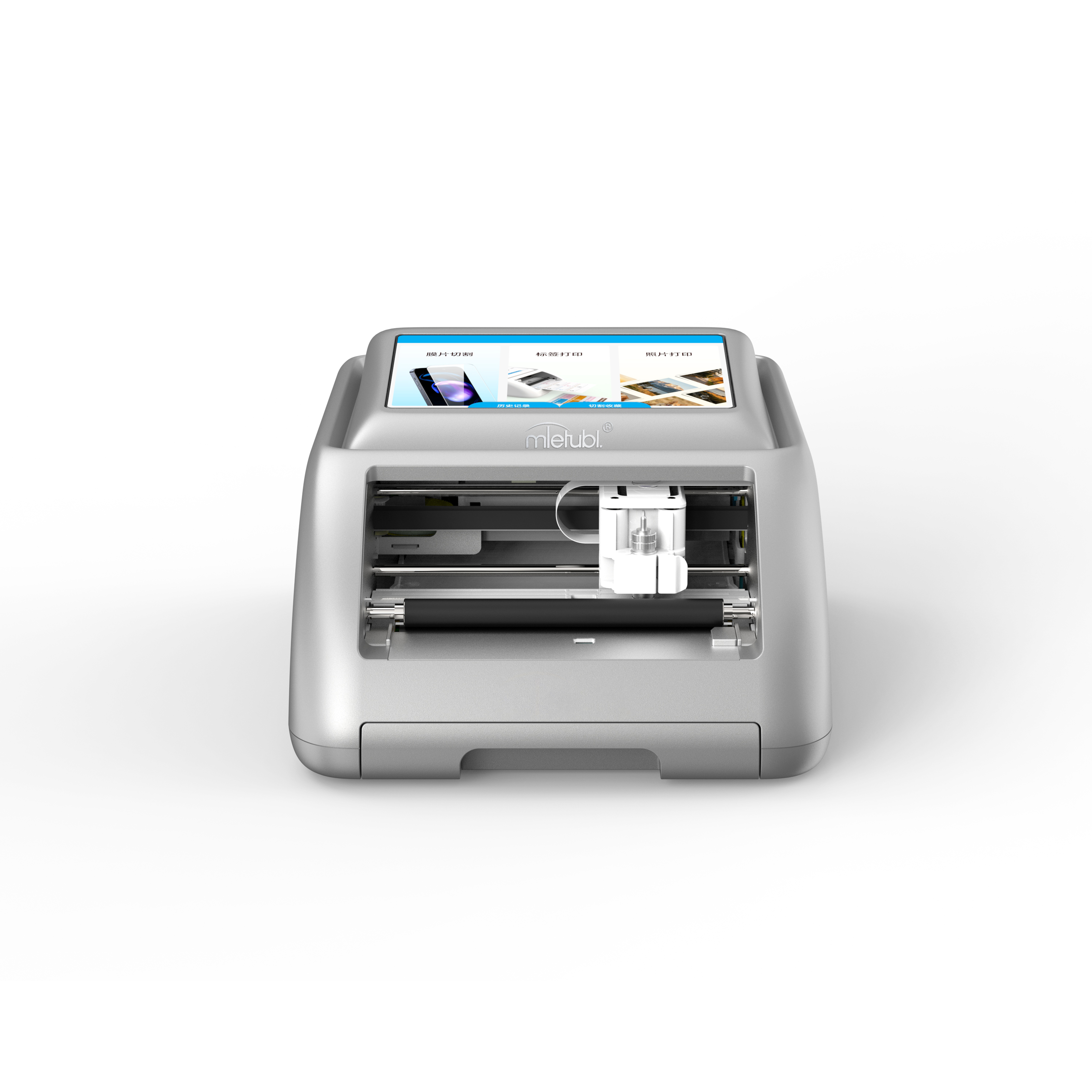
Material compatibility should be treated as a test result, not assumed from a broad application list. The MTB-CUT M888 has a 160 mm feed width and a 138 mm cutting width. Buyers should compare both limits with the full media width and the required finished cut area, including margins needed for feeding and positioning.
The listed paper size is 100 × 148 mm. If the planned product uses another size, thickness, coating, adhesive construction, or surface treatment, the buyer should submit that exact material for testing. A visually similar substitute may behave differently during printing, feeding, or cutting.
For protective films and phone back films, validation should use the intended commercial stock. For photos, cards, and labels, buyers should test the actual printable surface and finishing method. Where multiple suppliers provide consumables, samples from each supplier may be necessary because the machine specification alone does not establish compatibility with every material variation.
Set Output Acceptance for Print and Contour Cutting
The M888 is specified with 300 DPI resolution and integrates printing and cutting in one machine. Its approved selling points include thermal-sublimation high-definition printing and support for irregularly shaped stickers. Buyers should convert these features into measurable sample acceptance conditions.
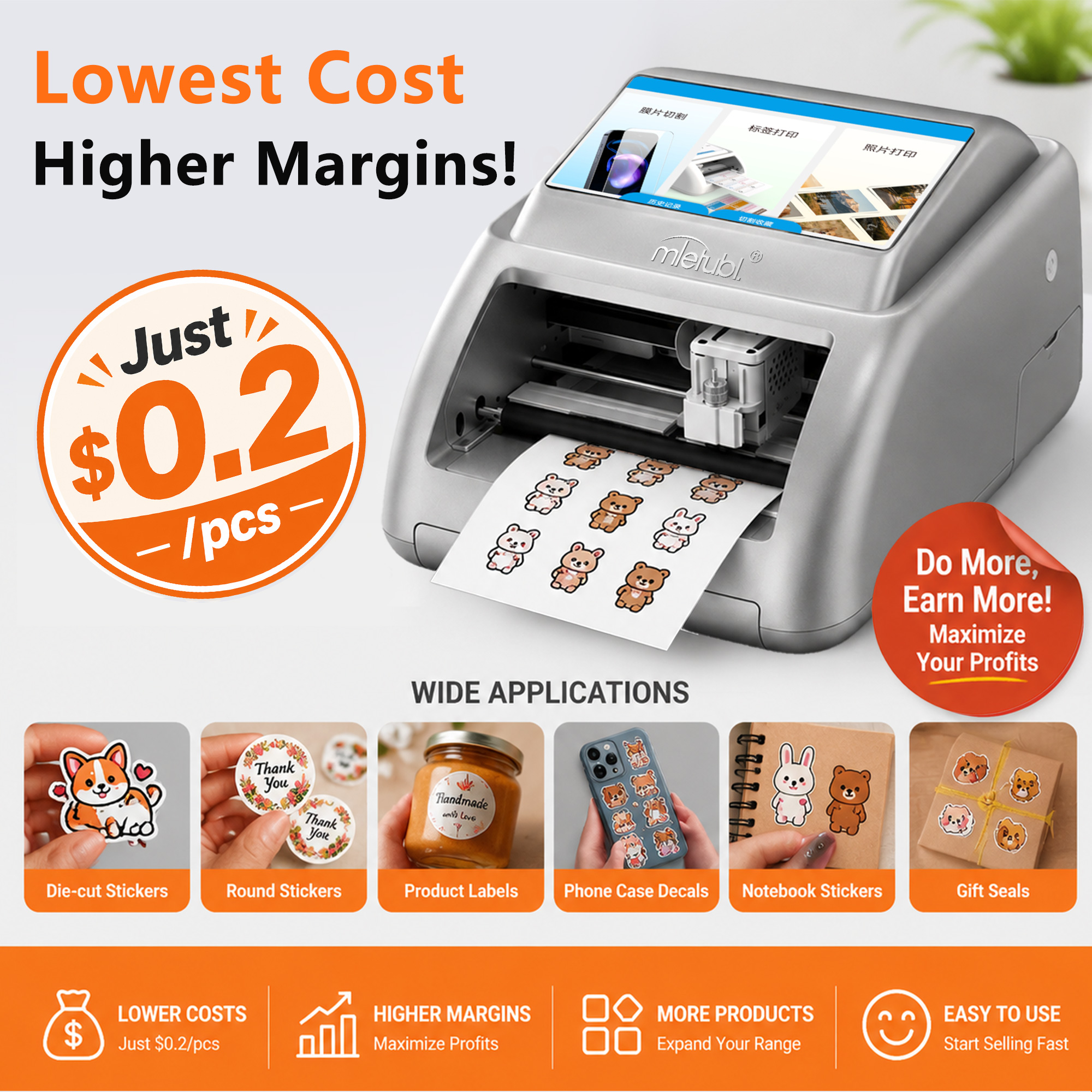
For printing, compare the sample against an approved digital file or physical reference. Review small text, gradients, solid colors, edge clarity, and visible banding. The supplier describes the printed result as detailed in color, waterproof, and resistant to fading; buyers relying on these qualities should define their own exposure, handling, or rub tests rather than accepting the description without verification.
For contour cutting, test circles, tight corners, narrow borders, and asymmetric shapes. The stated maximum precision of approximately 0.1 mm can guide the test, but the final acceptance limit should reflect the artwork, media, and intended product. Record whether the cut enters the printed area, leaves an excessive border, or varies across repeated samples.
Run a Repeatable Sample-Validation Process
Use the same files, consumables, settings, and inspection method for every trial. Begin with a simple design to verify basic feeding and output, then add a commercially representative design with fine details and irregular contours.
- Document the material name, dimensions, printable side, and supplier.
- Provide final or near-final artwork rather than a demonstration-only image.
- Produce several copies to check whether the result remains consistent.
- Inspect printed appearance before evaluating the cut path.
- Record pass, conditional pass, or fail for each acceptance criterion.
The machine also includes templates, image upload, AI background removal, and AI-generated design functions. These can simplify content preparation, but buyers should separately validate any function that will be part of the daily workflow. Output approval should remain based on the finished sample, not solely on feature availability.
Common Questions About M888 Sample Approval
Can one sample confirm compatibility with every material?
No. Buyers should test each commercially important material type, especially when coatings, adhesives, thicknesses, or suppliers differ.
Should buyers test printing and cutting separately?
They can inspect each stage separately, but final approval should cover the complete integrated workflow because the finished product depends on both print quality and contour alignment.
What files should be used for validation?
Use representative production artwork containing the smallest text, narrowest borders, most demanding colors, and most complex shapes expected in normal orders.
Conclusion
The MTB-CUT M888 should be approved when representative materials pass documented checks for feeding, printed appearance, contour alignment, and finished-product usability. Buyers should avoid relying on a generic demonstration and instead use their own consumables and artwork to establish a clear, repeatable acceptance decision.
About Mietubl
Mietubl is a Guangzhou-based mobile accessories brand whose name reflects its guiding idea: Make It Easier To Use, Better Life. With roots in the mobile accessories industry dating to 1998 and the MIETUBL brand registered in 2010, the company focuses on products that make everyday digital use simpler and more practical.
Its portfolio includes screen protectors, intelligent screen protector cutting machines, film materials, data cables, chargers, power banks, and audio accessories. By combining design, product development, manufacturing, and channel support, Mietubl works with distributors and retailers serving a broad range of mobile accessory needs, with products exported to more than 120 countries and regions.
For product information, samples, or distribution opportunities, contact Marketing@mietubl.com or visit www.mietubl.com.
Was this article helpful?
Your feedback helps us improve future articles.