
Buyers should validate the MTB-CUT 180T with representative film materials and real device patterns before approving an order. Its stated material support and adjustable cutting controls make it a candidate for multi-material operations, but specifications alone cannot confirm compatibility with a buyer’s exact film construction. The purchasing decision should therefore depend on accepted samples, repeatable output, and clearly recorded tolerances.
Start the Purchase Decision With Sample Validation
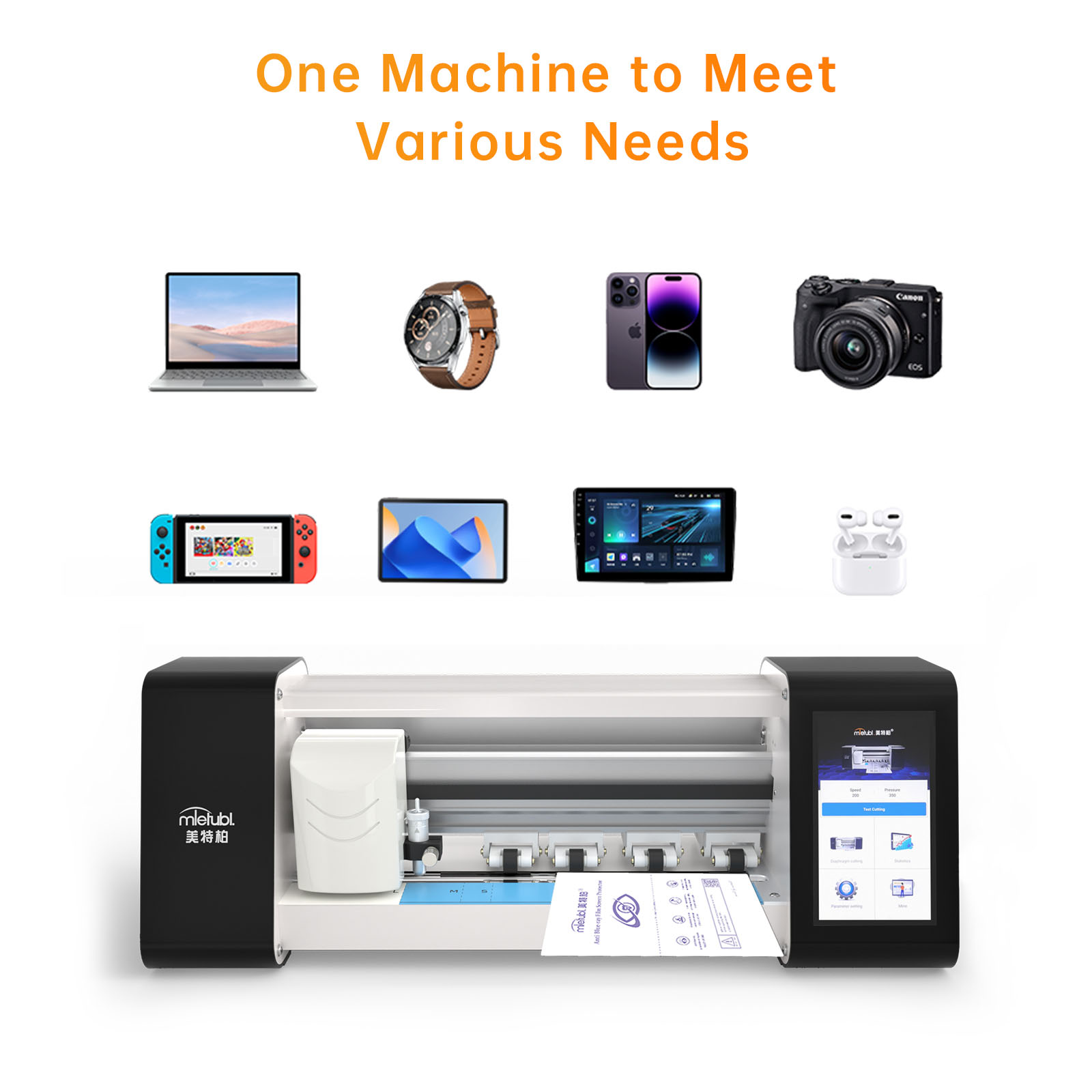
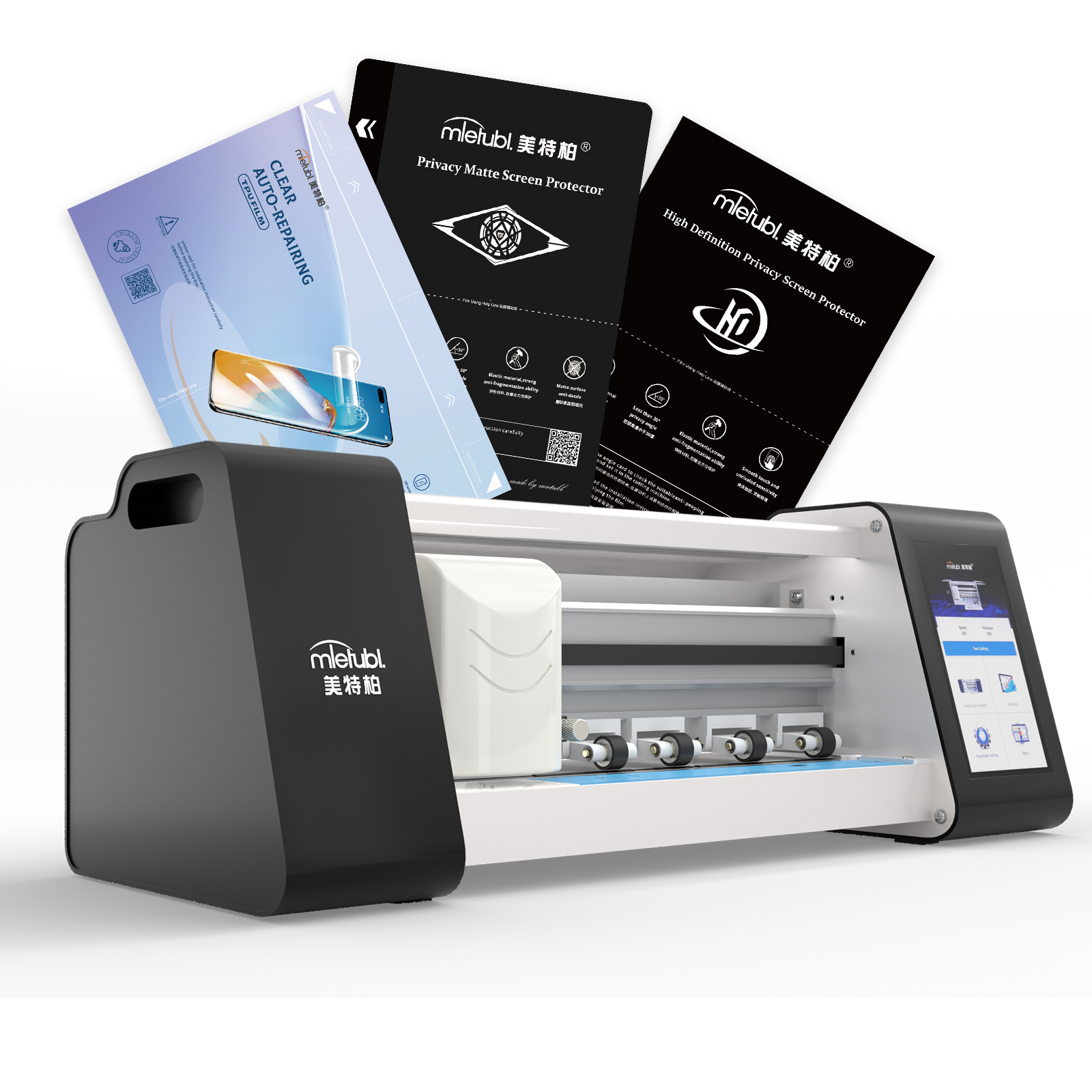
When evaluating a current-generation mobile phone film cutting machine, begin with the materials and device categories that matter commercially. The MTB-CUT 180T supports TPU, PET, clear, matte, and privacy films. It can also process patterns for phones, tablets, watches, and cameras.
A useful decision checklist is:
- Use production-representative film: Test the same material types, thicknesses, liners, and surface finishes intended for sale.
- Select meaningful patterns: Include high-volume phone models, small watch shapes, and larger tablet layouts where relevant.
- Define acceptance before testing: Record requirements for edge quality, dimensional fit, liner condition, and repeatability.
- Confirm operating cost assumptions: The machine is offered without point deductions or per-cut charges, which can simplify long-term usage planning.
Verify Material Compatibility Within the Cutting Range
The machine has a maximum feed width of 320 mm, a maximum cutting width of 228 mm, and a stated maximum cutting thickness of 0.7 mm. Buyers should compare these limits with the complete film stack rather than only the nominal top-layer thickness.
Each requested sample should use the actual film, adhesive structure, and release liner. A material may fit within the stated thickness range yet require different pressure or speed settings to produce an acceptable result. The MTB-CUT 180T provides digital pressure adjustment from 1 to 999 and digital speed adjustment from 1 to 500, allowing settings to be matched to different sample materials.
During validation, check whether the blade cuts the intended layer without scoring the liner excessively. Also inspect corners, speaker openings, camera cutouts, and narrow sections because these areas can reveal compatibility issues more clearly than long straight edges.
Set Measurable Output Acceptance Criteria
The stated cutting accuracy is 0.05 mm, while repeat accuracy is listed as 0.1 mm over two repetitions on a 200 × 200 mm pattern. These figures provide a reference for planning acceptance, but buyers should still judge completed samples on the target devices.
Output acceptance can include:
- Alignment with the display, camera, sensor, and speaker areas.
- Consistent margins around curved or narrow edges.
- Clean separation from the surrounding film.
- No unintended penetration or severe marking of the release liner.
- Comparable results across repeated cuts using unchanged settings.
Use a simple inspection record for pattern name, material, pressure, speed, blade condition, observed deviation, and pass or fail status. This creates a practical reference for incoming inspection and operator setup.
Run Representative Samples, Not Showcase-Only Cuts
A sample set should reflect the intended operating mix rather than only one easy-to-cut phone pattern. For a retail deployment, buyers may request several current phone models plus a privacy or matte film. A distributor serving multiple channels may also include tablet, watch, and camera patterns.
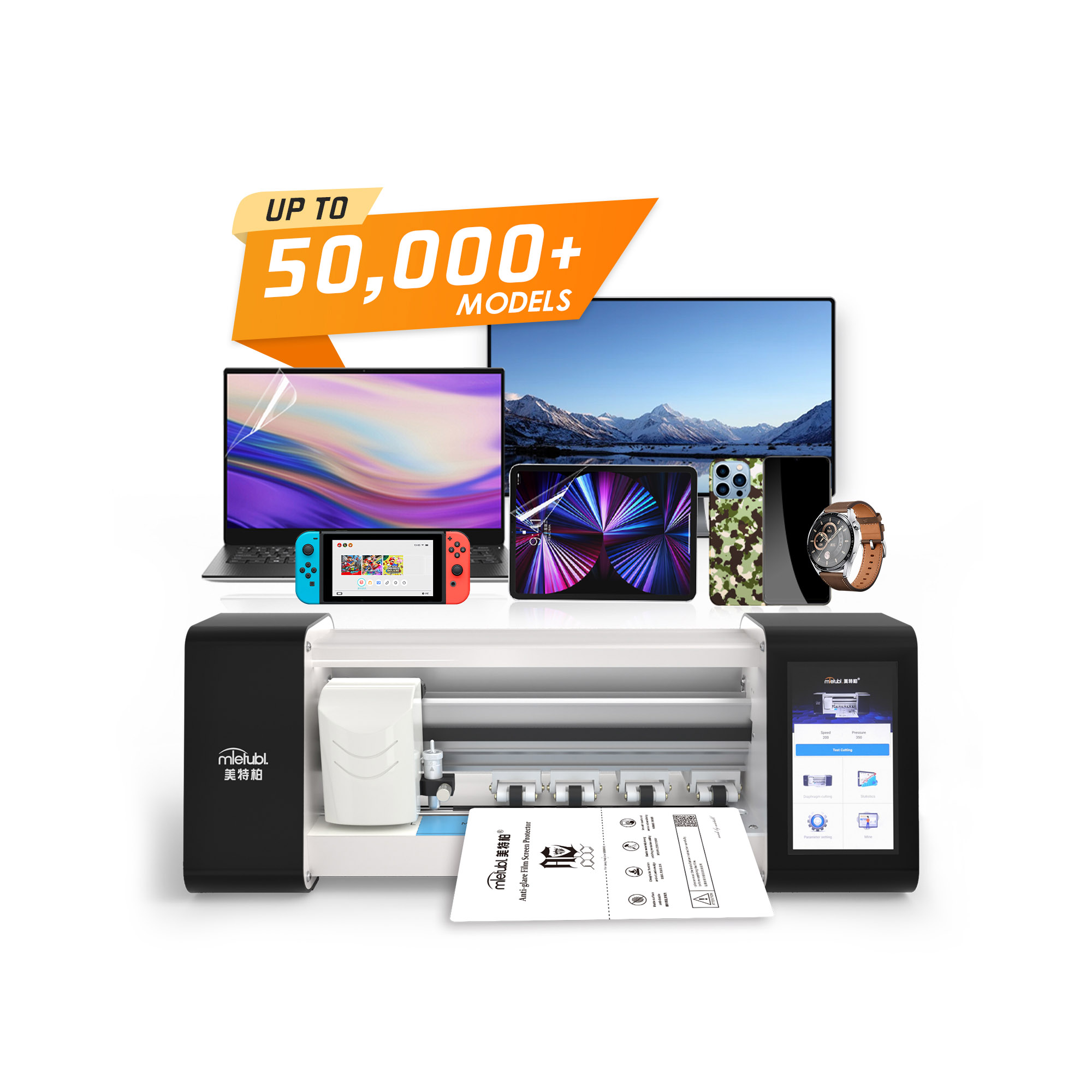
Run repeated cuts after identifying a workable setting. A single successful output shows possibility; repeated accepted outputs provide better evidence for purchasing. If several materials will be stocked, validate each separately instead of assuming one setup will transfer across TPU, PET, and other film constructions.
The listed quality inspection method is GB/T2828.1. Buyers should confirm how this method will be applied to their order and agree on the inspected characteristics, sampling arrangement, and acceptance thresholds before shipment.
Common Questions About Sample Acceptance
Can one approved TPU sample validate every supported material?
No. Buyers should test each commercially important material because PET, matte, clear, privacy, and TPU films may respond differently to blade pressure and cutting speed.
Should buyers accept a sample based only on dimensional measurements?
No. Measurements should be combined with installation on the intended device or an agreed equivalent to check openings, edge margins, handling, and liner condition.
What should be confirmed if the sample fails?
Record whether the issue relates to the pattern, material stack, pressure, speed, blade condition, or acceptance threshold, then request a revised sample under documented settings.
Conclusion
The MTB-CUT 180T should be approved when representative materials produce repeatable, device-fitting cuts under recorded settings and agreed inspection criteria. This validation-first approach gives distributors and retailers a clearer basis for judging operational fit while reducing the risk of accepting a machine from specifications or a single showcase sample alone.
About Mietubl
Mietubl is a Guangzhou-based mobile accessories brand whose name reflects its guiding idea: Make It Easier To Use, Better Life. With roots in the mobile accessories industry dating to 1998 and the MIETUBL brand registered in 2010, the company focuses on products that make everyday digital use simpler and more practical.
Its portfolio includes screen protectors, intelligent screen protector cutting machines, film materials, data cables, chargers, power banks, and audio accessories. By combining design, product development, manufacturing, and channel support, Mietubl works with distributors and retailers serving a broad range of mobile accessory needs, with products exported to more than 120 countries and regions.
For product information, samples, or distribution opportunities, contact Marketing@mietubl.com or visit www.mietubl.com.
Was this article helpful?
Your feedback helps us improve future articles.