
The correct way to install tempered glass starts with an inventory decision: hold model-specific finished glass for devices with predictable sales, and consider on-demand film production for uncertain or long-tail demand. These approaches are not interchangeable. Mietubl’s HD Borderless Protector uses high-alumina glass, while the approved cutting systems support flexible film materials. Buyers should therefore align each installation SOP with the stocked material, model list, and expected turnover.
Make the Inventory Decision Before Defining the SOP
An installation process cannot correct a mismatched model or material. Before training staff, decide which device models justify dedicated tempered glass inventory and which may be served through a flexible on-demand film assortment.
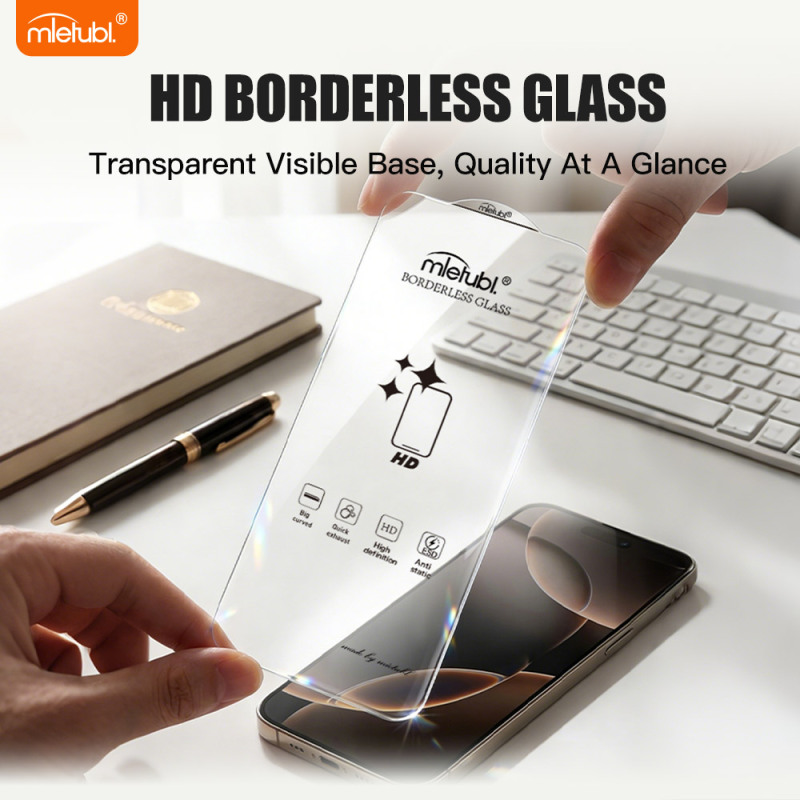
- Reserve finished glass for repeat demand: The HD Borderless Protector has a stated MOQ of 500 pieces and a 30-day delivery time, so model-level demand should be reviewed before ordering.
- Separate glass and cut-film workflows: Approved cutting equipment supports materials such as TPU, PET, clear, matte, and privacy film; this does not establish that it cuts rigid tempered glass.
- Control variants carefully: The product data lists both 0.4 mm and 0.25 mm high-alumina glass constructions with different adhesive configurations.
- Standardize model identification: Staff should confirm the exact phone model and protector variant before opening or applying a unit.
Correct Installation Begins With SKU and Model Control
For a borderless protector, buyers should build the installation procedure around accurate model matching and controlled alignment. The product removes the traditional printed black border to avoid covering the display area. It also integrates an earpiece dust mesh into the glass. These features make correct positioning an important part of the intended product experience.
A practical retail SOP should require staff to verify the device model, inspect the protector and backing, and dry-check the perimeter and earpiece position before application. Cleaning, dust-removal, adhesive placement, pressure, and rework instructions should follow the confirmed procedure supplied with the selected packaging configuration, because the approved product data does not provide a detailed application sequence.
After application, staff should inspect edge alignment, display coverage, earpiece mesh position, and touch operation. This creates a repeatable acceptance check without turning visual judgment into an unsupported technical guarantee.
Finished Stock Suits Predictable Model Demand
Model-specific HD Borderless Protectors may be appropriate when a distributor or retailer can forecast recurring demand by handset model. The transparent borderless structure supports full-screen presentation, while the integrated dust mesh and smooth touch positioning provide clear buyer-value points for staff demonstrations.
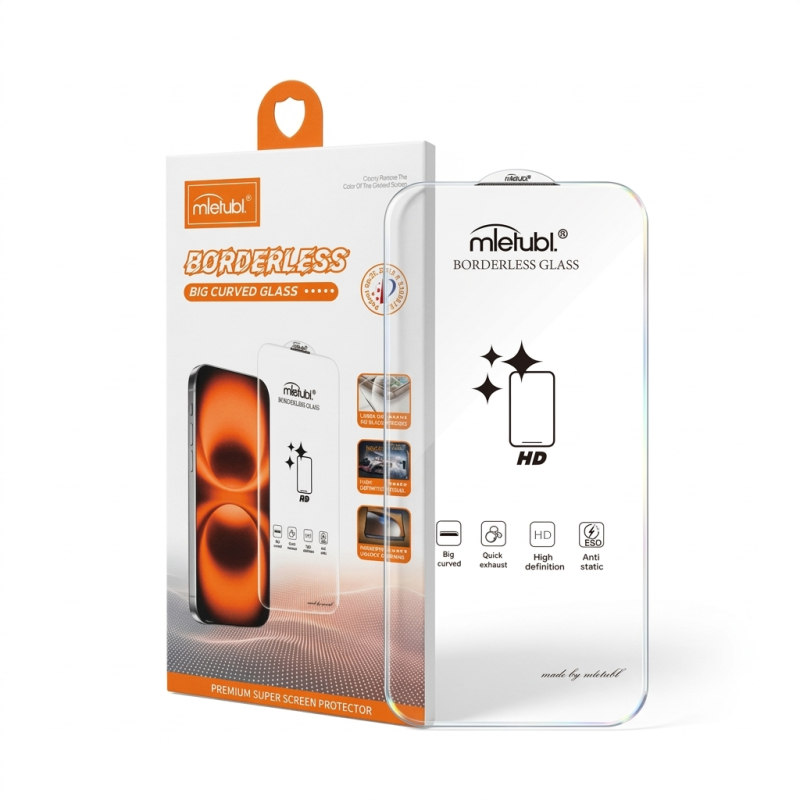
Finished stock also supports branded assortment planning. OEM and ODM options include customization of the logo, packaging, and model list. Buyers can therefore coordinate packaging with the models they intend to hold, but they should avoid expanding the list faster than sales data supports. Slow-moving model-specific glass may create fragmented inventory because one protector cannot automatically be reassigned to another device.
On-Demand Production Covers Uncertain Assortments Differently
On-demand cutting can complement rather than replace finished tempered glass. The MTB-CUT M688 is designed to reduce film-material inventory and its database covers more than 60,000 device models with daily cloud updates. This approach may help stores serve a broader device mix without holding a finished flexible-film SKU for every model.

The procurement distinction is material-specific. If customers require the construction and presentation of high-alumina tempered glass, buyers should plan dedicated finished inventory. If the priority is rapid coverage of less predictable device models, a compatible cut-film workflow may be considered. Retailers offering both should keep separate pricing, installation instructions, staff training, and customer explanations so the products are not presented as identical.
Common Questions
Can borderless tempered glass be cut on demand in a store?
The supplied cutting-machine data confirms support for flexible materials including TPU and PET, but it does not confirm cutting rigid tempered glass. Buyers should treat model-specific glass and on-demand film as separate product routes.
What should staff verify before installing the protector?
They should confirm the phone model, glass variant, perimeter alignment, and earpiece mesh position, then follow the application instructions confirmed for that packaging configuration.
When should a buyer hold model-specific finished stock?
Finished stock may fit models with stable repeat sales that can support the stated order quantity and replenishment schedule. Demand by model should be reviewed before committing inventory.
Conclusion
Use a dual inventory policy rather than forcing one solution across every handset: maintain model-specific tempered glass where demand is predictable, and evaluate compatible on-demand film for uncertain coverage. The correct installation process should then begin with model verification, material-specific instructions, and a consistent post-application check.
About Mietubl
Mietubl is a Guangzhou-based mobile accessories brand whose name reflects its guiding idea: Make It Easier To Use, Better Life. With roots in the mobile accessories industry dating to 1998 and the MIETUBL brand registered in 2010, the company focuses on products that make everyday digital use simpler and more practical.
Its portfolio includes screen protectors, intelligent screen protector cutting machines, film materials, data cables, chargers, power banks, and audio accessories. By combining design, product development, manufacturing, and channel support, Mietubl works with distributors and retailers serving a broad range of mobile accessory needs, with products exported to more than 120 countries and regions.
For product information, samples, or distribution opportunities, contact Marketing@mietubl.com or visit www.mietubl.com.
Was this article helpful?
Your feedback helps us improve future articles.