
Do not choose between ceramic and tempered glass screen protectors from the category name alone. The approved product data identifies the Privacy Borderless Protector as high-alumina glass, but it provides no equivalent ceramic-film specification. Buyers should therefore use the documented glass construction as a control sample, request full material details for any ceramic-labeled alternative, and approve the category only after representative samples meet defined output criteria.
Validate the Material Claim Before Comparing Categories
The immediate sourcing risk is assuming that “ceramic” and “tempered glass” labels describe standardized constructions. For the focus product, the documented material is high-alumina glass, offered in 0.4 mm and 0.25 mm configurations. That gives buyers a specific construction to validate rather than a general marketing category.
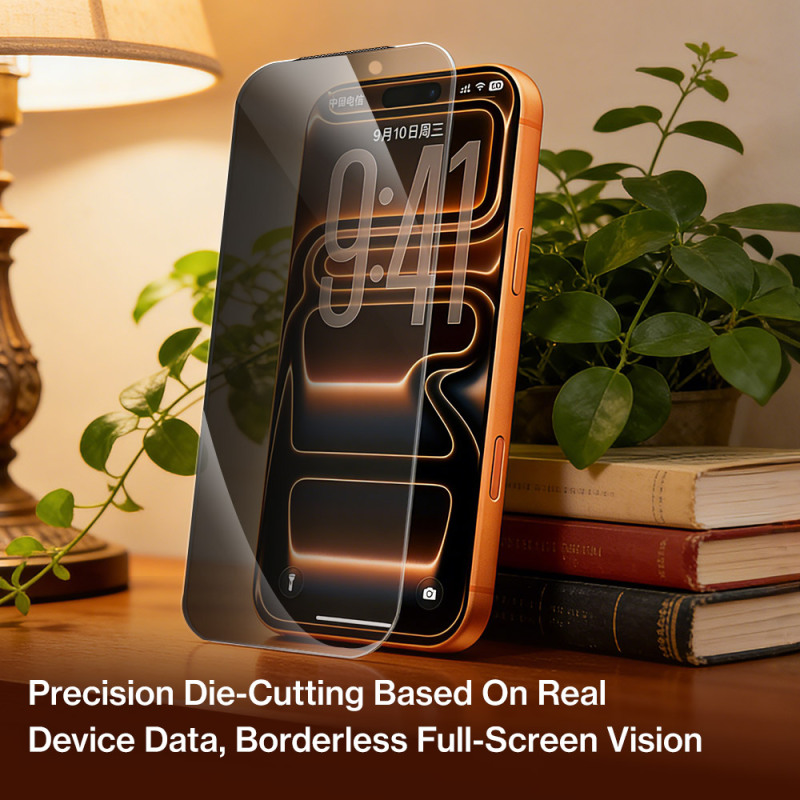
Before comparing it with a ceramic-labeled option, request the candidate’s declared base material, adhesive structure, thickness, surface treatment, and supported models. If those details are unavailable, the buyer cannot make an evidence-based material comparison.
Key validation criteria
- Confirm that the delivered sample matches the declared base material and construction.
- Test each thickness or structure separately rather than treating variants as interchangeable.
- Use representative phone models, screen shapes, and intended packaging configurations.
- Define acceptable installed output before discussing volume production.
- Record results by model and sample batch for later comparison.
Build a Representative Sample Test for Material Compatibility
A useful sample plan should reflect the actual assortment. The glass product data includes different thickness and curvature combinations: the 0.4 mm construction is associated with 120cc curvature, while the 0.25 mm construction is associated with 60cc curvature. These variants should not be approved from a single handset test.
Select samples across flat and curved screen profiles within the intended model list. Installation testing should check edge alignment, full-surface contact, visible lifting, and whether the protector interferes with the expected screen area. Buyers planning multiple regional model lists should include representative devices from each planned assortment rather than validating only one popular phone.
Material compatibility also includes the adhesive system. The product uses a privacy antistatic AB adhesive, with a 150um configuration specified for the thinner glass variant. Sampling should confirm that each supplied construction corresponds to the correct approved model and thickness combination.
Set Output Acceptance for Privacy, Touch, and Appearance
Acceptance should focus on installed output, not only uninstalled sample appearance. The approved selling points describe a micro-louver privacy layer intended to keep the front view clear while obscuring screen content from the side. Buyers should define a consistent viewing setup and compare samples under the same screen brightness, content, angle, and ambient lighting.
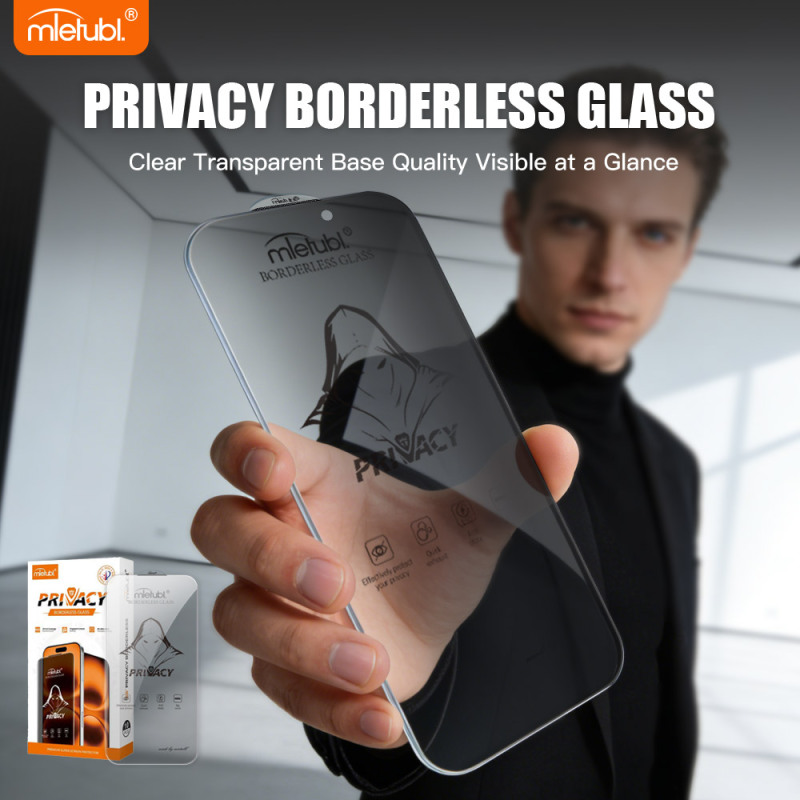
The transparent borderless structure is intended to reduce the heavy black-edge appearance associated with traditional privacy protectors. Inspect whether the installed sample avoids unwanted display obstruction and maintains visually consistent edges on each representative model.
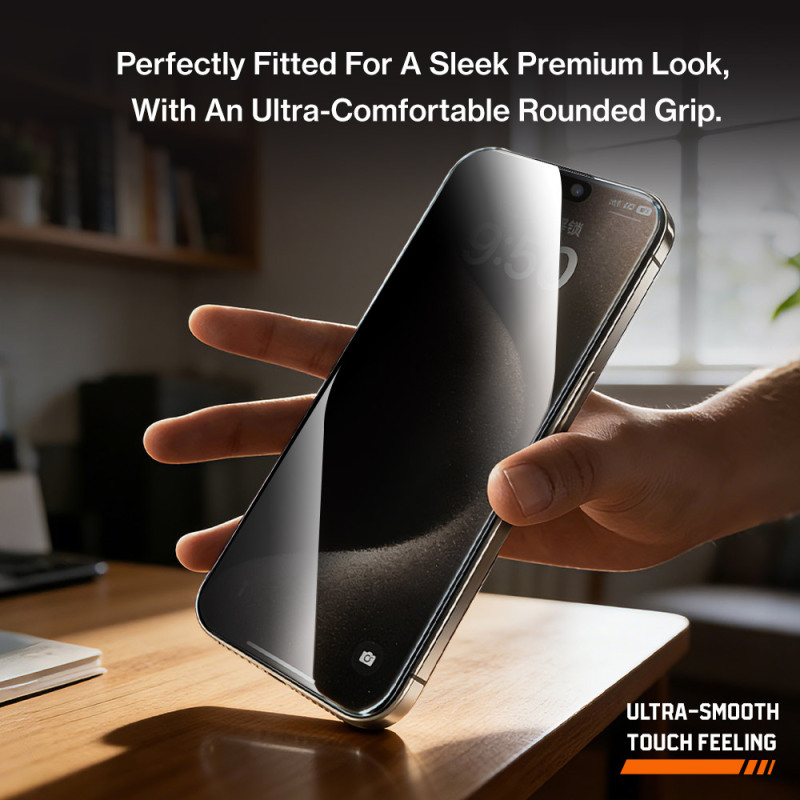
Touch response and glass feel should also be checked through repeatable actions such as typing, swiping near the edges, and using common navigation gestures. Acceptance criteria must be agreed by the buyer and supplier; the source data does not provide numerical thresholds for privacy angle performance, touch latency, or edge-lift tolerance.
Turn Sample Results Into a Procurement Decision
Approve tempered glass when the documented glass construction meets the buyer’s model-fit, privacy, touch, and cosmetic requirements. A ceramic-labeled alternative may be considered, but it should not be treated as better, lighter, or more flexible without corresponding approved specifications and comparable sample results.
For repeat orders, convert the approved sample into a reference standard. Record the product structure, model mapping, packaging version, and observed output. The stated quality inspection method is GB/T2828.1, but buyers should still confirm the inspection level, acceptance limits, defect definitions, and how the approved reference sample will be used during production inspection.
OEM and ODM options include customization of logos, packaging, and product specifications. Any customization should be included in the validation batch because printing, packaging pressure, or a changed construction may affect the final delivered presentation.
Common Questions
Can buyers identify ceramic and tempered glass by touch alone?
No reliable conclusion should be based only on touch or appearance. Confirm the declared construction in writing and test labeled samples under the same installation and inspection conditions.
Is one phone model enough for sample approval?
Usually not when the order covers different screen profiles or protector constructions. Buyers should select representative models and test each relevant thickness and curvature combination.
Should privacy performance be checked before bulk ordering?
Yes. Compare front clarity and side-view obstruction using a consistent viewing setup, then document what output is acceptable for the intended retail positioning.
Conclusion
The safest decision is to approve verified output rather than a ceramic or tempered glass label. Use the documented high-alumina glass construction as a control, require equivalent material disclosure from alternatives, and place the order only when representative installed samples satisfy the agreed acceptance standard.
About Mietubl
Mietubl is a Guangzhou-based mobile accessories brand whose name reflects its guiding idea: Make It Easier To Use, Better Life. With roots in the mobile accessories industry dating to 1998 and the MIETUBL brand registered in 2010, the company focuses on products that make everyday digital use simpler and more practical.
Its portfolio includes screen protectors, intelligent screen protector cutting machines, film materials, data cables, chargers, power banks, and audio accessories. By combining design, product development, manufacturing, and channel support, Mietubl works with distributors and retailers serving a broad range of mobile accessory needs, with products exported to more than 120 countries and regions.
For product information, samples, or distribution opportunities, contact Marketing@mietubl.com or visit www.mietubl.com.
Was this article helpful?
Your feedback helps us improve future articles.