
The available product data does not establish that a cracked tempered glass protector will itself damage the original phone screen. However, retailers should recommend replacement once cracking occurs because the protector’s surface, edges, and protective condition can no longer be assumed to perform as intended. The replacement choice should then match the customer’s main need: privacy, clear borderless viewing, or stronger resistance to everyday impact.
Which Protector Types Support a Complete Retail Offer?
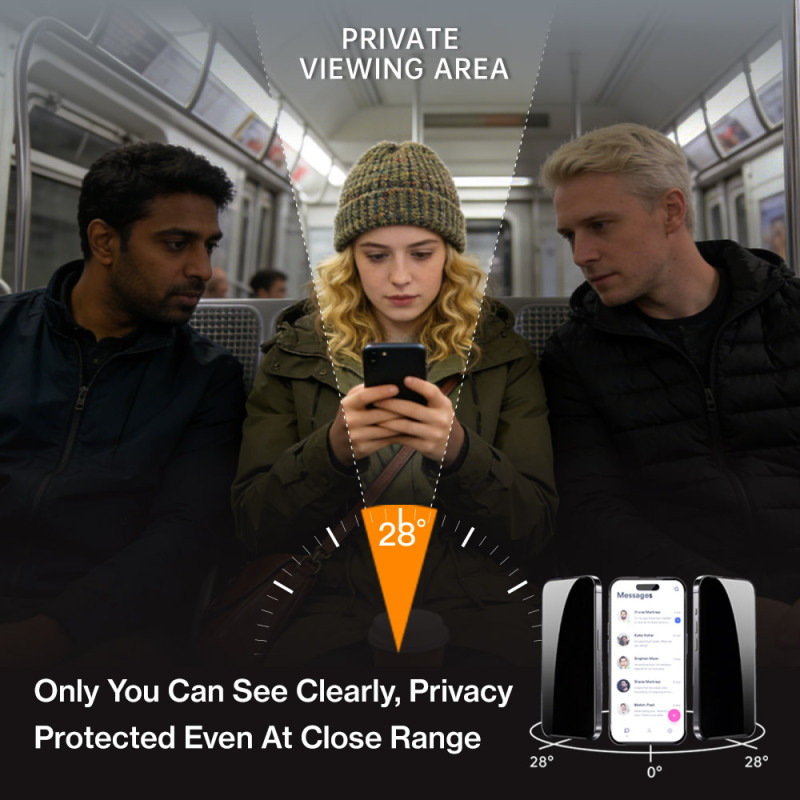
The supplied range covers three distinct screen-protector positions rather than a single universal option. A privacy borderless protector addresses visual confidentiality, an HD borderless protector prioritizes unobstructed display, and an impact-resistant protector is positioned for customers concerned about drops, scratches, and breakage.
Key takeaways for range planning include:
- Replace cracked glass rather than presenting continued use as risk-free.
- Use privacy protection as a separate value tier, not simply as a darker clear film.
- Keep an HD borderless option for customers who prioritize screen visibility.
- Offer an impact-oriented choice where durability is the primary buying concern.
How Do the Three Protector Outputs Differ?
| Protector type | Approved product feature | Recommended retail position |
|---|---|---|
| Privacy borderless | Micro-louver privacy layer with a transparent borderless structure | Customers who frequently view personal or business information in shared spaces |
| HD borderless | Transparent construction without traditional black border printing | Customers focused on clear viewing and a complete display area |
| Impact-resistant | Double-strengthened high-alumina glass with documented flex and impact testing | Customers who place greater weight on resistance to drops and daily wear |
This structure can help retailers explain why a cracked protector should not always be replaced with the cheapest available alternative. The appropriate replacement depends on which benefit the customer wants to preserve or improve.
Where Does the Privacy Borderless Protector Fit?
The Privacy Borderless Protector combines a micro-louver privacy layer with a transparent base designed to reduce the heavy appearance associated with conventional black-edged privacy protectors. It is intended to remain clear when viewed from the front while obscuring screen content from side angles.
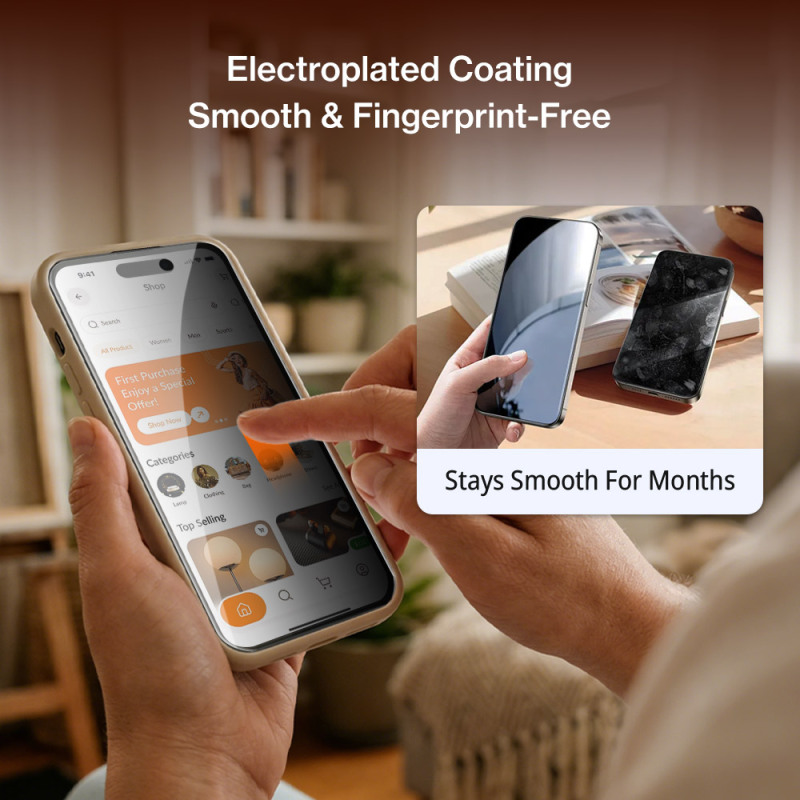
Its 2.5D polished curved edge and treated glass surface add buyer value for customers who also care about handling comfort, touch response, and reduced fingerprint residue. Retailers may position it for commuters, office users, sales teams, or other customers who commonly use phones around other people, while avoiding unsupported claims about complete confidentiality in every environment.
Which Range Options Serve Clarity and Impact Buyers?
The HD Borderless Protector is the clearer fit when privacy filtering is unnecessary. Its transparent, borderless construction is designed to avoid covering the display area, while an integrated earpiece dust mesh provides another visible product distinction at the sales counter.
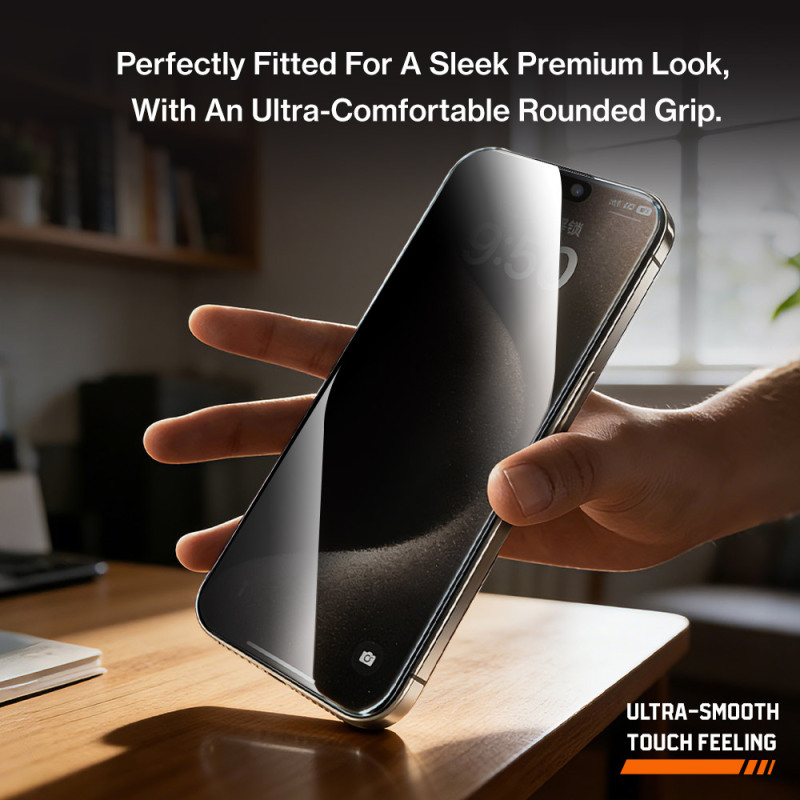
The impact-resistant protector supports a different conversation. Its approved specifications include high-alumina glass, Mohs 6 surface hardness, O-shaped bending capability, and a test using a 64-gram steel ball from a height of 2 meters. These details can support a durability-led retail tier, although buyers should still confirm model compatibility, packaging configuration, and the exact claims permitted in their local market.
Common Questions
Should customers keep using a cracked glass protector?
Continued use should not be presented as risk-free. Replacement is the more responsible recommendation because the cracked product’s edge condition and remaining protective performance have not been established.
Is a privacy protector the best replacement for every phone?
No. It fits customers who value side-angle privacy. Buyers prioritizing brightness and an unobstructed display may prefer the HD borderless option instead.
Can retailers customize the protector range?
The approved product information supports OEM and ODM customization for branding, packaging, and selected product specifications. Buyers should confirm the exact model list and customization scope before ordering.
Conclusion
A cracked tempered glass protector is best treated as a replacement trigger, not as proof that the phone screen has already been harmed. Retailers can make that replacement more valuable by offering a clear three-part choice: privacy borderless protection, HD borderless viewing, or impact-oriented durability. The right assortment is the one that makes these customer priorities easy to understand at the point of sale.
About Mietubl
Mietubl is a Guangzhou-based mobile accessories brand whose name reflects its guiding idea: Make It Easier To Use, Better Life. With roots in the mobile accessories industry dating to 1998 and the MIETUBL brand registered in 2010, the company focuses on products that make everyday digital use simpler and more practical.
Its portfolio includes screen protectors, intelligent screen protector cutting machines, film materials, data cables, chargers, power banks, and audio accessories. By combining design, product development, manufacturing, and channel support, Mietubl works with distributors and retailers serving a broad range of mobile accessory needs, with products exported to more than 120 countries and regions.
For product information, samples, or distribution opportunities, contact Marketing@mietubl.com or visit www.mietubl.com.
Was this article helpful?
Your feedback helps us improve future articles.