
The MTB-CUT M888 can suit buyers seeking one compact machine for both printing and contour cutting. Before ordering, however, confirm that its media limits, finished output, software workflow, and commercial terms match the intended product range. A sample-based evaluation is especially important because print appearance, water resistance, cutting accuracy, and production efficiency can vary with the chosen material and design.
What buyers should verify before issuing a purchase order
Procurement should begin with the intended products rather than the equipment description. The M888 is positioned for phone back films, protective films, photos, labels, greeting cards, and irregularly shaped stickers. Buyers should identify which of these applications will generate regular demand and supply representative artwork and materials for testing.
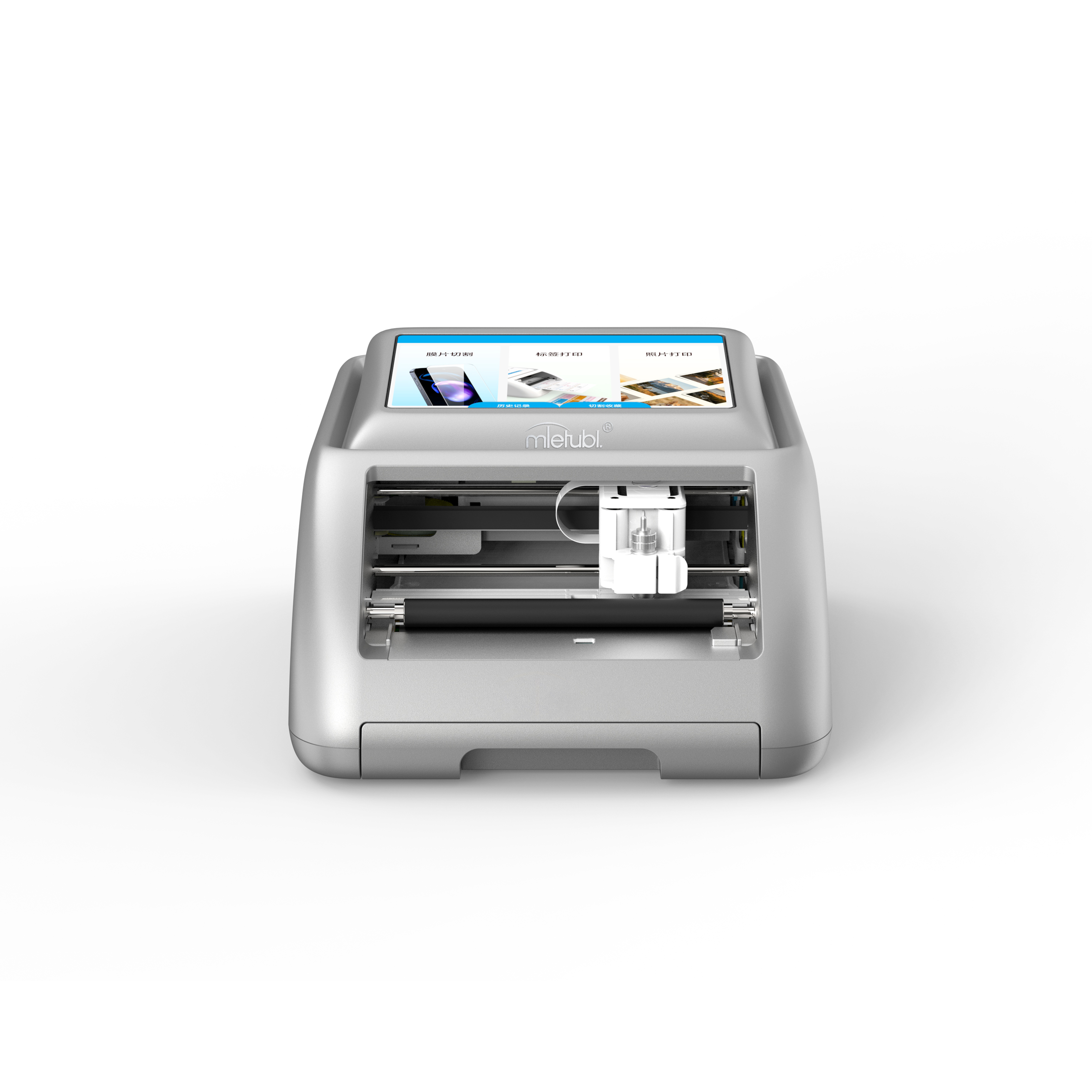
- Workflow fit: Confirm that combining printing and cutting removes meaningful handling steps in your operation.
- Material compatibility: Test every planned film, paper, coating, and adhesive construction.
- Finished-product acceptance: Define tolerances for color, edge alignment, small details, and contour consistency.
- Operating requirements: Review template access, image upload, QR-code operation, and design-tool usability.
- Order readiness: Put inspection, warranty, lead time, accessories, and training expectations in writing.
Confirm that the integrated workflow matches the business model
The central buyer value is the integration of printing and cutting in one machine. This may reduce separate equipment requirements and operator handoffs for stores or workshops producing customized items on demand. It should not automatically be treated as proof of higher throughput.
Ask the supplier to demonstrate the complete sequence: selecting or uploading a design, preparing the media, printing, contour recognition, cutting, unloading, and finishing. Time the full process rather than only the cutting stage. Buyers should also check whether the built-in templates, AI background removal, and AI-generated design functions are appropriate for staff skill levels and local customer requests.
Check media dimensions and finishing tolerances
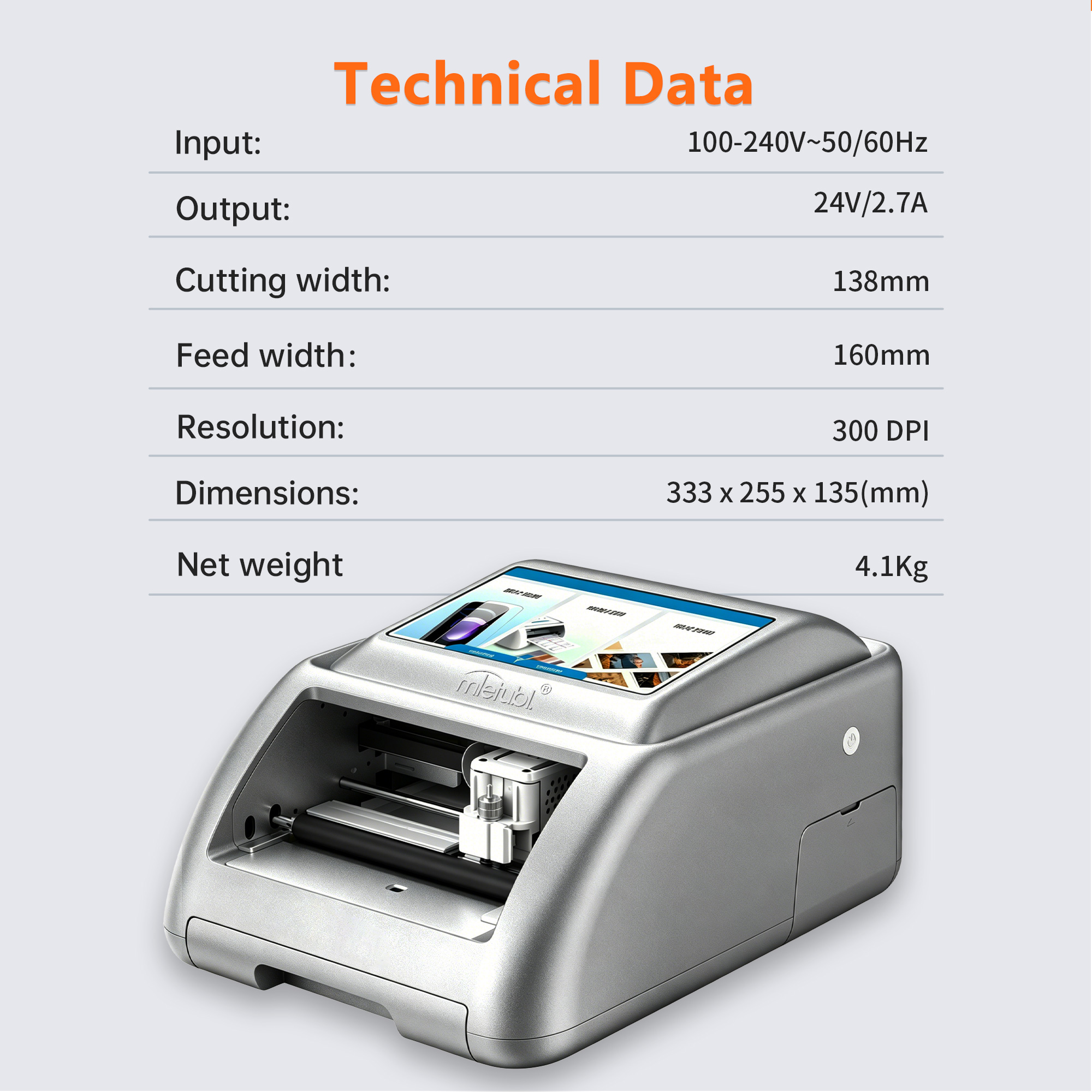
The approved specification lists a 160 mm feed width, a 138 mm cutting width, and a 100 × 148 mm paper size. These boundaries should be compared with the largest design and the usable area required after margins, registration, and finishing are considered.
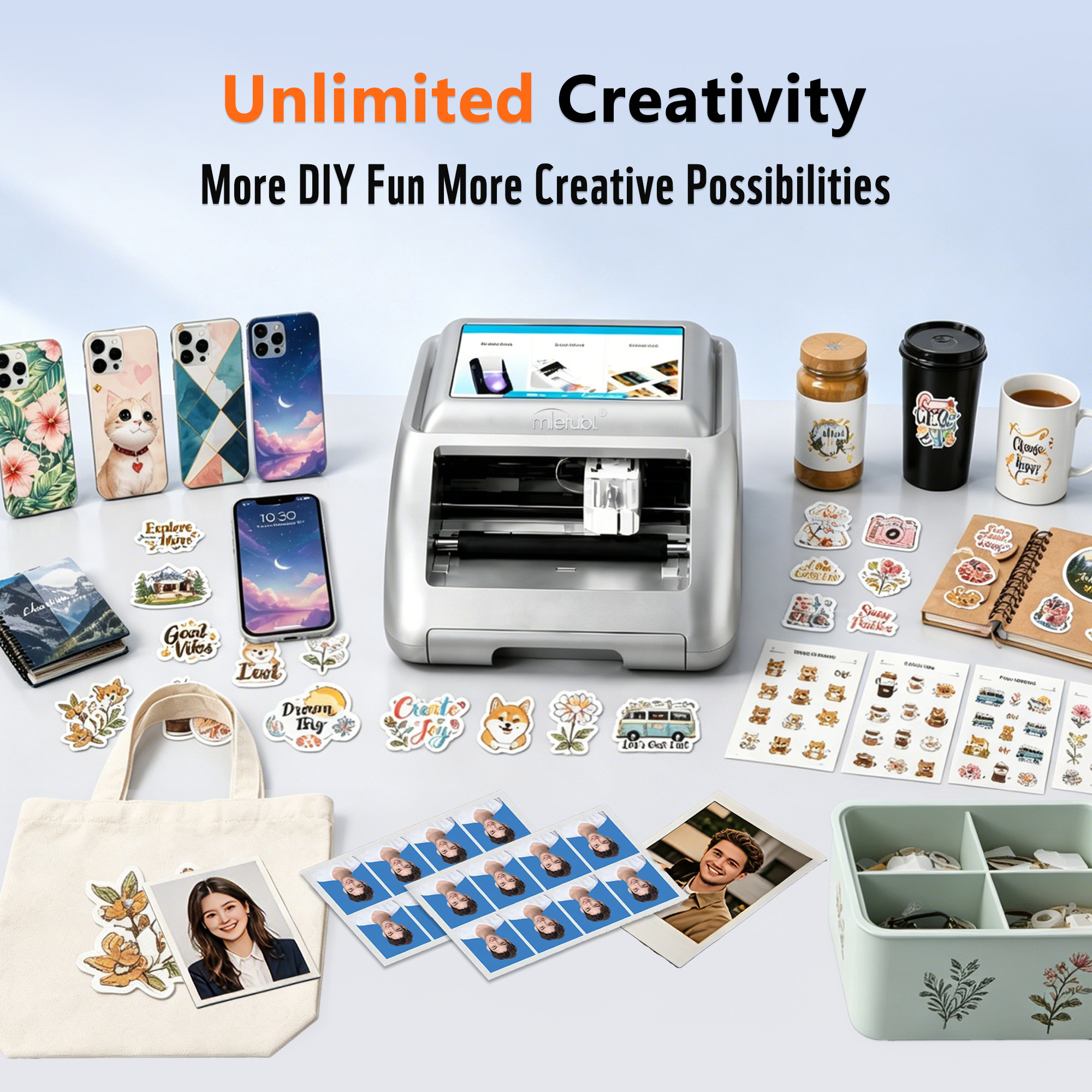
The machine is specified at 300 DPI with contour cutting accuracy of up to approximately 0.1 mm. Professional buyers should request samples containing curves, internal corners, narrow borders, text, and repeated copies. Evaluate whether printed and cut edges remain acceptable across a complete sheet, not just on a simple demonstration graphic.
The product information describes heat-sublimation output as detailed, water-resistant, and not easy to fade. Treat these as characteristics to validate on the exact media being sourced, using agreed rub, moisture, adhesion, and appearance checks.
Validate software, training, and store deployment
The M888 supports QR-code operation and is described as suitable for stores, studios, and home use. For commercial deployment, buyers should confirm the actual onboarding process, supported interface languages, account requirements, template availability, file preparation rules, and whether any functions depend on network access.
Its listed body size is 333 × 255 × 135 mm and its weight is 4.1 kg. Buyers can use these figures to plan counter space, storage, transport, and operator access. Also request a packing list covering the power adapter, cutting tools, consumables, maintenance items, and any components needed to begin production.
Common Buyer Questions
What should be included in a pre-order sample test?
Use your own artwork and intended materials. Include solid colors, photographs, fine contours, repeated shapes, and difficult edges, then approve both print appearance and cutting alignment against written criteria.
What are the stated MOQ, delivery time, and warranty?
The approved information lists a minimum order quantity of one machine, a delivery time of seven days, and a one-year warranty. Buyers should confirm when the delivery period starts, what the warranty covers, and which party handles freight or replacement parts.
How should quality inspection be agreed?
The listed quality inspection method is GB/T2828.1. The purchase agreement should still define the inspection level, acceptance limits, test items, sampling stage, and response to nonconforming units rather than relying on the standard name alone.
Conclusion: Order after a sample workflow test
The M888 is worth considering when a compact, integrated print-and-cut process aligns with the buyer’s planned product mix. A purchase decision should follow successful testing with real materials, approval of finished samples, confirmation of software access, and written agreement on inspection and after-sales responsibilities.
About Mietubl
Mietubl is a Guangzhou-based mobile accessories brand whose name reflects its guiding idea: Make It Easier To Use, Better Life. With roots in the mobile accessories industry dating to 1998 and the MIETUBL brand registered in 2010, the company focuses on products that make everyday digital use simpler and more practical.
Its portfolio includes screen protectors, intelligent screen protector cutting machines, film materials, data cables, chargers, power banks, and audio accessories. By combining design, product development, manufacturing, and channel support, Mietubl works with distributors and retailers serving a broad range of mobile accessory needs, with products exported to more than 120 countries and regions.
For product information, samples, or distribution opportunities, contact Marketing@mietubl.com or visit www.mietubl.com.
Was this article helpful?
Your feedback helps us improve future articles.