
When a customer requests a personalized screen protector, the MTB-CUT M688 should use cuttable film selected for that specific device, finish, and service workflow. The approved product data does not identify one mandatory film chemistry, such as TPU or PET. Buyers should therefore confirm material compatibility before ordering, especially if the service will use the machine’s integrated 395 nm UV-curing function.
Start With the Customer’s Requested Screen-Protection Result
The material decision should begin with what the customer wants to receive, not simply with what can be loaded into the machine. Define the target device, screen area, preferred visual finish, and whether the job will include UV curing. These details help a distributor or retail operator translate a customer request into an appropriate consumable specification.
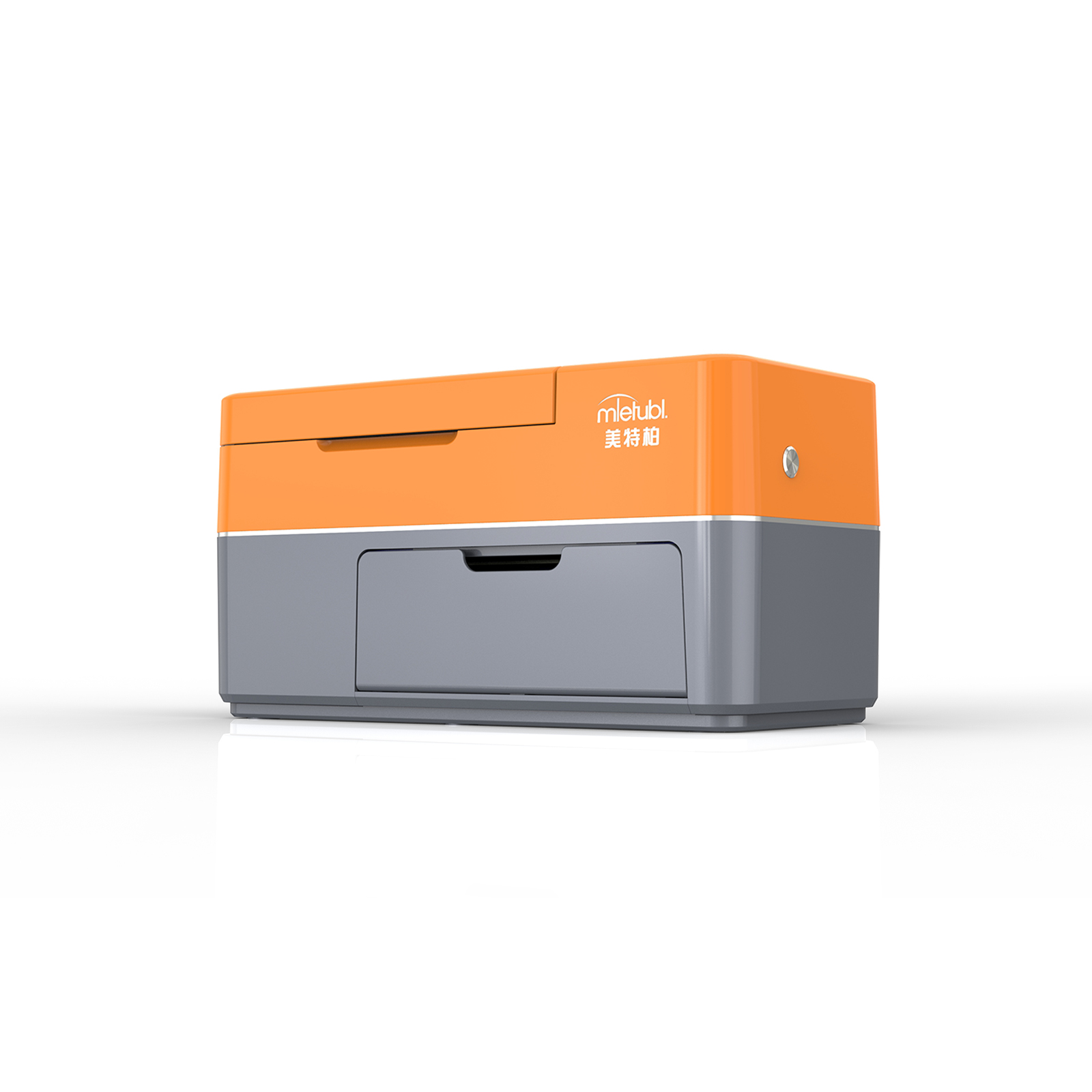
For personalized output, buyers should provide the film supplier with the M688 model name and describe the intended process: cutting only, cutting and application, or the complete cut, apply, and UV-cure workflow. The last option is particularly important because a material should not be assumed to suit UV curing unless its supplier confirms that use.
Match Personalized Film Orders to the M688 Cutting Area
Material dimensions are a clear purchasing boundary. The M688 has a maximum material width of 235 mm, a maximum cutting width of 213 mm, and supports cutting up to 14.6 inches. Film rolls or sheets should fit these limits while leaving enough usable area for the selected device pattern.
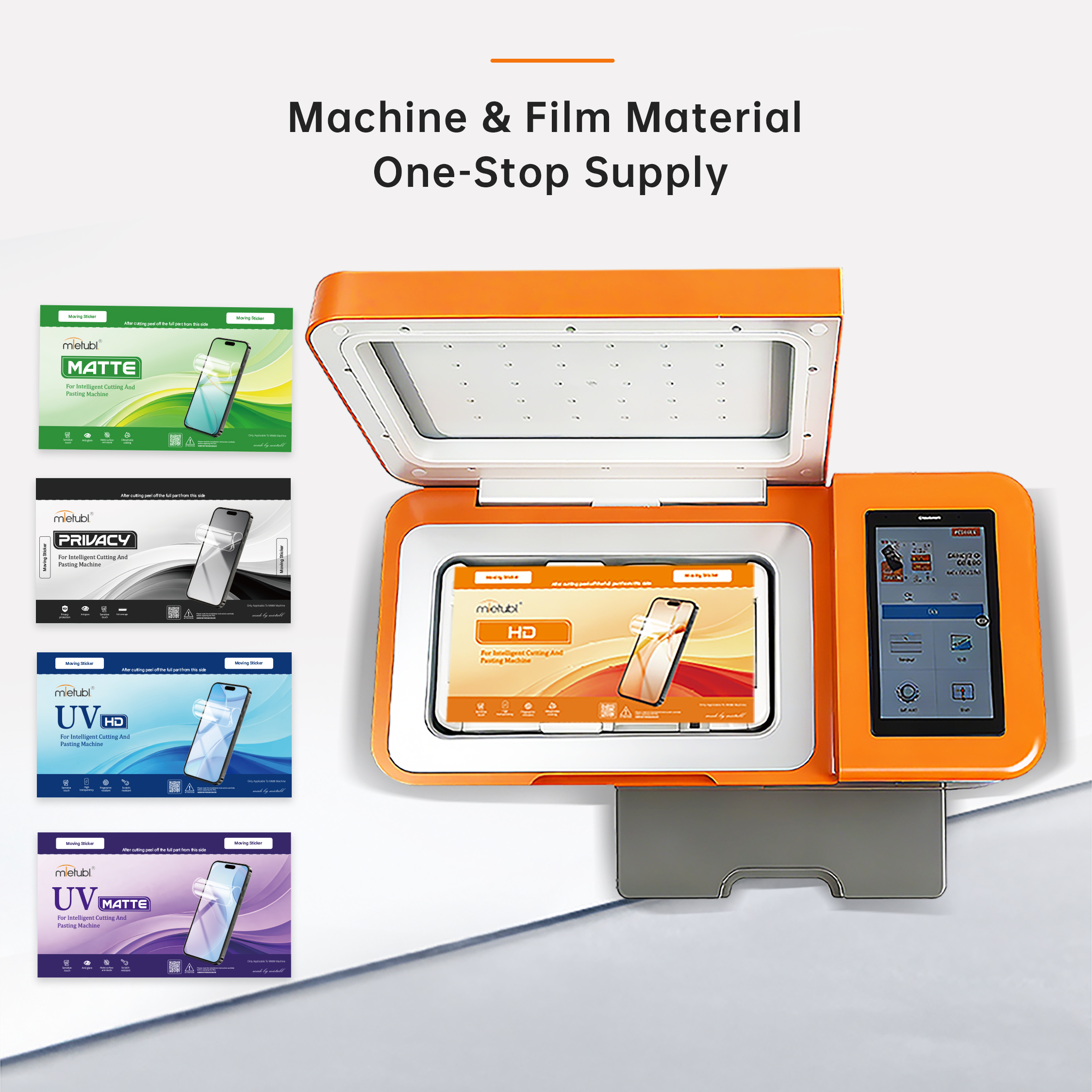
This capacity supports customer requests for phones and tablets within the machine’s stated range. For unusually large devices, buyers should compare the actual pattern dimensions with the cutting area before promising service. Nominal screen size alone may not describe the complete protector outline, so the final template dimensions should be checked.
Use the Three-in-One Workflow for Customer-Specific Service
The M688 combines film cutting, film application, and UV curing in one machine. This service-led workflow can help stores prepare a protector after the customer selects a device model and preferred output, rather than relying only on a large stock of pre-cut model-specific protectors.
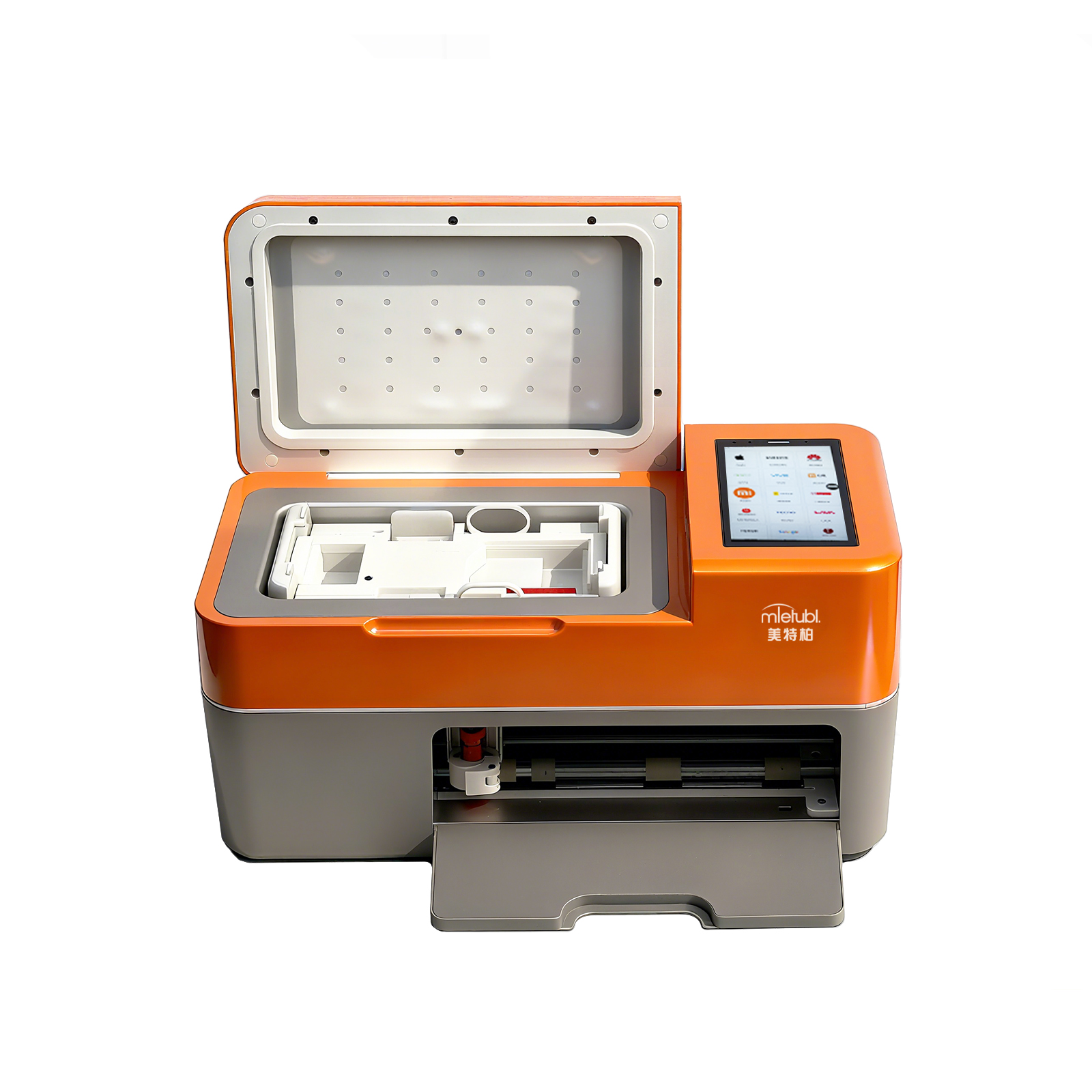
Its standardized guided operation is also intended to help new operators complete the application process. However, guided operation does not replace consumable validation. Cutting settings, application steps, and curing requirements may vary by material, so professional buyers should request operating guidance for each film SKU they plan to sell.
Decision Checklist for a Personalized Film Program
- Define the requested output: Record the device, coverage area, finish, and whether UV curing is required.
- Check physical fit: Keep material and pattern dimensions within the M688 loading and cutting limits.
- Confirm curing suitability: If using the built-in 395 nm UV system, obtain explicit compatibility guidance from the film supplier.
- Validate before scaling: Test cutting, alignment, application, and curing with the exact material SKU before a volume purchase.
- Standardize store choices: A controlled selection of validated films can make customer options easier to explain and reproduce.
Common Questions About M688 Film Selection
Does the MTB-CUT M688 require TPU or PET film?
The approved M688 information does not specify a compulsory TPU, PET, or other film composition. Buyers should not assume that materials listed for another cutting machine are automatically compatible. Confirm the exact consumable with the M688 supplier.
What film width can be ordered for the machine?
The material must remain within the stated maximum width of 235 mm, while the usable maximum cutting width is 213 mm. Buyers should also account for margins and the dimensions of the selected pattern.
Does every personalized protector need UV curing?
Not necessarily. The M688 includes a 395 nm UV-curing system, but the required process depends on the selected film. Follow the consumable supplier’s application and curing instructions rather than applying UV treatment by default.
Conclusion
Choose M688 film by working backward from the customer’s requested protector and validating the exact material against the machine’s dimensions and intended workflow. For procurement, the safest decision is to approve specific film SKUs through practical cutting, application, and, where relevant, UV-curing tests before offering them as standardized personalized options.
About Mietubl
Mietubl is a Guangzhou-based mobile accessories brand whose name reflects its guiding idea: Make It Easier To Use, Better Life. With roots in the mobile accessories industry dating to 1998 and the MIETUBL brand registered in 2010, the company focuses on products that make everyday digital use simpler and more practical.
Its portfolio includes screen protectors, intelligent screen protector cutting machines, film materials, data cables, chargers, power banks, and audio accessories. By combining design, product development, manufacturing, and channel support, Mietubl works with distributors and retailers serving a broad range of mobile accessory needs, with products exported to more than 120 countries and regions.
For product information, samples, or distribution opportunities, contact Marketing@mietubl.com or visit www.mietubl.com.
Was this article helpful?
Your feedback helps us improve future articles.